Technology has been shaping and re-shaping every industry at an impressive pace. What’s leading this race for technological supremacy is one’s ability to ideate, innovate and implement. And this is true even for the Indian defence sector.
The high-octane field has received a mighty boost in creativity and innovation with the influx of private players. Many small and big companies / start-ups / MSMEs, etc. are leveraging disruptive technologies to create unique solutions for the Indian defence forces to make India a self-reliant military might.
We got a chance to witness many of these stellar applications at the recently held AeroIndia 2025 at Bangalore and practical application during Operation Sindoor. This has given us enough evidence to state that ‘Infusion of Technology’ in Made in India products can place India on equal grounds with major global powers.
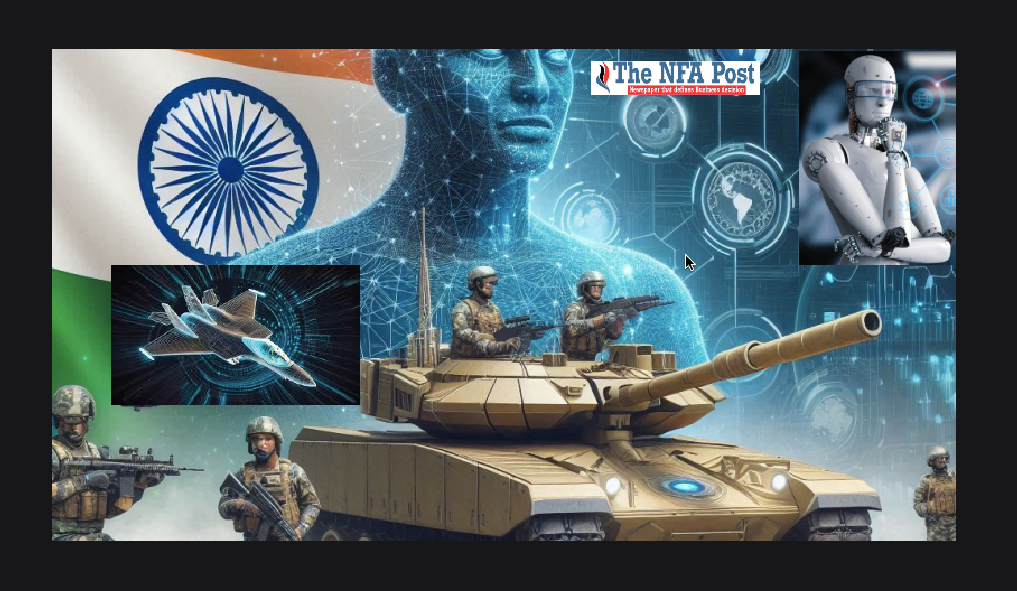
Technologies like artificial intelligence (AI), networking and the Internet of Things (IoT), cloud computing, big data and analytics, multi sensor data fusion (MSDF), etc. are all being used and/or researched upon for the development of new generation products and systems for the modernisation of the Indian defence forces. India is also working towards building its indigenous 5th Gen Fighter aircraft AMCA and with the thrust and help being extended by Government of India (GoI), we are not far from achieving this dream.
India is learning from the examples of countries like China, USA, Germany, France, etc. who’s modernised defence industries are supported financially and politically by their respective federal governments. GoI is also catching up on this front and is pumping in a good amount of GDP every year in defence manufacturing, innovation, and R&D.
Below is a snapshot of how the latest technologies are likely to be used on the battlefield:
AI and Automation | De-risking Human-lives on the Battlefield
AI has influenced every industry, big or small, and when it comes to the defence sector – AI is proving useful in not only aiding human lives but also de-risking human lives. Drones, robots, war games, simulators and unmanned vehicles are powered by AI/ML algorithms which help them perform tasks such as visual perception and decision-making with minimal or no human intervention, thereby reducing the need for humans to risk their lives on the battlefield.
AI also comes to the rescue where large amounts of data is required to be processed manually and thereby causing delay in decision making.
Automation in assessment of events in real time and predicting future scenarios based on historical patterns and trends, image classification, face recognition and intelligence reporting using AI / LLM algorithms, are all being used in tri-service networked systems.
Blockchain and Quantum Computing | Elevating Security
Blockchain technology and quantum computing are among the most exciting technologies to be linked to the defence industry in recent years. The reason is clear – they make it possible to onboard high levels of security, paramount to a defence sector.
With the application of these technologies, data is not stored in a single location. Thus, there is no centralized version of the information which can be hacked or accessed by external forces. Blockchain, with its distributed node system allowing layers of security inside a sealed network, run by powerful quantum computers will make the defence sector resilient to cyber-attacks and threats.
Cloud Computing | No More Data Siloes
Cloud computing, albeit not new, is a very interesting technology to have found a place in the defence sector. It is being merged with Edge Computing (providing data closer to the user) as per the requirement. In the last decade, cloud computing has completely replaced the ‘siloed’ systems of storing and processing data used by defence sectors.
They are now exploring options of moving their data to cloud servers for secure storage and accessing it
through Edge Computers for faster access and processing.
IoT | Used for Decades by Defence Industry
While the idea of having inter-connected devices over a common network (IoT) seems novel for the commercial sector, the defence sector has, in fact, leveraged IoT for decades. The defence industry has been using aircraft, ground vehicles, ships and weapons systems that are connected to a common network to share tactical data with one another, long before this technology gained momentum in other industries.
Make in India | Fostering Innovation, Boosting Manufacturing
The only way for the defence sector to achieve self-reliance is by continuously implementing and improving technological innovations. Keeping this is mind, GoI has put together several programs and one of them is ‘Make in India’, aimed at boosting manufacturing capabilities and attracting foreign investments.
The Indian industry is looking at procuring advanced technologies from foreign countries through bilateral arrangements, industrial policies and the defence procurement policy. India also has bilateral and multilateral international ties with countries such as Russia, Israel, USA, South Korea, Singapore, UK, etc. for the development of strategic, unique, transformative, advanced technology / systems / platforms under the ‘Make in India’ initiative.
Offering of not just the end products (5th Gen Fighter aircrafts) but inherent technology by two major defence industrial power houses, the USA (F-35 supplier) and Russia (Su-57 supplier) to India is a case in point.
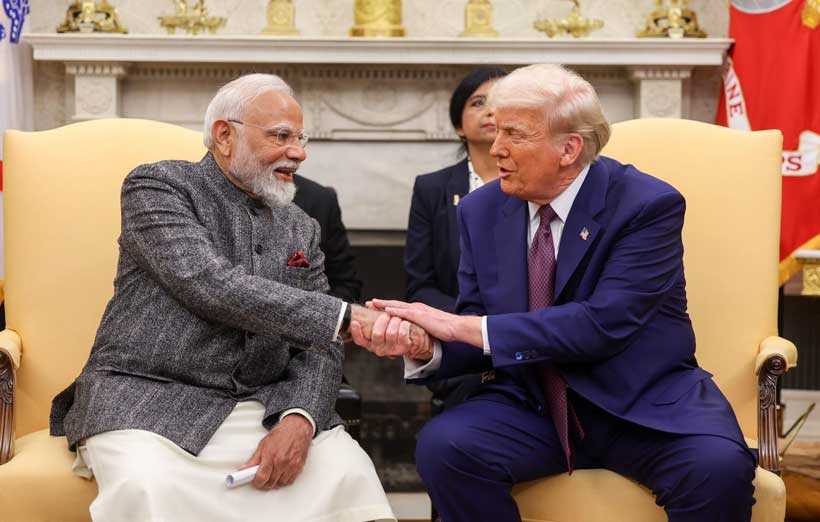
Defence Research and Development Organisation (DRDO) and major defence R&D houses are partnering with global players to help Indian defence forces be ready to face any eventuality, both from within and externally. Apart from this, Indo-US Defence Technology and Trade (DTTI) and a Joint Working Group (JWG) on Defence Equipment and Initiative Technology Co-operation with Japan have been set up to promote co-operation in the field of defence equipment and technology.
Foreign Direct Investment (FDI)
The FDI policy for defence has been revised in 2020 to facilitate access to latest technologies in the shortest possible timeframe and help our defence forces to be prepared to fight a multi-faced war. Under the modified policy, FDI up to 74% is allowed through the automatic route, and up to 100% under government approval route. India received FDI worth $6.4 million in defence industries till March 2025.
The Department of Defence Production (DDP) also brought in policy reforms for attracting investment including setting up Two Defence Corridors in Tamil Nadu and Uttar Pradesh to provide Plug and Play support to the industries. In DPP, under ‘Buy & Make (Indian)’ and ‘Buy (Global – Manufacture in India)’ categories of capital acquisition, foreign companies and Indian companies are encouraged to work together to manufacture defence equipment in India as a part of the Make in India program.
The main objective is to encourage technology partnerships between Indian and foreign companies. Government is encouraging innovation from our premier institutes like the IITs, IISC and institutes of academic excellence, start-ups and niche technology providers by incentivising entrepreneurship as well as new technology development and help place us high in the list of global innovators.
Can we say…this is the Time for India!!!