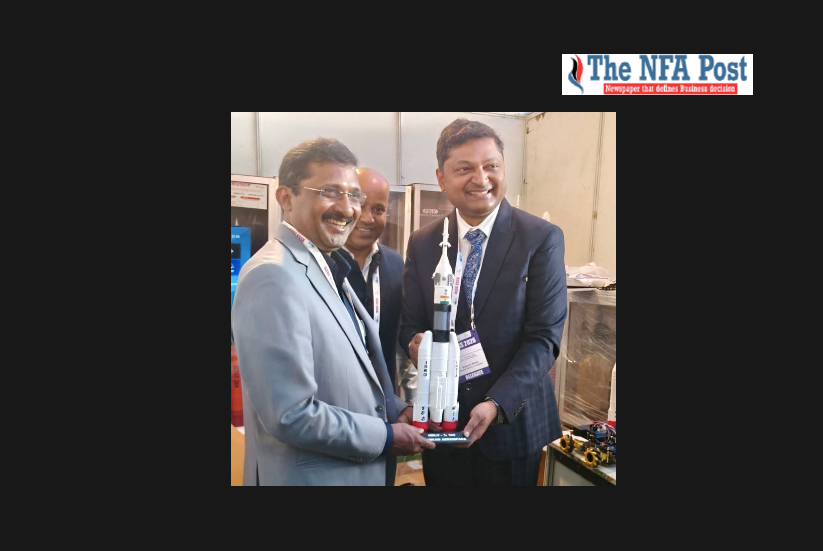
Bengaluru, NFAPost: With human spaceflight, lunar sample return, a space station and a 30-tonne-class launch vehicle on the roadmap, ISRO is preparing for an ambitious new phase in which industry, startups and academia will become central to delivery.
India’s space programme is preparing to enter one of its most ambitious phases yet, combining increasingly complex scientific and human-spaceflight missions with a broader effort to expand the country’s presence in the global space economy.
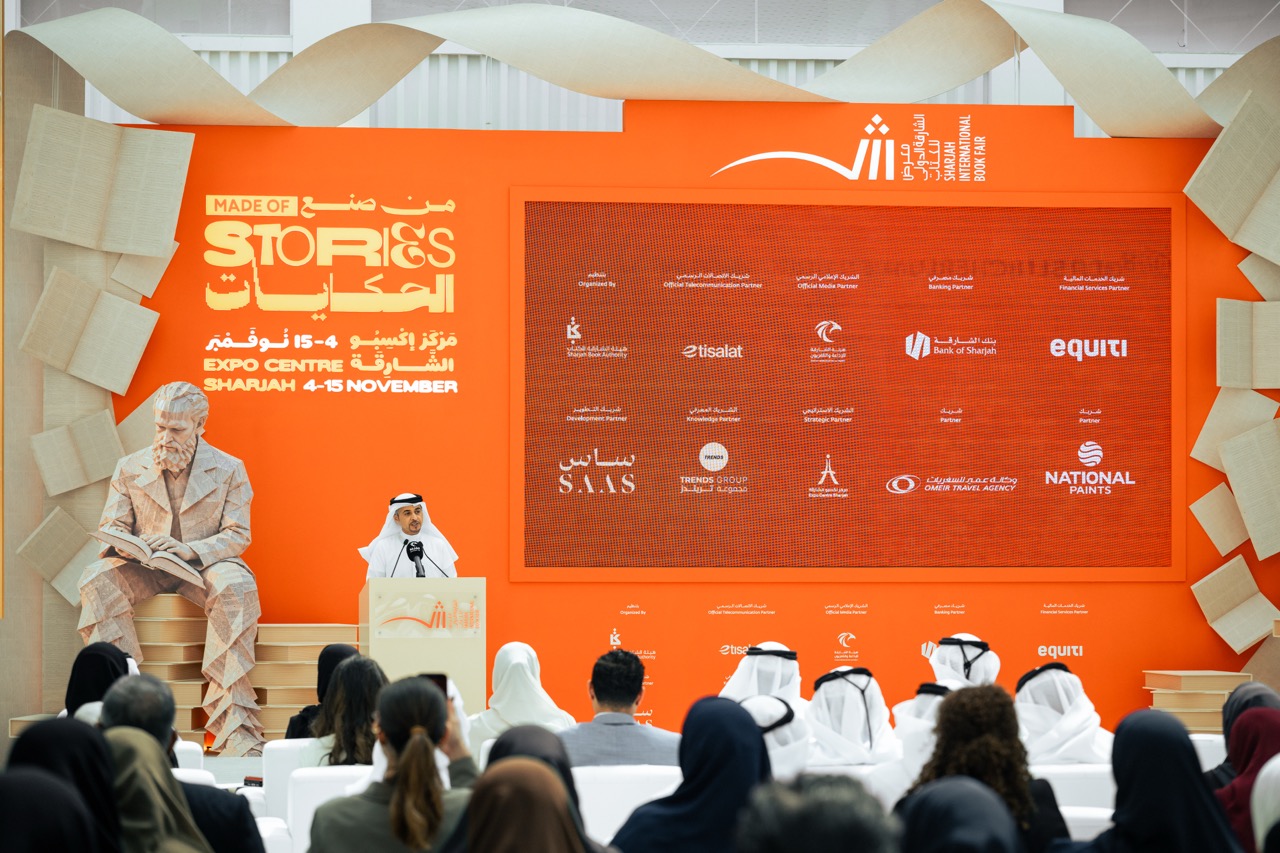
Delivering the keynote address at the Bengaluru Space Expo 2026, M. Ganesh Pillai, Scientific Secretary, ISRO, said India’s share of the global space economy, currently estimated at around 2%, is targeted to increase to 8% by 2033 and eventually to 10%.
“The ecosystem has to work together to meet this target,” Pillai said, underscoring the growing roles of ISRO, industry, startups, academia, government departments and international partners.
His remarks came during the plenary session, “ISRO at the Core: Aligning R&D to Accelerate India’s Space Economy,” where he outlined a roadmap that stretches from human spaceflight and lunar exploration to next-generation launch vehicles, planetary missions and the expansion of space-based services for national development.
From Sarabhai’s vision to a full-stack space programme
Pillai placed India’s current ambitions in the context of the vision articulated by Dr. Vikram Sarabhai, who saw advanced space technology as a means of addressing the developmental needs of ordinary citizens.
India’s first rocket launch from the Thumba Equatorial Rocket Launching Station in 1963 used a US-supplied Nike-Apache sounding rocket and carried a French payload. More than a decade later, the Satellite Instructional Television Experiment used the American ATS-6 satellite to connect around 2,400 remote villages, demonstrating the potential of space technology for education and rural development.
That early development-oriented approach has since evolved into an end-to-end national space programme encompassing launch vehicles, satellites, communications, remote sensing, navigation, human spaceflight, space science and planetary exploration.
According to Pillai, ISRO has conducted more than 4,000 sounding-rocket missions and 242 major missions, including 106 launch-vehicle missions, 136 satellite missions and five experimental missions.
Those experimental programmes have covered spacecraft recovery, reusable launch vehicles, crew-module recovery and scramjet propulsion, progressively building the technologies required for more complex missions.
At the same time, the organisation’s industrial model is changing.
Industry is increasingly manufacturing and assembling major launch-vehicle hardware, including strap-on boosters, structural elements and payload fairings. ISRO is consequently moving towards a greater focus on system integration, advanced technology development and mission leadership rather than manufacturing every component internally.
Gaganyaan moves towards human spaceflight
One of the most significant programmes on the roadmap is Gaganyaan, India’s human-spaceflight programme.
The mission is designed to demonstrate India’s ability to send astronauts to low Earth orbit and safely return them to Earth. The planned crew and service module configuration is expected to remain in orbit for approximately two days before re-entry.
Pillai said most of the technologies and hardware required for the programme have either been developed or are at advanced stages of preparation, with the programme moving towards its first uncrewed mission.
Rather than being treated as a single flight, Gaganyaan is being developed as a sequence of eight missions comprising three uncrewed missions, two crewed missions, two cargo missions and one mission associated with the first module of the Bharatiya Antariksh Station.
“The safety of the astronaut comes first,” Pillai said, highlighting the significantly higher standards required for human spaceflight.
Those standards extend across reliability, materials, fabrication, non-destructive testing and acceptance testing. Industry partners are increasingly involved in developing and qualifying the hardware alongside ISRO.
Bharatiya Antariksh Station takes shape
Gaganyaan is also expected to serve as a stepping stone towards India’s planned Bharatiya Antariksh Station, a five-module space station designed to support long-duration activities in low Earth orbit.
Following government approval, the first module is targeted for 2028. The completed station is expected to have a mass of approximately 52 tonnes and will require multiple launches followed by in-orbit assembly.
The station is expected to support microgravity research, space biology, space medicine and collaborative scientific experiments.
Among the key technologies required will be autonomous and controlled docking, integration of pressurised and non-pressurised modules, and environmental-control and life-support systems capable of supporting sustained human operations.
The programme could eventually enable more advanced demonstrations, including docking in elliptical orbits and orbital refuelling.
NGLV to carry up to 30 tonnes to low Earth orbit
India’s ambitions in space will also require a new generation of launch infrastructure.
Beyond the LVM3, ISRO is developing the Next Generation Launch Vehicle (NGLV), which Pillai described as the future successor to the country’s existing heavy-lift launch vehicle.
The NGLV is being designed to place up to 30 tonnes into low Earth orbit. The proposed vehicle is expected to use clustered liquid oxygen–methane engines, large propellant tanks and a three-stage architecture incorporating a cryogenic upper stage.
The scale of the programme is already drawing substantial industrial interest. More than 50 companies recently participated in an industry interaction focused on hardware realisation and engine-fabrication requirements for the new launcher.
ISRO is simultaneously working on an upgrade of the LVM3. The proposed enhancement would replace the vehicle’s L110 core stage with a semi-cryogenic stage using liquid oxygen and kerosene, with a target thrust of approximately 2,000 kilonewtons. The C25 upper stage is also being developed into the higher-capacity C32 configuration.
Reusable launch-vehicle technology is progressing from landing demonstrations towards an orbital mission capable of returning from orbit and landing safely.
Other technology programmes include scramjet propulsion, spacecraft docking and advanced orbital operations.
Chandrayaan enters the sample-return era
India’s lunar programme is also moving into a significantly more complex phase.
Chandrayaan-4 is planned as a lunar sample-return mission involving a landing on the Moon, collection of surface material and the return of those samples to Earth.
The mission is expected to use two launchers and two spacecraft systems, with an estimated combined mass of approximately 9,600 kilograms—substantially greater than the roughly 3,900-kilogram Chandrayaan-3 lander.
ISRO is targeting 2027 for the mission, with work on the spacecraft configuration already under way.
The proposed Chandrayaan-5, or LUPEX, will be undertaken in cooperation with Japan’s space agency, JAXA. The mission is expected to involve longer-duration lunar surface operations, with the lander designed to operate for around 100 days, compared with the 14-day operating period of the Chandrayaan-3 lander.
The planned lander is expected to weigh approximately 6,150 kilograms, while the rover would have a mass of around 350 kilograms.
The extended mission will require technologies capable of operating in the challenging lunar polar environment.
Venus and Mars on the longer horizon
India’s planetary exploration roadmap extends beyond the Moon.
The Venus Orbiter Mission is being developed to study Venusian atmospheric composition, circulation and evolution, as well as the interaction between solar activity and the planet’s atmosphere.
Around 90 payloads have been identified for the mission, including instruments involving international partners.
A Mars Landing Mission is also under consideration. The project report and associated approvals remain in progress, with the mission potentially targeting the 2031 timeframe.
The proposed mission would seek to demonstrate an Indian landing capability on Mars, marking another major technological step beyond the country’s existing Mars exploration experience.
Space technology for Viksit Bharat
While planetary exploration and human spaceflight represent the high-profile elements of the roadmap, Pillai also emphasised the continuing importance of space applications for national development.
Under the Viksit Bharat 2047 vision, ISRO has been working with government departments and states to identify future requirements for space-based services.
A National Meet 2 consultation brought together 63 central ministry departments and representatives from 63 states and union territories, identifying more than 110 satellites required for applications covering land, oceans and the atmosphere.
Pillai said the emerging model would increasingly see standardised operational missions delivered by industry, allowing ISRO to concentrate on technology demonstrations, advanced research and more complex R&D.
More than 1,000 standard and utility activities are currently under way across areas including launch systems, remote sensing, communications, navigation, advanced sensors, propulsion and human-spaceflight technologies.
ISRO is also pursuing technologies such as all-electric propulsion, quantum key distribution, deployable 18-metre antennas, atomic clocks, hyperspectral sensors and radioisotope heater units aimed at extending spacecraft operational life.
The organisation is studying in-space resource utilisation as well, including the possibility of generating oxygen during future planetary missions.
Microgravity experiments and the robotic or humanoid system Mitra are also planned for upcoming human-spaceflight activities.
Industry moves from supplier to delivery partner
Pillai stressed that industry’s involvement in the Indian space programme is not new.
The Vikas engine, which powers multiple launch-vehicle families including PSLV, GSLV and LVM3, was designed by ISRO but realised through industry from the early stages.
The ecosystem has now expanded to more than 450 space companies, alongside large industrial partners and a rapidly growing startup base.
This growth is also changing the way ISRO approaches manufacturing.
The organisation is increasingly adopting a government-owned, company-operated model for certain facilities, under which private industrial partners use government infrastructure to manufacture and assemble space hardware.
ISRO is considering taking that model further by requiring companies to procure materials and undertake more of the end-to-end manufacturing process themselves.
Startups supported through IN-SPACe programmes are also gaining access to ISRO facilities for testing and technology development.
The shift is intended to create an industry capable of delivering operational systems at scale rather than merely supplying individual components.
Academia remains a critical source of talent
The expansion of the space economy will also depend heavily on India’s academic institutions.
ISRO’s engagement with universities and research institutions includes the RESPOND programme, Space Technology and Innovation Centres, Regional Academic Centres for Space Technology, Space Technology Cells and Centres of Excellence at IITs and NITs.
More than 450 sponsored research programmes are currently under way, while more than 1,400 academic projects have been completed or remain in progress.
Pillai said one of the most important outcomes of these programmes is the human capital they create, including students, junior research fellows and senior research fellows trained in advanced space technologies.
Technology transfer is another major component of the industrial transition.
ISRO has signed more than 629 technology-transfer agreements covering technologies ranging from lithium-ion systems and silicon-organic materials to launch-vehicle structures, sensors and propulsion systems.
Five SSLVs have been realised by an industry consortium, while the transfer of SSLV technology to industry is progressing in phases.
Reforms reshape India’s space ecosystem
The transformation has accelerated since the government introduced space-sector reforms in 2020.
The Indian Space Policy was released in 2023, followed by a new foreign direct investment policy for the sector. The proposed Space Activities Bill remains under development.
IN-SPACe has emerged as the principal institutional mechanism for promoting, authorising and supporting private-sector participation in space activities.
Its responsibilities include enabling companies and startups to access government infrastructure, undertake testing and develop launch vehicles, satellites and other space systems.
India’s international space engagement has expanded in parallel.
Cooperation now extends across more than 300 platforms involving 62 countries and six multinational bodies, covering joint satellites and ground stations, scientific experiments, policy engagement, professional exchanges and capacity building.
India’s role has evolved from relying on foreign launchers and satellites to developing systems for international partners and participating in increasingly complex joint missions.
These include the India-Bhutan satellite, South Asian Satellite, NASA-ISRO Synthetic Aperture Radar (NISAR) mission and the planned LUPEX mission with Japan.
ISRO remains at the core, but the ecosystem must deliver
The roadmap presented by Pillai reflects a fundamental change in the scale and character of India’s space ambitions.
The programme that began with sounding rockets and development-oriented satellite applications is now preparing for human spaceflight, a national space station, lunar sample return, planetary exploration, reusable launch systems and a 30-tonne-class next-generation launcher.
Delivering that roadmap, however, will require more than ISRO’s internal capabilities.
Industry will increasingly have to manufacture and operate production systems at scale. Startups will need to convert technology into commercial products. Universities will have to supply both research and specialised talent, while international partnerships will become increasingly important for complex scientific and technological missions.
The transformation is therefore not simply about launching more spacecraft or undertaking more ambitious missions. It is about building an ecosystem capable of supporting an expanding space economy.
“Space will surely play a major role” in realising the vision of Viksit Bharat by 2047, Pillai said.
For ISRO, the next frontier is consequently not only deeper into space, but also deeper into the economy—where the success of the national programme will increasingly be measured by how effectively its technologies, infrastructure and knowledge are translated into a broader industrial capability and a globally competitive Indian space sector.