Powered by India’s open digital rails, Uber deepens its commitment to connected mobility and commerce by expanding its logistics engine and enabling metro ticketing for millions of Bengaluru commuters.
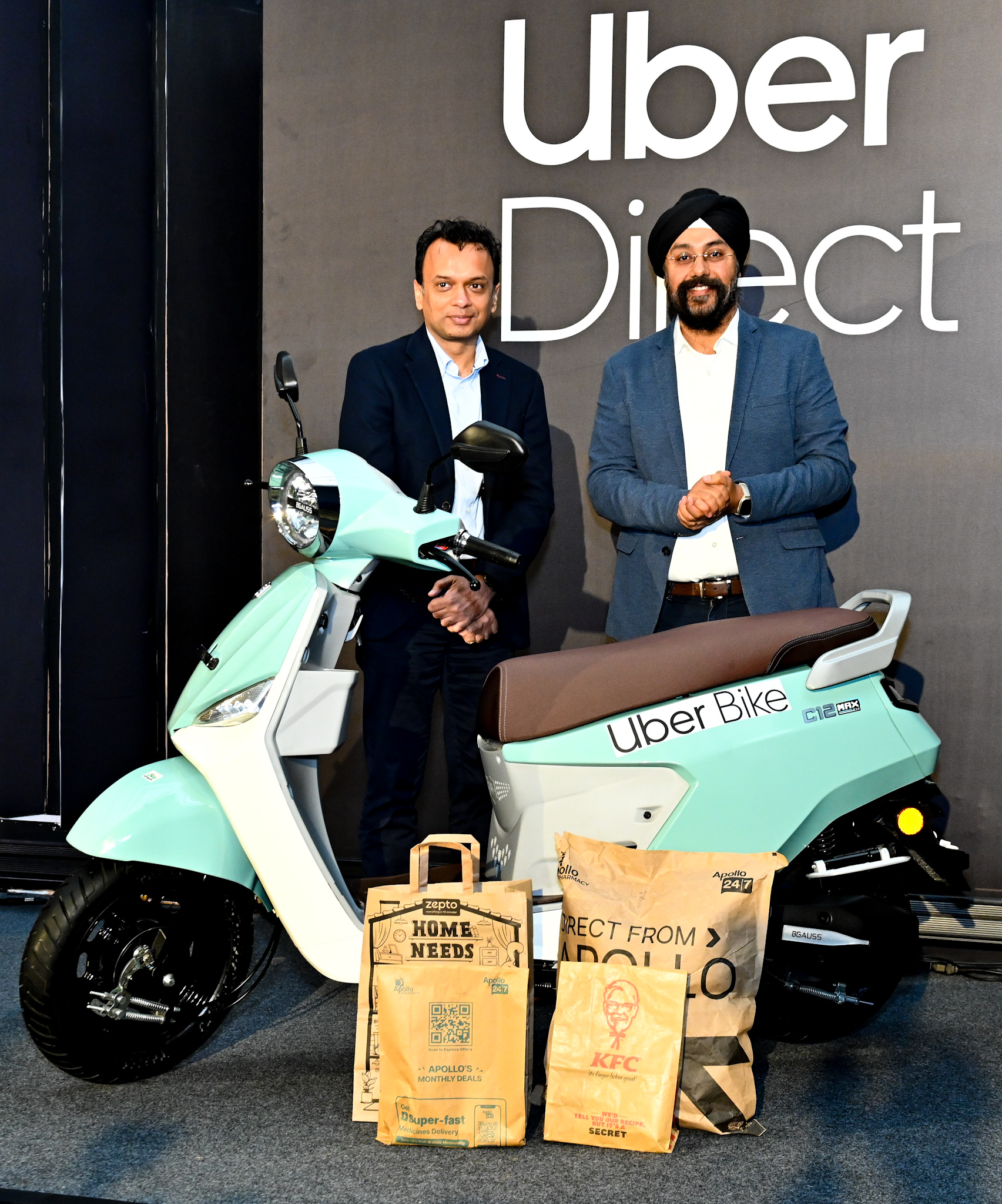
Bengaluru, NFAPost: In a significant move that highlights the company’s growing ambition beyond ride-hailing, Uber today announced the launch of its B2B logistics service Uber Direct in Bengaluru, powered by the Open Network for Digital Commerce (ONDC). Alongside this, Uber also rolled out metro ticketing integration for Namma Metro, offering commuters a unified interface to discover routes, buy QR-based tickets, and access live metro information — all within the Uber app.
With these two major launches, Uber is positioning itself not just as a mobility provider but as a multi-service platform seamlessly embedded into India’s digital public infrastructure.
Uber Direct: A New B2B Logistics Engine
Uber’s foray into B2B logistics represents a strategic expansion into enterprise fulfilment. Built on ONDC’s interoperable digital commerce rails, Uber Direct functions as a behind-the-scenes delivery engine for businesses — markedly different from its consumer-facing delivery product, Uber Courier.
In contrast to Courier, which consumers book directly via the Uber app for personal deliveries, Uber Direct is triggered at the seller’s end. Customers place orders through a brand’s app or website, and Uber fulfils the last-mile delivery without the consumer interacting with Uber until a driver arrives at the doorstep.
With this model, Uber offers enterprises a plug-and-play logistics solution that is standardized, scalable, and integrated into the ONDC network. The service went live today in Bengaluru, with Uber’s driver partners already fulfilling grocery deliveries for brands such as Zepto and KPN Farm Fresh.
The company plans to expand rapidly. In the next few weeks, Uber Direct will also support food delivery for global brands such as KFC, Burger King, Taco Bell, and major Indian cloud kitchen operators like Rebel Foods.
Prabhjeet Singh, President of Uber India and South Asia, emphasized the strategic importance of this expansion, saying:
“Bangalore is a playground for innovation, so it is a natural place for us to deepen our integration with ONDC and solve for mobility and logistical needs for people and businesses. The launch of Metro ticketing and Uber Direct in Bangalore helps us bring alive our vision to help people ‘Go anywhere, Get anything’ and we are excited to build that at scale with ONDC.”
Metro Ticketing on Uber: Expanding Multi-Modal Public Transport Access
Parallel to its logistics expansion, Uber launched Bangalore Metro (BMRCL) ticketing on its app, powered by the ONDC network. The feature allows riders to purchase QR-based tickets using UPI and view live transit information — simplifying public transit usage for millions of commuters.
The company has already seen strong adoption of metro ticketing in Delhi, Mumbai, and Chennai. Bengaluru marks the next chapter as Uber works to make public transit a central pillar of its mobility ecosystem.
Dr. J Ravishankar, MD of Bangalore Metro Rail Corporation Limited (BMRCL), welcomed the development:
“We welcome Uber’s initiative to integrate Namma Metro ticketing into its platform through the ONDC network, making travel more seamless for commuters. Uber’s entry also strengthens first and last mile connectivity and expands commuter choice.”
The integration aligns with BMRCL’s multi-operator ticketing approach, which encourages collaboration with digital platforms to make metro travel more accessible, efficient, and technology-driven.
ONDC’s Role in Unlocking an Interoperable Digital Economy
ONDC, envisioned as India’s open, unbundled, and protocol-driven digital commerce infrastructure, plays a pivotal role in enabling such cross-platform integrations. Speaking at the launch, Vibhor Jain, Acting CEO and COO of ONDC, highlighted the significance of Uber’s continued expansion on the network.
“Uber’s continued expansion on the ONDC Network, first with Metro ticketing in multiple cities and now with the official launch of Uber Direct, demonstrates the true potential of interoperable digital commerce. Uber Direct will provide a standardized, plug-and-play logistics layer for businesses, fostering efficiency and innovation in the B2B space.”
ONDC enables different platforms, sellers, and service providers to interact seamlessly — mirroring the interoperability seen in UPI’s payments ecosystem. For Uber, tapping into this open infrastructure allows it to diversify into logistics and public transport without building standalone closed systems.
A Strategic Bet on India’s Digital Public Infrastructure
Uber’s decade-long journey in India has evolved from a simple “press a button, get a ride” service into one of the nation’s most expansive mobility networks spanning autos, cars, motos, buses, and metro rail. With more than 3 billion trips completed and presence in 125 Indian cities, the company is now entering a phase focused on deeper integrations, multimodal connectivity, and enterprise logistics.
The combination of Uber Direct and metro ticketing reflects the company’s vision to create an interconnected ecosystem where mobility, commerce, and last-mile fulfilment co-exist seamlessly.
Starting today, users in Bengaluru can:
- Purchase QR-based metro tickets for BMRCL via the Uber app
- Access route information and live schedules
- Use UPI as the exclusive payment method
- Leverage Uber Direct-enabled brands for swift, reliable deliveries (from groceries today to food in the coming weeks)
Uber has confirmed that more metro integrations and Uber Direct city rollouts are planned through 2026 as it strengthens its India-first strategy.
About Uber
Since its arrival in India in 2013, Uber has transformed into a multi-modal mobility ecosystem supporting over 1.4 million driver-partners and serving millions of riders daily. From autos to intercity buses and metro ticketing, Uber continues to build solutions designed around India’s diverse travel needs.
About ONDC
Established in 2021 under the Department for Promotion of Industry and Internal Trade (DPIIT), ONDC aims to democratize digital commerce through open, interoperable, and unbundled infrastructure that enables businesses of all sizes to participate in the digital economy.