At BIFFes, the celebrated writer and lyricist reflects on poetry, cinema, time, and the deeply personal act of writing songs
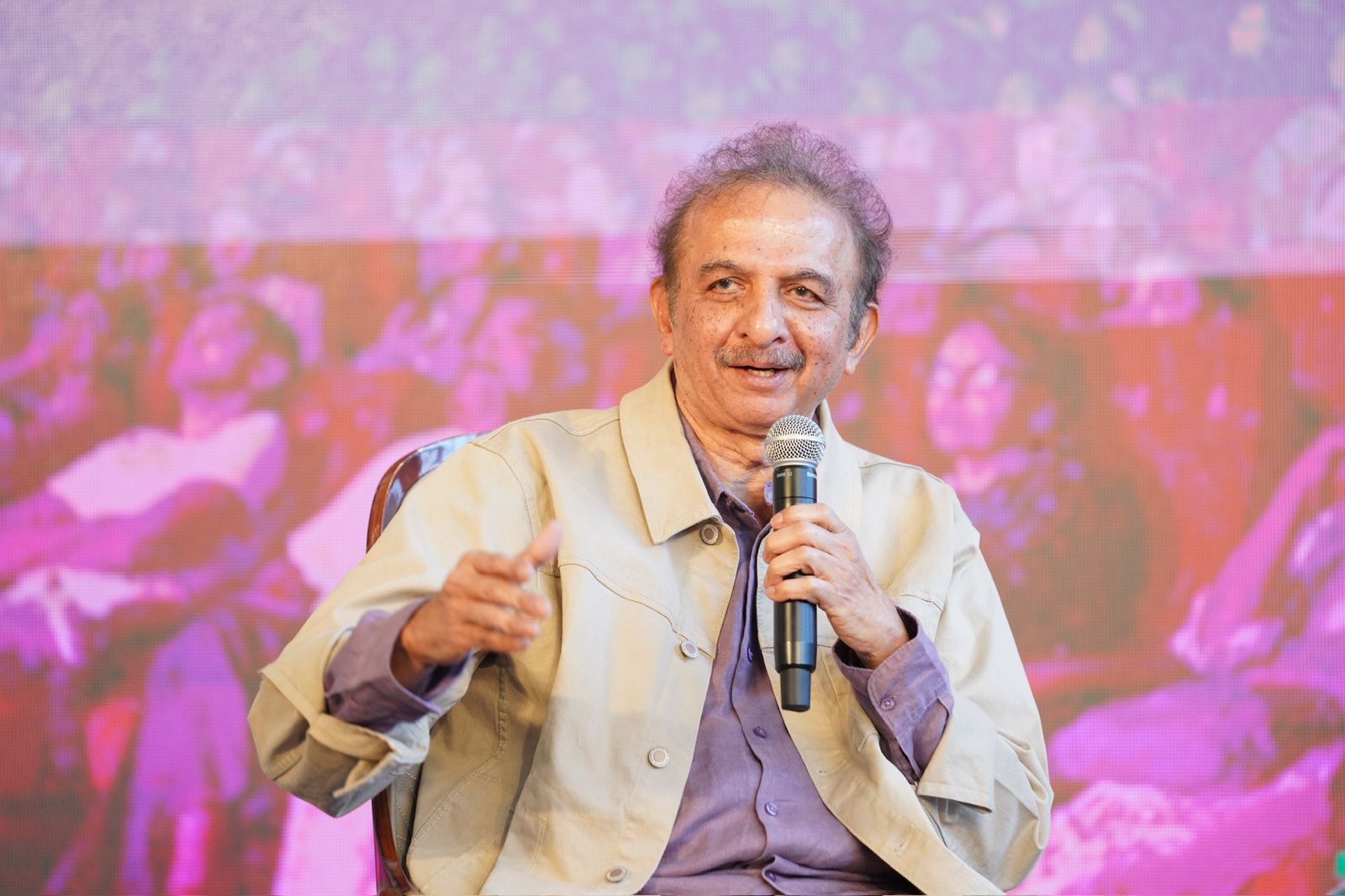
Bengaluru, NAFPost: Songwriting is not a skill that can be packaged into a workshop or mastered through formal training—it is an instinctive act that must emerge from lived experience, literature, and the subconscious mind. This was the central thought articulated by acclaimed writer and lyricist Jayant Kaikini during a compelling seminar at the 17th Bengaluru International Film Festival (BIFFes).
Addressing a packed audience of students, writers and cinema enthusiasts, Kaikini spoke with characteristic wit and philosophical clarity about creativity, time, cinema, and the intimate journey that led him—quite late in life—into film songwriting.
“Songwriting is something one must learn independently; it cannot be taught,” Kaikini said.
“You must read Kannada poetry and literature, observe public life, and absorb the world around you. Writing comes from inside—it rises from the subconscious. There are no training programmes for that.”
Why Songwriting Defies Training
Drawing a sharp distinction between songwriting and other cinematic crafts, Kaikini argued that unlike acting or direction, lyric writing does not lend itself to structured instruction.
“Sometimes when we dream, we see abstract images and ideas,” he explained. “Songwriting is like that.”
He warned that institutionalising creativity often leads to uniformity rather than originality.
“If you try to ‘train’ songwriters, the result is like identical bodies coming out of a gym, or brides looking the same after visiting a beauty parlour,” he said, prompting laughter from the audience.
“If you want to leave your mark, you must find your own voice.”
Change Is Inevitable—And Necessary
Kaikini also addressed a common cultural lament—that everything in the past was better than the present.
“It is a mistake to say that everything earlier was good and everything now is bad,” he said.
“If that were true, then we too would still be the same as we were decades ago.”
Reflecting on the passage of time, he added:
“Earlier, there were many elders in my town. Today, I have become the elder. Time changes, technology evolves, and we must evolve along with it.”
For Kaikini, resisting change is not a sign of wisdom, but of stagnation.
A Late Entry into Film Songs
Despite being one of Kannada literature’s most respected voices, Kaikini entered cinema relatively late.
“I became a film lyricist at the age of 52,” he revealed.
“In my youth, I wrote serious literary works like Kotitirtha. Film songs came much later.”
He described himself as a lifelong lover of film music.
“We all grew up humming songs,” he said fondly.
“My father used to say, ‘Humming is better than grumbling.’”
Discovering the Difficulty of Simplicity
Kaikini candidly admitted that he initially underestimated the challenge of writing film lyrics.
“I thought writing film songs would be very easy,” he said. “But once I began, I realised how difficult it really is.”
In cinema, he explained, lyrics are written after the tune is composed, and must conform to strict metrical constraints.
“That was my biggest challenge,” he said.
“There are billions of songs already. Nearly 97% are love songs. How many ways can you repeat the same words—olavu (love), nalivu (joy), usiru (breath)? Finding a fresh expression beyond these clichés is the real test.”
Cinema’s Unexpected Gift to Literature
Kaikini also spoke about the unexpected crossover between cinema and literature that songwriting enabled.
“When I started writing film songs, some well-wishers were disappointed,” he said.
“They feared I would abandon literature. But that never happened.”
Instead, he described the process as a kind of cultural reverse osmosis.
“Many young people who had never read my stories or poems heard my songs and then sought out my books,” he said.
“As a result, my books were reprinted. Cinema brought new readers to literature.”
Cinema: A Complete Medium
Calling cinema a uniquely powerful art form, Kaikini described it as a rare convergence of multiple expressive modes.
“Cinema has sound, visuals and expression,” he said.
“If a director truly understands and masters these three, they can create wonders.”
His own fascination with cinema began in childhood, shaped by touring talkies in his hometown.
“I grew up watching films like Katari Veera, Beedhi Basavanna and Chandavalliya Thota,” he recalled.
Quoting Javed Akhtar, Kaikini added:
“Cinema is our religion. In India, we are inseparably blended with movies.”
Writing Across Languages: Ponniyin Selvan
Speaking about his work on the Kannada dubbed version of Ponniyin Selvan, Kaikini shared an anecdote that captured both linguistic sensitivity and humour.
“There were 14 songs across two parts, composed by A R Rahman,” he said.
“I told Mani Ratnam that I wouldn’t translate the lyrics—I wanted to write original Kannada songs.”
Mani Ratnam, he said, gave him complete freedom.
“I even teased him,” Kaikini laughed.
“In Kannada, you have to touch your lips to say Preethi or Prema. In Tamil, your lips don’t even touch when you say Kadhal. I asked him jokingly—‘How do you love without joining your lips?’”
A Voice That Continues to Evolve
The session, moderated by Prashant Pandit, was marked by warmth, laughter and deep introspection. Kaikini’s reflections reminded the audience that creativity is not a technique to be mastered, but a lifelong conversation with language, memory and experience.
At BIFFes, Jayant Kaikini reaffirmed a simple yet profound truth: while cinema may change with time and technology, the soul of songwriting still begins in silence—and grows from within.