At the Bengaluru International Film Festival, directors interrogate power, authorship and the visual language that has long defined women on screen
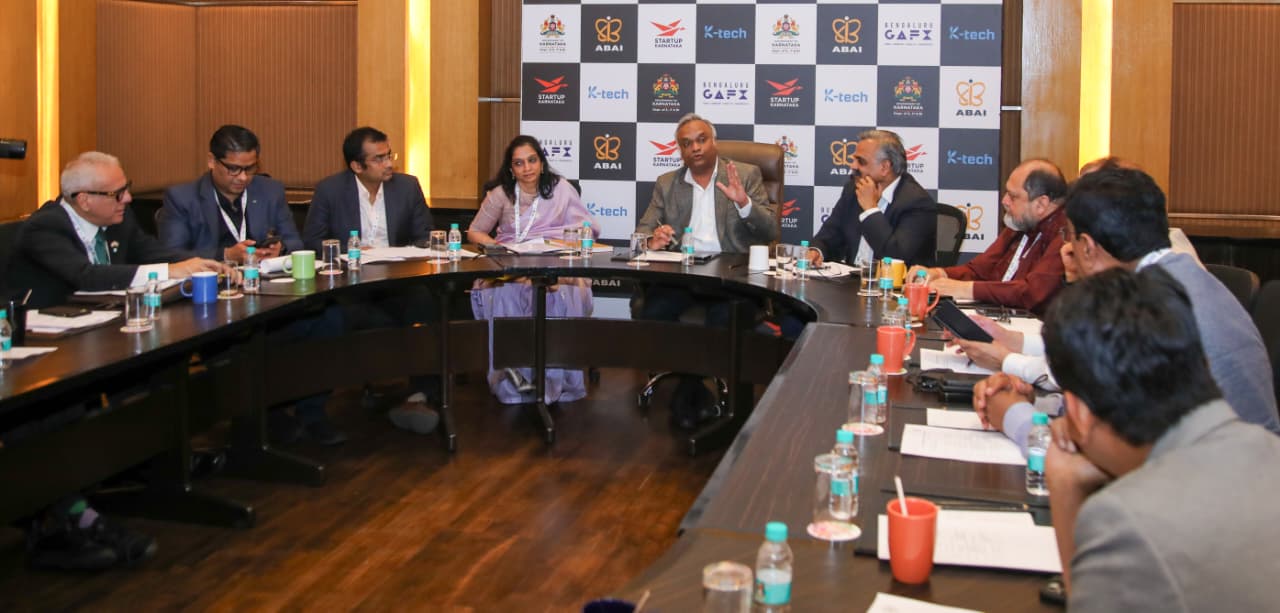
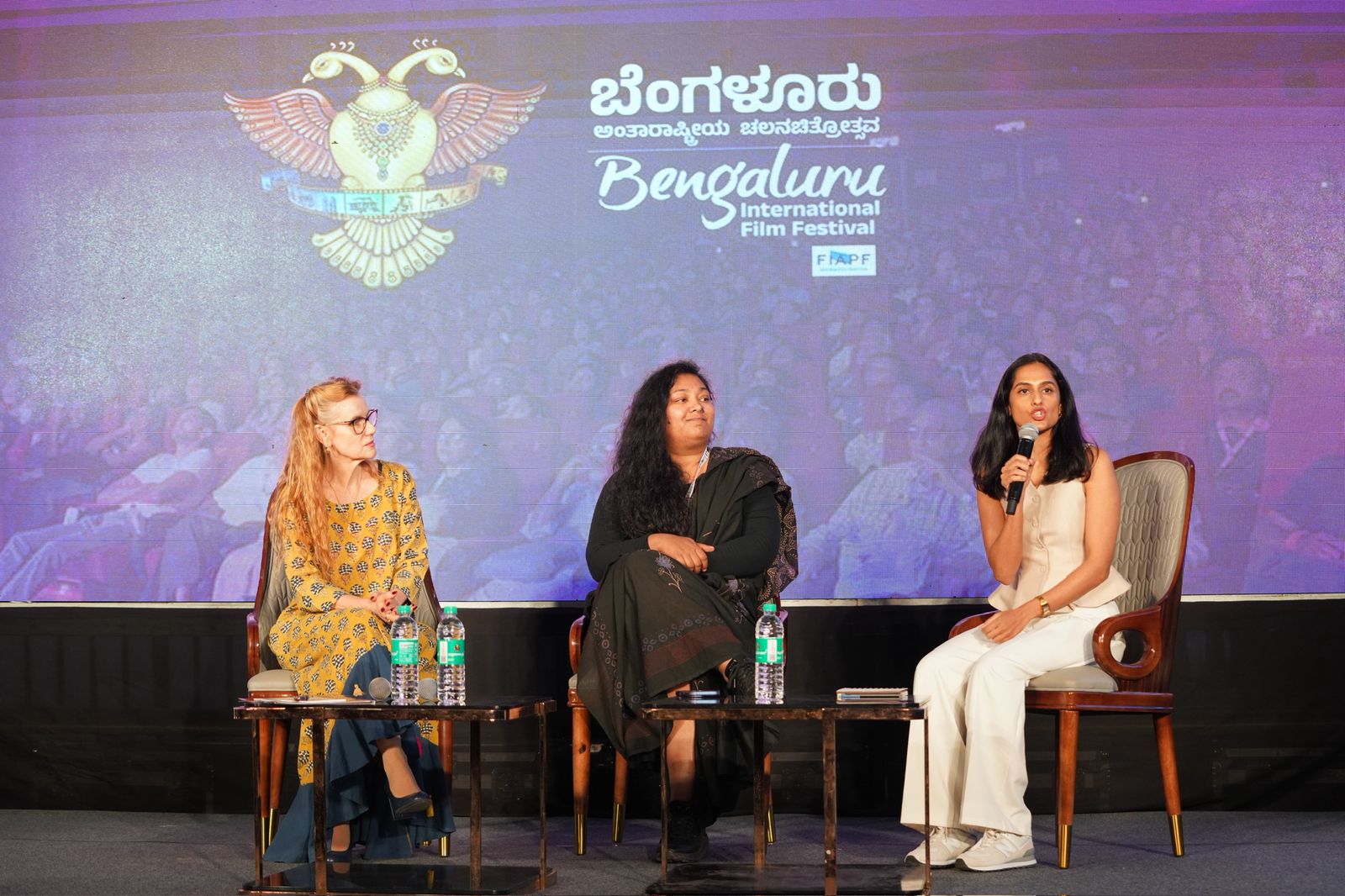
Bengaluru,NFAPost: As the 17th Bengaluru International Film Festival moved into its sixth day, the conversation shifted decisively from cinema as craft to cinema as power. A panel discussion titled “Women Directors Changing the Language of Cinema”brought together filmmakers and audiences for a searching, at times uncomfortable, examination of how gender, authority and representation continue to shape the film industry—both on screen and behind the camera.
Moderated by Kannada filmmaker Sindhu Sreenivasa Murthy, the session featured Indian director Nidhi Saxena and German actor-director and coach Jacqueline Roussely. Drawing from their personal and professional journeys, both speakers offered incisive insights into working within industries still structured by deeply patriarchal norms.
Authority on Set: A Constant Negotiation
Nidhi Saxena, known for films such as Secret of a Mountain Serpent and Sad Letters of an Imaginary Woman, spoke candidly about the everyday challenges women directors face on film sets. Despite years of experience, she said, women are still required to constantly prove their legitimacy as leaders.
“Film sets are spaces of male authority,” Saxena observed. “As a woman director, you are either expected to shed all signs of femininity and become aggressive, or to remain endlessly polite and accommodating. Neither of these expectations has anything to do with creative competence.”
She recounted instances where she was compelled to remove crew members who openly resisted her authority, underscoring how gendered power dynamics translate into routine workplace friction.
“Respect for a woman’s creative vision is still negotiable in ways it is not for men,” she said, pointing out that such resistance is rarely framed as misconduct but rather normalised as ‘creative disagreement’.
The Camera as a Political Tool
Beyond workplace hierarchies, Saxena turned the discussion toward the grammar of cinema itself—arguing that the camera has long functioned as a tool of gender bias.
“Movement, speed and agency are coded as masculine,” she explained. “Men are shown in full bodies, in action, driving the story forward. Women, on the other hand, are filmed slowly, fragment by fragment—lips, waist, cleavage—reduced to objects rather than subjects.”
This fragmentation, she argued, strips women of narrative agency and reinforces their role as spectacles of desire rather than drivers of the story.
“This visual language is so deeply normalised that it often goes unquestioned,” Saxena said. “Even well-meaning filmmakers reproduce it without realising how violent it can be.”
Inherited Gazes and Invisible Barriers
Jacqueline Roussely echoed many of these concerns from the context of European cinema. While acknowledging that German films today feature more ‘strong’ female characters, she questioned the cost at which this strength is achieved.
“Women are allowed power only when they abandon softness,” Roussely noted. “They must be more brutal, more emotionally restrained, sometimes more ruthless than men to be taken seriously.”
She offered a crucial insight into how even women filmmakers can unconsciously perpetuate the male gaze.
“Cinema for over a century has been shaped by men—writers, cinematographers, directors,” she said. “That language becomes what all of us learn. So even women sometimes reproduce it, not because they want to, but because it is the only grammar available.”
Roussely framed this struggle as part of a broader social conditioning that assigns rigid roles to all genders.
“This transition is not complete,” she emphasised. “We are still in the middle of it, and it affects men as much as women.”
The Glass Ceiling in Creative Industries
Addressing structural inequality, Roussely invoked the metaphor of the glass ceiling to describe how women artists often find their growth stalled at a certain point.
“Women may enter the industry and even gain recognition,” she said, “but access to large budgets, big productions and long-term influence remains overwhelmingly controlled by men.”
Both speakers agreed that this imbalance is not merely a question of individual bias, but of systems that reproduce themselves unless actively challenged.
Solidarity as Strategy
The discussion concluded with a call for collective action. Saxena and Roussely stressed the importance of solidarity among women filmmakers, stronger unions, and shared platforms of support to confront entrenched hierarchies.
Changing cinema, they argued, is not only about placing more women behind the camera, but about dismantling the visual, narrative and institutional frameworks that have historically centred male experience.
As the audience engaged with the panel through questions and reflections, the session made one thing clear: the struggle to change the language of cinema is inseparable from the struggle to change society itself. At BIFFES, that conversation is no longer happening at the margins—but firmly in the spotlight.