On Day Two of his Australia tour, the Defence Minister underscores growing naval cooperation and invites deeper industrial partnerships under the Comprehensive Strategic Partnership.
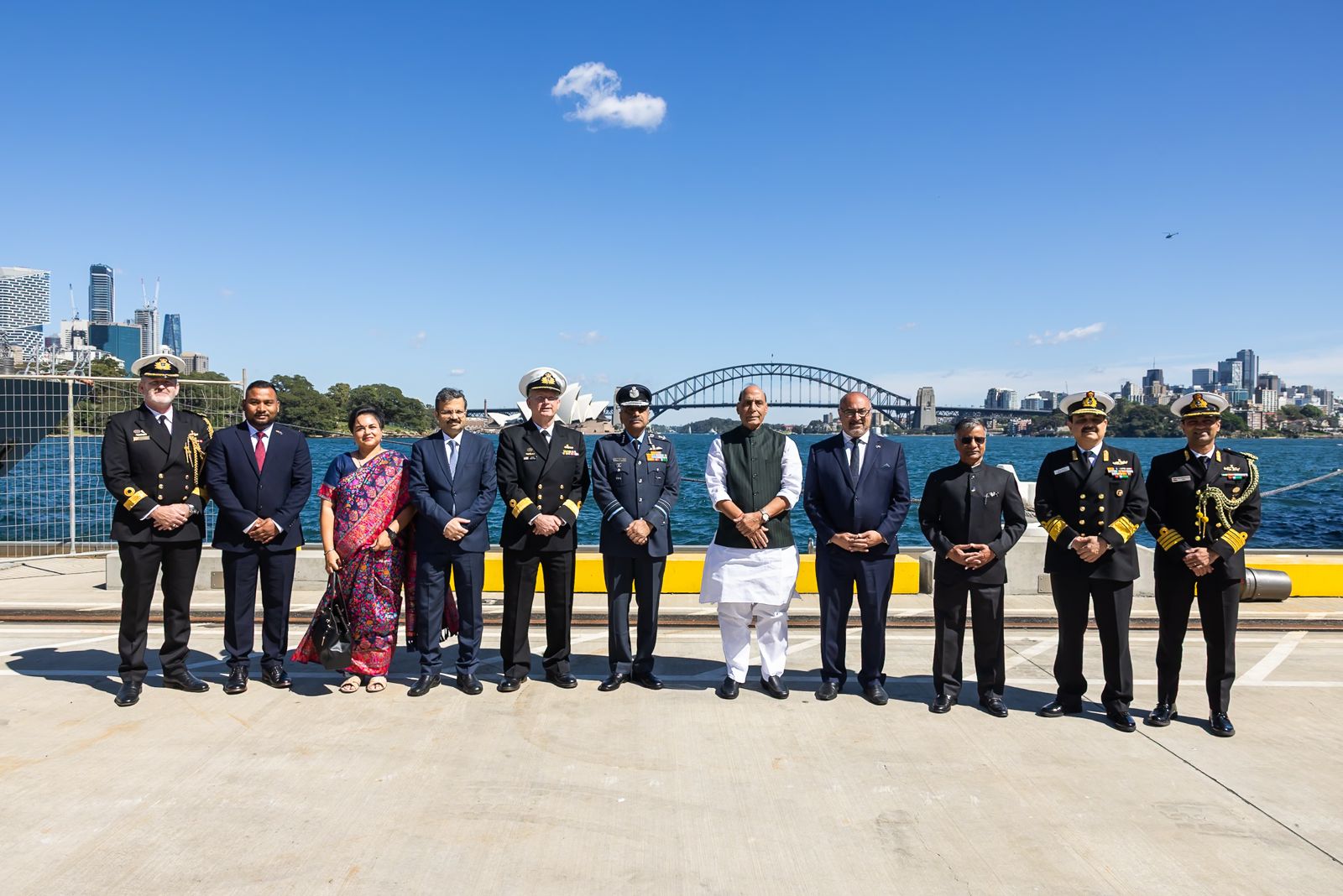
NFAPost, Bengaluru: Continuing his official visit to Australia, Raksha Mantri Shri Rajnath Singh on Friday visited the historic HMAS Kuttabul, the Royal Australian Navy’s strategic naval base in Sydney. Accompanied by Australia’s Assistant Minister for Defence, Mr Peter Khalil, the Defence Minister toured the state-of-the-art facilities at Sydney Harbour and was briefed on the operational capabilities of the Australian fleet.
The visit highlighted the deepening maritime ties between India and Australia and their shared commitment to ensuring peace, stability, and security across the Indo-Pacific region.
“India and Australia stand to gain immensely from enhanced maritime cooperation, particularly in areas such as joint exercises, logistics, and Maritime Domain Awareness,” said Shri Rajnath Singh, noting that the Indo-Pacific is central to both nations’ strategic interests.
The Minister’s visit to HMAS Kuttabul — a site with historic significance as Australia’s primary naval base — underscored the growing interoperability and mutual trust between the two nations’ armed forces. Both leaders discussed the potential for expanding naval collaboration, including shipbuilding, technology sharing, and coordinated efforts in regional maritime security.
Co-Chairing the First India-Australia Defence Industry Business Roundtable
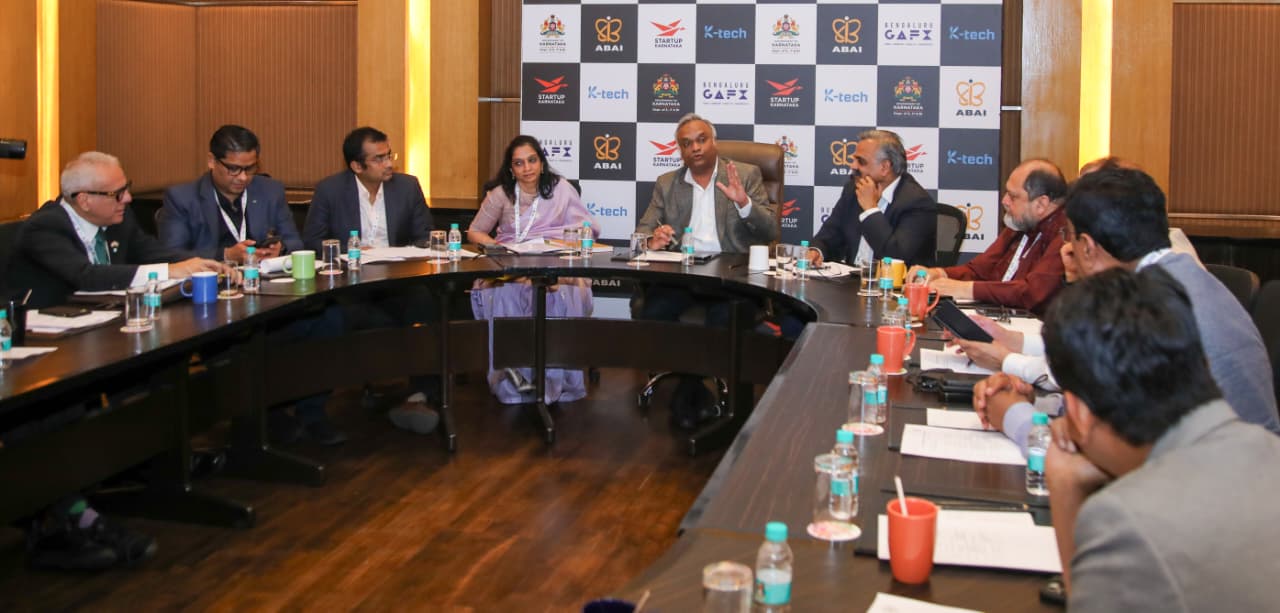
Later in the day, Shri Rajnath Singh co-chaired the maiden India-Australia Defence Industry Business Roundtablewith Mr Peter Khalil. The Roundtable brought together senior government officials, defence manufacturers, innovators, and business leaders from both countries.
The discussions focused on industrial partnerships, technology co-development, and defence innovation, aligning with India’s ‘Make in India’ and ‘Aatmanirbhar Bharat’ initiatives. Industry participants expressed strong interest in joint R&D, manufacturing of high-end defence systems, and capability development aimed at boosting self-reliance and regional resilience.
“India is committed to working closely with Australia to create a robust and sustainable defence industrial ecosystem that supports innovation, co-production, and technology exchange,” Shri Rajnath Singh said.
The Minister emphasised that the Roundtable represents not just a dialogue, but a declaration of intent to make India and Australia natural partners in business, technology, and innovation. He called for collaborative efforts in emerging sectors such as autonomous underwater systems, advanced materials, propulsion technologies, and quantum defence systems.
The event was jointly organised by the Ministry of Defence (Government of India), the Australian Department of Defence, the Newland Global Group, and the Australia-India Business Council, underscoring the growing synergy between the two nations’ defence and industrial ecosystems.
Interaction with Indian Community in Sydney
In the evening, the Raksha Mantri addressed members of the Indian community at a special reception hosted by the Consulate General of India, Sydney. He lauded the Indian diaspora for serving as a vital bridge between the two countries, contributing to Australia’s economy while preserving the rich cultural and emotional bond with India.
“The Indian community in Australia embodies the best of both worlds — representing India’s values, talent, and enterprise while strengthening Australia’s multicultural fabric,” Shri Rajnath Singh remarked.
He noted that the diaspora’s growing participation in business, academia, and innovation reflects the strengthening people-to-people ties that form one of the key pillars of the India-Australia Comprehensive Strategic Partnership.
The second day of Shri Rajnath Singh’s visit thus reaffirmed India’s strategic intent to expand defence cooperation with Australia — from maritime security to industrial co-development — while celebrating the enduring partnership shared by the two nations and their people.