From PARAM Shivay to PARAM Rudra, India’s National Supercomputing Mission is redefining self-reliance in high-performance computing — enabling groundbreaking research, innovation, and industrial transformation across the nation.
NFAPost, Bengaluru: “India’s mantra is Atmanirbharta through research — Science for Self-Reliance.”
These words from Prime Minister Narendra Modi echo the spirit of a nation determined to shape its technological destiny. And nowhere is this vision more evident than in the National Supercomputing Mission (NSM) — a flagship initiative that’s transforming India into a global supercomputing powerhouse.
Launched in 2015, the NSM represents one of the most ambitious technological undertakings in independent India’s history. The mission aims to build a comprehensive high-performance computing (HPC) ecosystem — designed, manufactured, and operated indigenously — to fuel cutting-edge research across sectors such as defense, healthcare, space, materials science, and artificial intelligence.
A Mission Born of Vision
Jointly steered by the Department of Science and Technology (DST) and the Ministry of Electronics and Information Technology (MeitY), and implemented by C-DAC, Pune, and the Indian Institute of Science (IISc), Bengaluru, the National Supercomputing Mission has followed a carefully crafted phased approach to indigenization.
- Phase I focused on assembling supercomputers domestically and building the foundational infrastructure.
- Phase II moved to indigenous manufacturing of components and software, achieving nearly 40% domestic value addition.
- Phase III, now underway, is about full indigenization — from processors and interconnects to system design and software stacks — cementing India’s self-reliant position in global HPC.
“The NSM is not just about machines — it’s about creating an ecosystem where India designs, builds, and uses its own supercomputers to solve its own problems,” says a senior C-DAC official closely involved with the mission.
Building a National Supercomputing Fabric
In just a decade, India’s supercomputing capacity has grown exponentially.
As of March 2025, 34 supercomputers with a combined capacity of 35 Petaflops have been deployed across premier institutions including IISc, various IITs, C-DAC, and research labs in Tier-II and Tier-III cities. Another 45 Petaflops of capacity is being added through new installations planned for 2024–25.
These systems are accessible via the National Knowledge Network (NKN) — a high-speed digital backbone linking academic and R&D institutions across the country. With over 85% utilization rates (some systems running at over 95%), these machines are driving research that once demanded foreign collaboration.
Over 10,000 researchers, including 1,700 PhD scholars, have benefited directly from NSM’s facilities, producing more than 1,500 scientific papers. Areas of impact include drug discovery, climate modeling, disaster management, astrophysics, energy security, and materials research.
“The NSM has democratized access to computational power,” notes Prof. Ajay Kumar of IIT Kanpur. “Students and researchers from smaller institutions now have the same supercomputing access as those from the IITs — that’s a true revolution.”
Rudra: India’s Supercomputing Backbone
A major leap in indigenous capability came with the development of the PARAM Rudra supercomputing series — systems built entirely on indigenously designed HPC servers, named Rudra.
These servers, developed by C-DAC, are India’s first high-performance computing platforms comparable to global counterparts. Deployed at multiple centers across India — including Pune, Delhi, and Kolkata — PARAM Rudra systems power research in physics, earth sciences, and cosmology.
To enable ultra-fast data transfer between computing nodes, C-DAC has also developed “Trinetra”, India’s own high-speed interconnect technology. The Trinetra-A version operates at 100 Gbps, already deployed in PARAM Rudra at Pune, while Trinetra-B (200 Gbps) will feature in the upcoming 20 Petaflop PARAM Rudra at C-DAC Bengaluru.
AIRAWAT: India’s Leap into AI Supercomputing
Complementing the NSM, the government has launched AIRAWAT — Artificial Intelligence Research, Analytics and Knowledge Assimilation Platform. This national AI compute infrastructure aims to provide 200 Petaflops of mixed-precision AI compute power, scalable up to 790 AI Petaflops.
In 2023, the AIRAWAT AI Supercomputer ranked 75th globally on the Top 500 Supercomputers list, making India one of the world’s leading AI supercomputing nations.
This platform will serve as a shared compute resource for Technology Innovation Hubs, startups, and academic institutions nationwide.
Training India’s Future HPC Workforce
Beyond infrastructure, NSM’s success rests on cultivating human capital.
Five dedicated HPC Training Centres — in Pune, Kharagpur, Chennai, Palakkad, and Goa — have trained over 22,000 individuals in high-performance computing and AI. The goal: to create a generation of scientists, engineers, and innovators fluent in HPC-driven research.
“Human resource development is the foundation,” emphasizes a MeitY spokesperson. “Supercomputers are only as powerful as the people who use them.”
Synergy with the India Semiconductor Mission
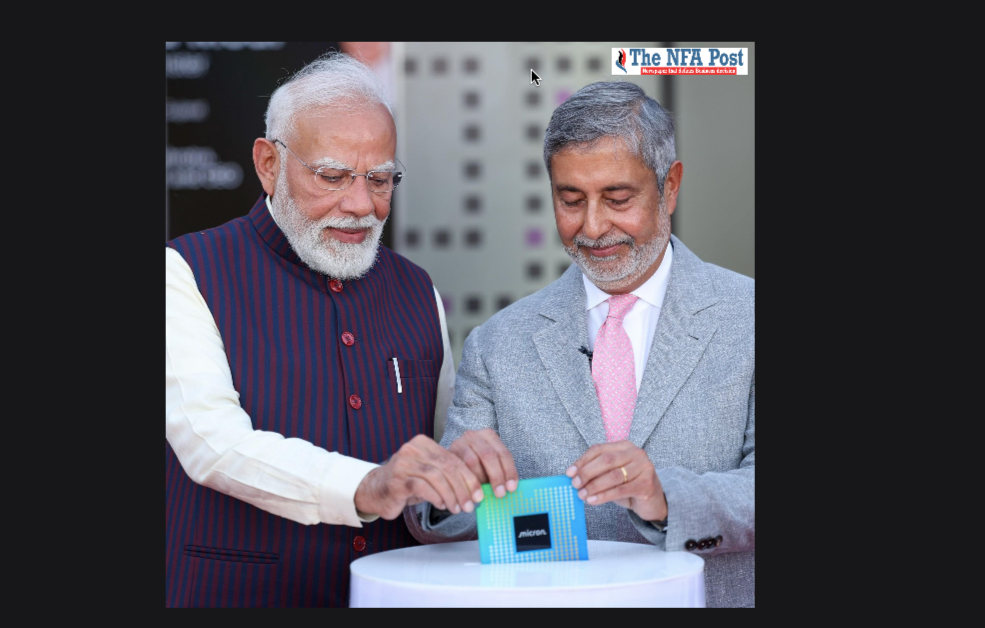
The India Semiconductor Mission (ISM), launched under the Digital India initiative, is expected to play a transformative role in the next phase of NSM. Supercomputers rely on cutting-edge processors, memory chips, and accelerators — areas where India has long depended on imports.
With ISM’s push toward indigenous semiconductor manufacturing, India will soon be able to design and produce these critical components domestically — making future supercomputers faster, more efficient, and more affordable.
This synergy between NSM and ISM represents a decisive step toward technological sovereignty.
A Journey Toward Global Leadership
From the first indigenously built PARAM Shivay at IIT (BHU) Varanasi in 2019 to the sophisticated PARAM Pravegaat IISc Bengaluru and PARAM Rudra in 2024, India’s supercomputing story is one of steady evolution — from assembly to innovation.
With a total investment exceeding ₹1,874 crore, the mission is not just advancing national research capacity but also anchoring India’s position in the global HPC landscape.
As Prime Minister Modi remarked at the 2024 dedication ceremony of the PARAM Rudra systems,
“Supercomputers are not just machines — they are the engines of innovation that will power India’s digital, scientific, and strategic future.”
Conclusion: Computing a Self-Reliant Future
The National Supercomputing Mission embodies India’s broader vision of Atmanirbhar Bharat — building indigenous capability in critical technologies that define global leadership in the 21st century.
As India prepares to deploy new generations of exascale-ready supercomputers, the NSM stands as a testament to what strategic investment, institutional collaboration, and visionary leadership can achieve.
From accelerating discovery to empowering students, the NSM is more than a mission — it’s a movement.
A movement driving India toward a future where knowledge, innovation, and computing power are truly made in India, for the world.