India’s private space sector enters a new era as Skyroot’s state-of-the-art campus becomes a symbol of the nation’s innovation surge and rising global ambition.
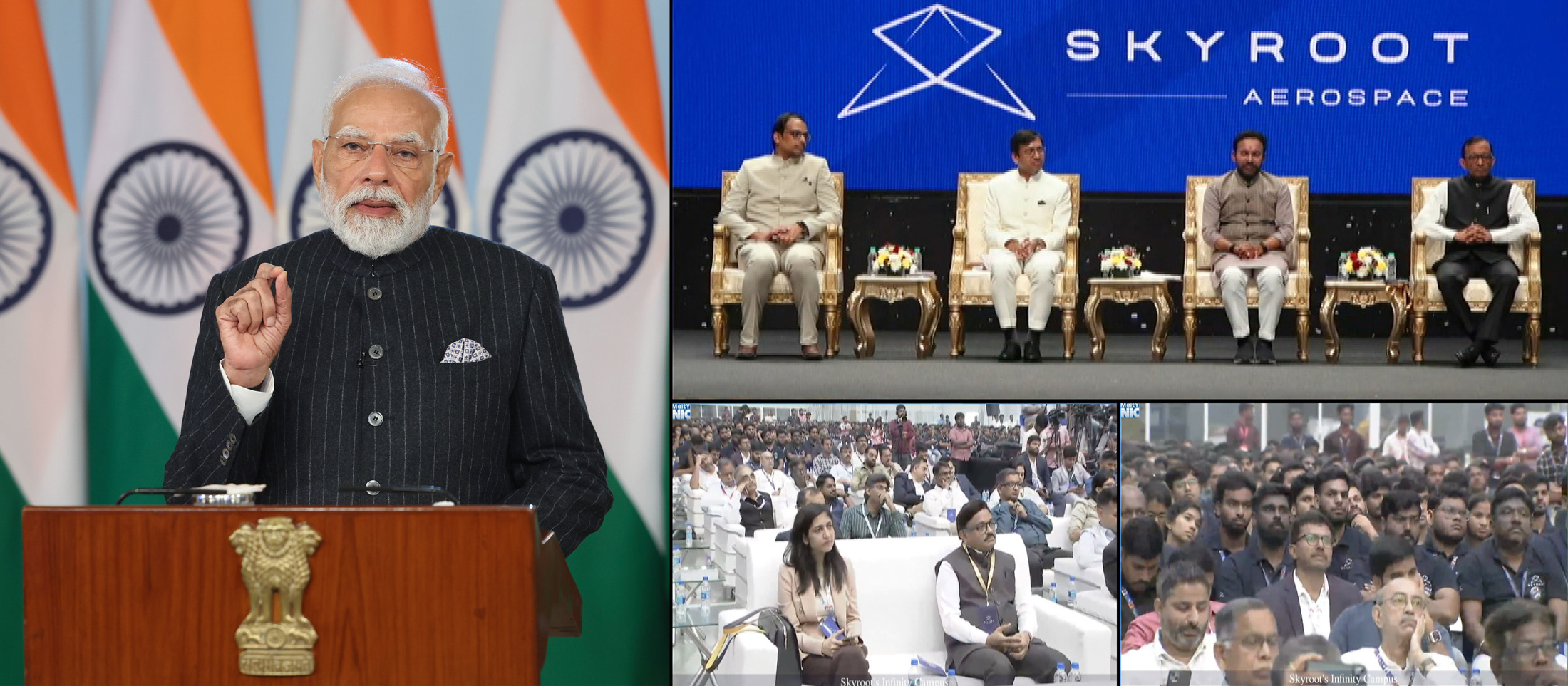
NFAPost, Bengaluru: Prime Minister Narendra Modi on Thursday inaugurated Skyroot Aerospace’s ‘Infinity Campus’ in Hyderabad via video conferencing, marking a milestone moment for India’s rapidly accelerating private space ecosystem. During the ceremony, the Prime Minister also unveiled Vikram-I, Skyroot’s first orbital-class launch vehicle designed to place satellites into orbit — a capability held by only a few private companies worldwide.
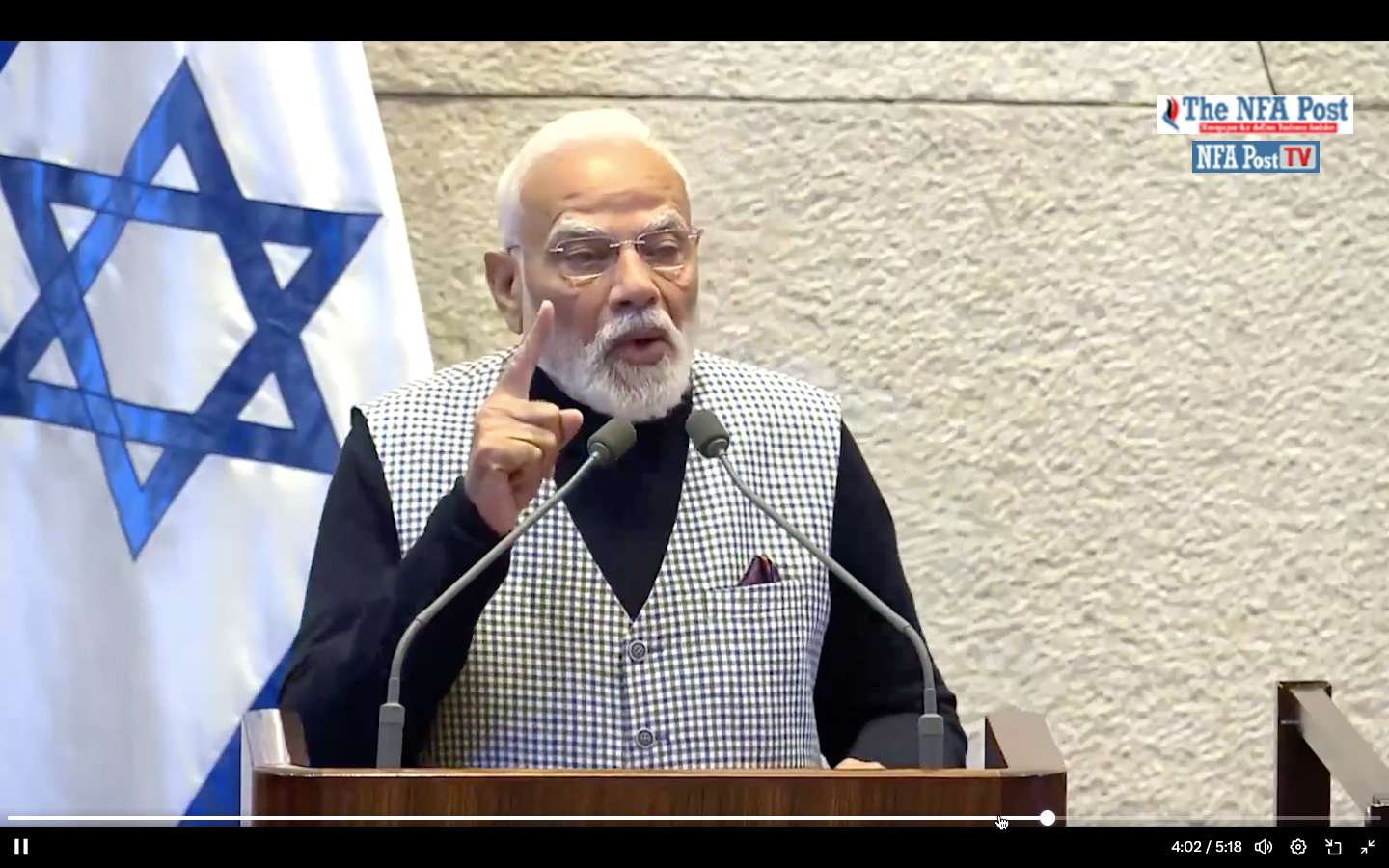
Calling the occasion “a reflection of India’s new thinking and innovation-first mindset,” the Prime Minister said the nation is experiencing an “unprecedented opportunity in the space sector” driven by youth entrepreneurship and deep-tech capability.
“Our youth power, with its innovation, risk-taking ability and entrepreneurship, is reaching new heights,”
— Prime Minister Narendra Modi
Skyroot as a Symbol of India’s New Space Ambition
Congratulating Skyroot founders Pawan Kumar Chandana and Naga Bharath Daka, the Prime Minister praised their journey from young ISRO engineers to pioneering space entrepreneurs.
“They trusted themselves, they did not shy away from taking risks. Today, the entire nation is witnessing their success and feeling proud,”
— PM Modi
Skyroot’s Infinity Campus — a 200,000 sq ft integrated facility — will enable the company to design, develop, assemble and test multiple launch vehicles, with the capacity to produce one orbital rocket every month. The unveiling of Vikram-I marks Skyroot’s entry into the global small satellite launch market, building on its path-breaking Vikram-Ssub-orbital launch in 2022, the first by an Indian private company.
India’s Space Rise: From Bicycle-Carried Payloads to Global Leadership
Reflecting on India’s storied space journey, the Prime Minister recalled the nation’s humble beginnings — from carrying rocket parts on bicycles — to becoming home to some of the world’s most reliable launch vehicles.
“The height of dreams is determined not by resources but by resolve,”
— PM Modi
He credited ISRO for laying a foundation of credibility, capacity, and scientific excellence that has given India a distinct identity in the global space arena.
Historic Reforms That Sparked a Private Space Revolution
PM Modi underlined that in the last six to seven years, India has transformed its space architecture into an open, cooperative, and innovation-driven ecosystem. Key reform milestones include:
- Opening the space sector to private players
- Establishing IN-SPACe to provide startups access to ISRO infrastructure
- Implementing the Indian Space Policy to streamline commercialization
- Providing opportunities for startups to co-develop technologies with national agencies
“When the government opened the space sector, our youth — especially Gen Z — came forward to make the most of the opportunity,”
— PM Modi
Today, he noted, over 300 space startups are propelling India’s private space revolution, many of them launched from rented rooms with tiny teams but immense determination.
Global Opportunity: Small Satellites, Big Markets
The Prime Minister highlighted that the demand for small satellites is rising worldwide, alongside increasing launch frequency.
“In the coming years, the global space economy will grow manifold. This is a very significant opportunity for India’s youth,”
— PM Modi
He emphasized that India possesses capabilities matched by only a few nations: world-class engineers, advanced manufacturing, reliable and cost-effective launch systems, and a strong innovation mindset.
“Global companies want to manufacture satellites in India, avail our launch services, and form technology partnerships,” he said.
India’s Broader Tech Transformation: From Space to Semiconductors
Connecting the rise of the space sector to India’s larger deep-tech transformation, the Prime Minister noted that startups today span FinTech, AgriTech, HealthTech, ClimateTech, EduTech, and DefenceTech, with Gen Z leading in innovation.
“India is no longer confined to apps and services; we are advancing rapidly in deep-tech, manufacturing, and hardware innovation,”
— PM Modi
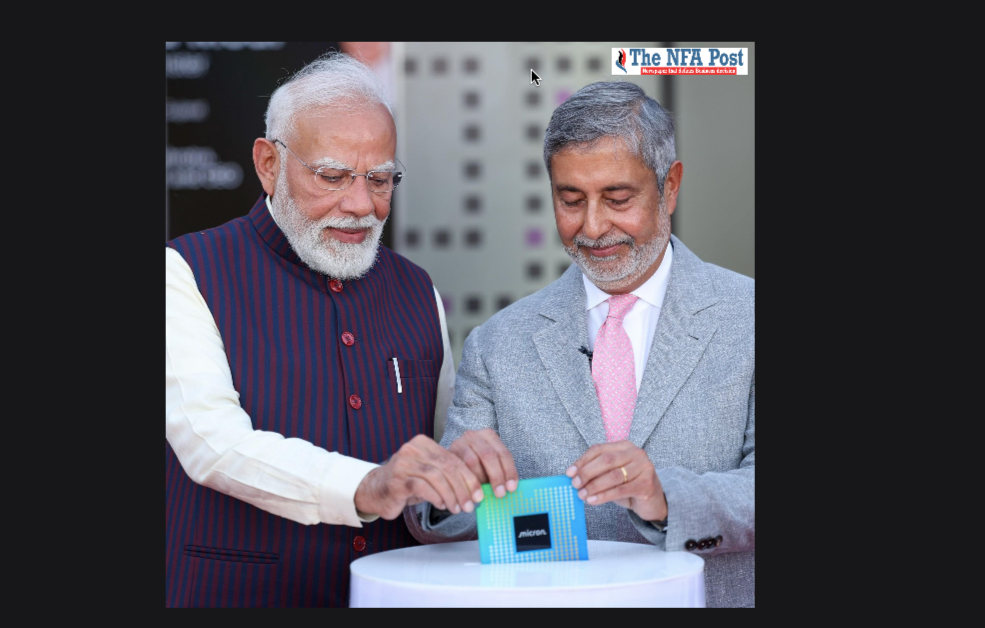
He highlighted progress in the semiconductor sector, including upcoming fabrication units and chip design hubs, framing them as crucial to India’s technological self-reliance and global supply chain strength.
Future Reforms: Opening the Nuclear Sector
In a significant signal of upcoming policy direction, PM Modi announced that India is preparing to open its nuclear sector to private innovation, creating opportunities in small modular reactors, advanced reactors, and clean energy technologies.
Backing Young Innovators and Research Excellence
The Prime Minister reaffirmed the government’s commitment to providing maximum opportunities for research and innovation:
- Establishment of the National Research Foundation
- One Nation, One Subscription for access to global scientific journals
- ₹1 lakh crore Research, Development & Innovation Fund
- Over 10,000 Atal Tinkering Labs established; 50,000 more planned
“The coming era belongs to India — to its youth and to its innovations,”
— PM Modi
He reiterated India’s ambition of creating five new space-tech unicorns in the next five years, noting Skyroot’s trajectory as a strong indicator of that future.
A New Chapter for India’s Space Century
Concluding his address, PM Modi urged the nation to rally together to make the 21st century the century of India — on Earth and in space.
He extended his best wishes to the Skyroot team and reaffirmed the government’s unwavering support to every startup, scientist, engineer, and innovator shaping the nation’s space destiny.