Two years ahead of its original timeline, India’s semiconductor mission gathers momentum as global giants back the country’s bid to become a full-stack chip and AI powerhouse.
Bengaluru, NFAPost: India’s long-stated ambition of becoming a serious force in the global semiconductor industry is no longer a distant aspiration—it is rapidly turning into an industrial reality. Commercial production from four semiconductor plants in the country is now expected to begin in 2026, significantly ahead of the original five-year timeline laid out when the national mission was launched in early 2022.
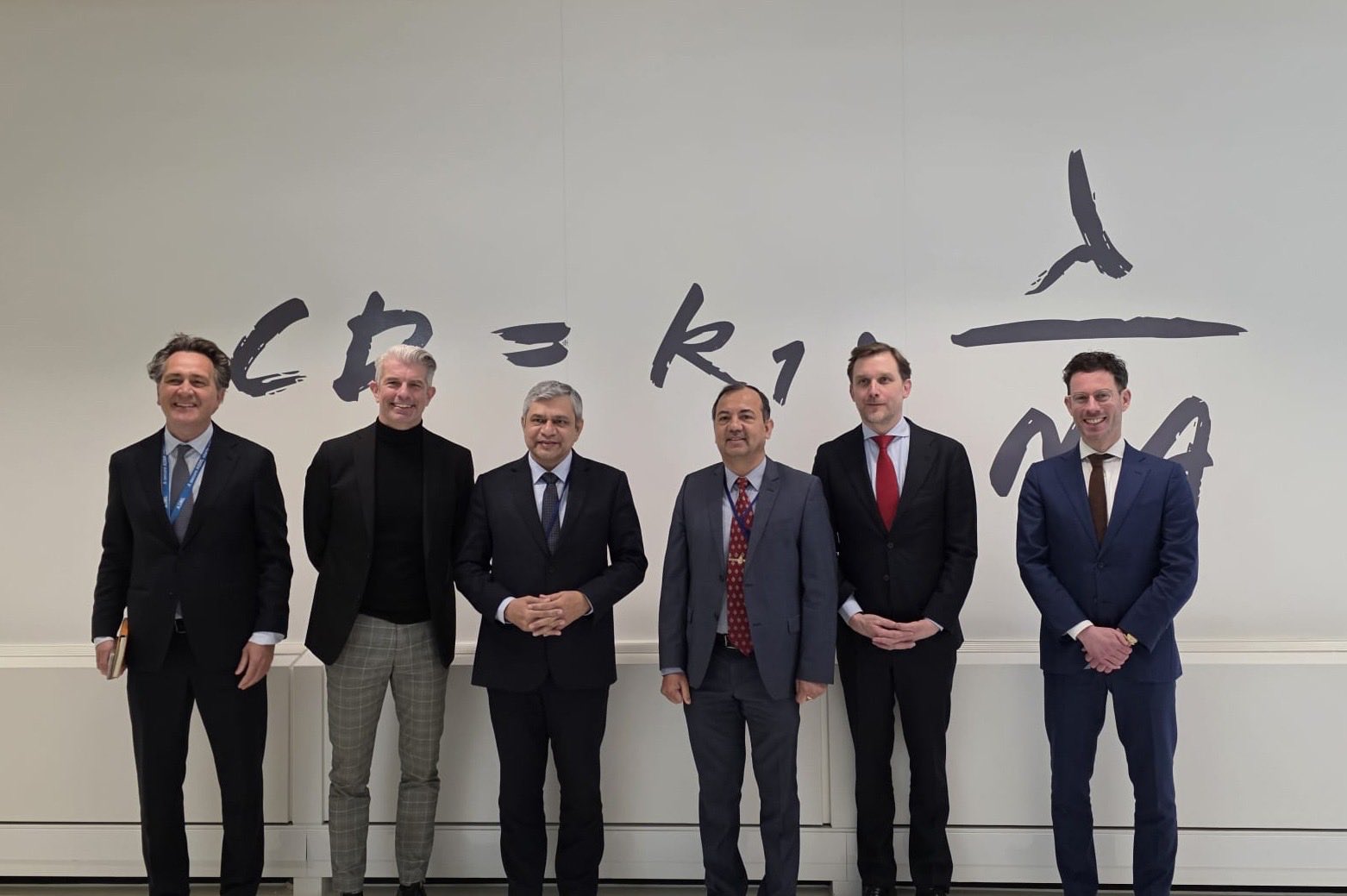
The accelerated timeline was confirmed by Union Minister for Electronics and Information Technology Ashwini Vaishnaw during a recent interaction from the Netherlands, where he visited key technology partners central to India’s semiconductor roadmap. The update signals not just faster execution, but a growing international confidence in India’s ability to build and sustain one of the world’s most complex industrial ecosystems.
“We had taken a target that within five years, we should start the commercial production,” Vaishnaw said. “Very glad to say that the first commercial production will start in 2026 itself. Actually, four of the plants will start their commercial production in 2026.”
The Netherlands Visit and the ASML Factor
A central highlight of the minister’s visit was his engagement with ASML, the Dutch company that sits at the heart of the global semiconductor value chain. ASML is the world’s dominant supplier of advanced lithography systems—machines so complex and precise that they are indispensable for manufacturing modern chips.
The upcoming fabrication plant at Dholera in Gujarat, India’s flagship semiconductor project, will rely on ASML’s cutting-edge lithography tools to print intricate circuits onto silicon wafers. This alone places India among a very small group of nations trusted with the most advanced chipmaking equipment.
“ASML here in the Netherlands is the world’s leading provider of lithographic tools, and they are the ones who enable practically every chip which is manufactured in the world,” Vaishnaw noted. “Our Fab in Dholera will be using the ASML equipment. This is going to be a major, major thing for India.”
The significance of this partnership goes beyond hardware procurement. Access to such tools reflects geopolitical trust, policy stability, and long-term confidence in India as a reliable manufacturing destination—factors that have historically limited entry into advanced semiconductor fabrication.
A Vote of Confidence from Global Industry Leaders
India’s progress is also resonating across global boardrooms. According to the minister, this confidence was clearly visible at the World Economic Forum in Davos, where a semiconductor roundtable brought together leaders from across the global chip industry.
“The semiconductor round table where practically all the big leaders of the semiconductor world were present—they showed the confidence in India’s journey so far,” Vaishnaw said. “They would like to contribute to our journey in every which way.”
This confidence is translating into action. Equipment manufacturers, materials suppliers, and ecosystem partners are increasingly exploring or committing to establishing operations in India, drawn by policy clarity, scale, and the promise of long-term demand.
Building More Than Fabs: The Talent and Supply Chain Play
While fabrication plants often dominate headlines, policymakers are keenly aware that chips are not built by machines alone. The semiconductor ecosystem requires a deep pool of skilled engineers, technicians, researchers, and process specialists—a gap India is moving quickly to close.
The progress on talent development has outpaced expectations.
“We had kept a target of 85,000 talent development over 10 years,” Vaishnaw revealed. “And within four years we have been able to develop 65,000.”
This rapid upskilling effort spans chip design, manufacturing processes, testing, packaging, and equipment maintenance. It also strengthens India’s already robust semiconductor design capabilities, where Indian engineers play a key role in global chip development.
Semiconductors as the Backbone of India’s AI Strategy
The semiconductor push is closely tied to India’s broader ambitions in artificial intelligence. Countering perceptions that India may remain a “second-tier” AI power, Vaishnaw outlined a far more expansive vision—one that integrates infrastructure, hardware, and energy with software and applications.
India, he said, is seeing nearly $90 billion in committed investments towards AI infrastructure. More importantly, the country is working across all five layers of the AI stack: applications, models, algorithms, hardware, and the underlying energy systems required to run data-intensive workloads.
By strengthening its domestic chip manufacturing capabilities, India aims to reduce strategic dependence, ensure supply-chain resilience, and create a virtuous cycle where AI demand fuels semiconductor growth—and vice versa.
A Strategic Inflection Point
Taken together, the early commissioning of four semiconductor plants, deepening global partnerships, accelerated talent development, and alignment with AI ambitions mark a strategic inflection point for India’s technology ecosystem.
The road ahead remains challenging—semiconductor manufacturing is capital-intensive, technologically unforgiving, and globally competitive. Yet, the pace of execution so far suggests that India’s semiconductor mission is no longer just about catching up. It is about staking a credible claim in one of the most critical industries shaping the future of the global economy.
As commercial production draws closer in 2026, the real test will be consistency—of policy, quality, and scale. For now, the message from both New Delhi and global industry leaders is clear: India’s chip ambition has moved decisively from promise to progress.