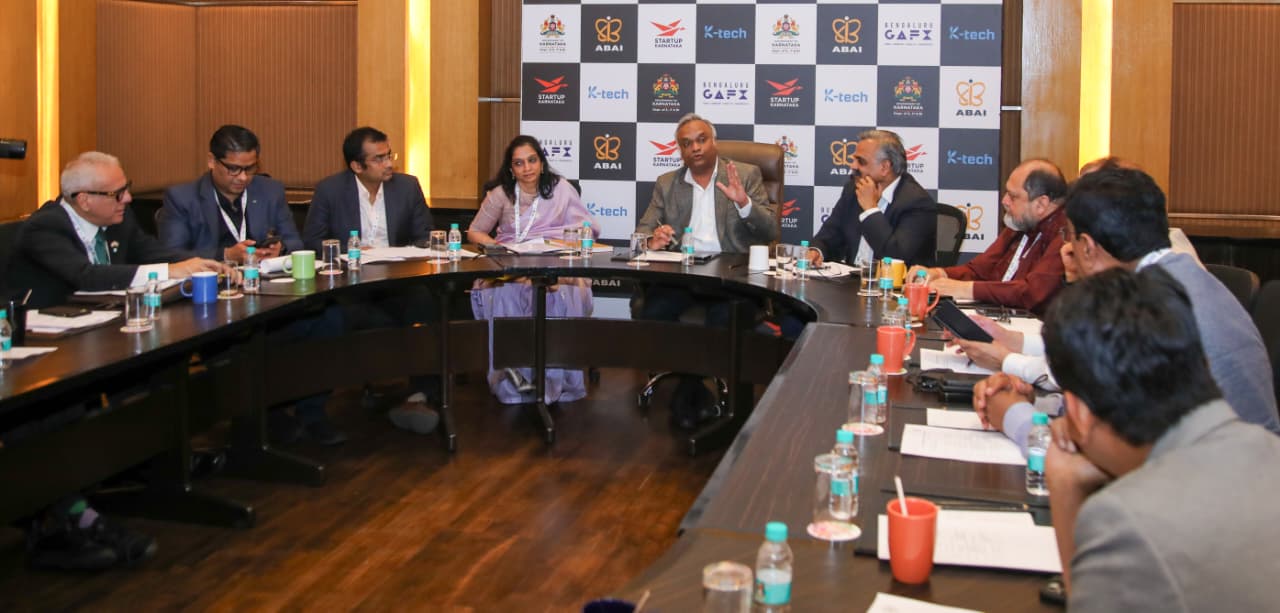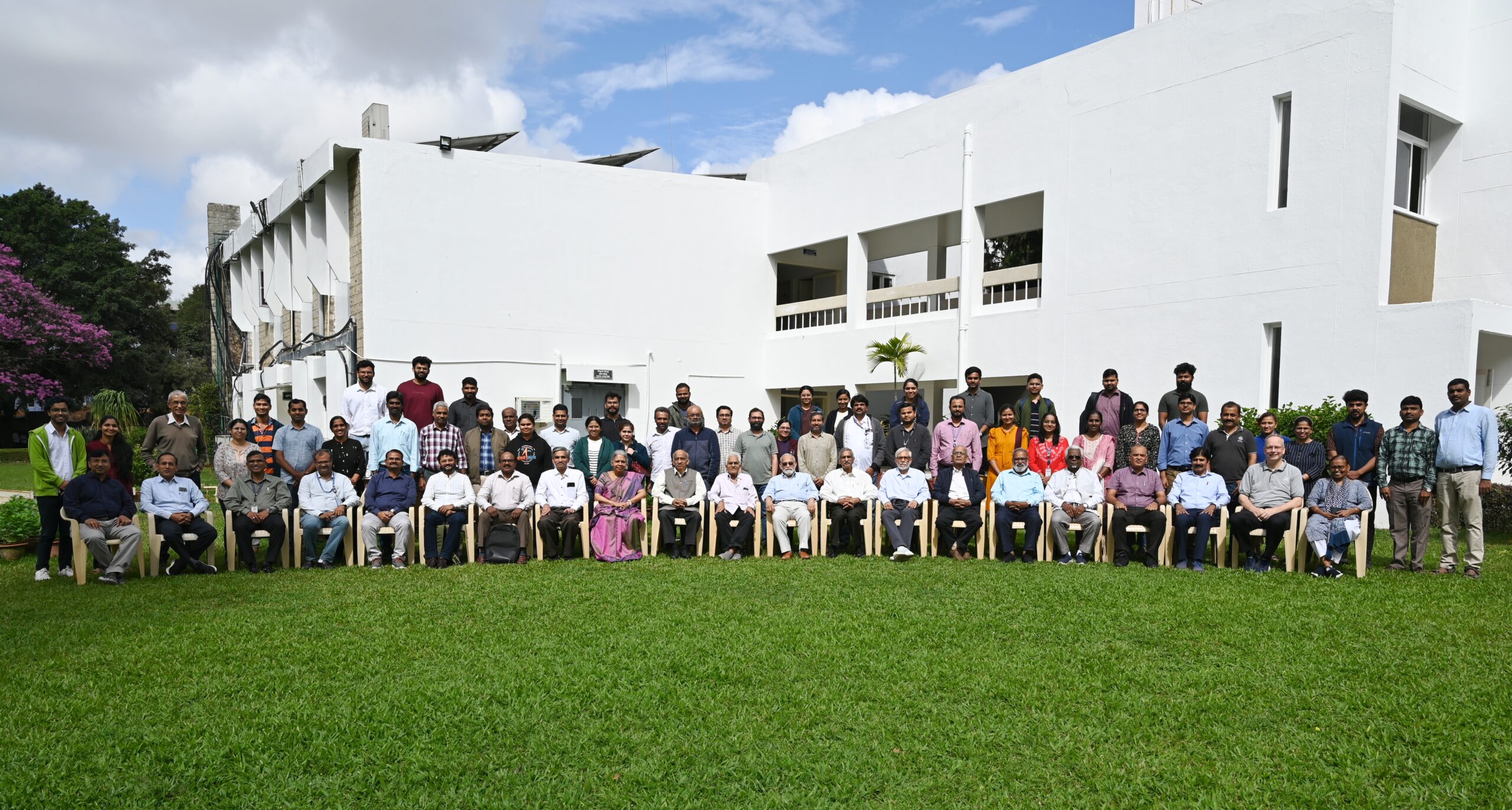
The Indian Institute of Astrophysics (IIA) on 4 December 2025 marked a milestone moment in the country’s space-science journey: ten years of continuous operation of the UltraViolet Imaging Telescope (UVIT), the primary payload aboard AstroSat, India’s first multi-wavelength space observatory.
Bengaluru, NFAPost: Launched by ISRO on 28 September 2015, AstroSat was envisioned as a platform capable of observing the universe simultaneously in ultraviolet, soft X-ray, and hard X-ray wavelengths. At the heart of this mission lies UVIT—designed, assembled, tested, and delivered by IIA at its Hosakote campus—whose doors first opened to the cosmos on 30 November 2015. To commemorate the mission’s contributions and chart the course for future UV observatories, IIA hosted a one-day academic workshop bringing together scientists, engineers, and mission collaborators.
A Telescope That Opened India’s Ultraviolet Window to the Universe
“Since UV rays are absorbed by our atmosphere, they can only be observed using space telescopes,” noted Dr. Annapurni Subramaniam, Director of IIA and Calibration Scientist of UVIT. “The UVIT is India’s first UV space telescope and is the only operational telescope capable of observing in the far-UV apart from the Hubble Space Telescope.”
UVIT’s defining strengths—its large field of view and superior spatial resolution better than 1.5 arcseconds—have made it unparalleled among ultraviolet missions, outperforming NASA’s GALEX in key aspects. Its twin-telescope architecture allows one unit to observe in the near-ultraviolet and visual bands, while the other focuses on far-ultraviolet wavelengths.
According to C.S. Stalin, in-charge of the UVIT Payloads Operation Centre, “The UVIT is a twin telescope system… Its combination of a large field of view and high spatial resolution makes it a unique instrument for astronomy-related discoveries.”
A Legacy Built Through Collaboration
The UVIT project represents one of India’s most successful multi-institutional scientific collaborations. Led by IIA, the mission drew contributions from IUCAA (Pune), TIFR (Mumbai), several ISRO centres including URSC, LEOS, IISU, and SAC, as well as the Canadian Space Agency.
A dedicated laboratory—the MGK Menon Laboratory with high-grade clean rooms—was established at IIA’s CREST campus specifically for handling sensitive UVIT components. “We had to set up a special laboratory… to prevent contamination that will degrade them,” Dr. Subramaniam added. This facility has since supported multiple Indian space missions.
Speaking at the celebration, Shri A.S. Kiran Kumar, former Chairman of ISRO, reflected on the collaborative spirit behind UVIT’s success.
“This was not an easy task, primarily because the project needed commitment from a number of institutions. But this is what is needed to bring change in the country,” he said. “Our ability to understand the Universe improves whenever we discover new ways of observing and measuring the cosmos.”
Science That Reshaped Understanding of the UV Universe
In its decade of operation, UVIT has observed 1,451 cosmic targets and has already contributed to about 300 research publications and 19 Ph.D. theses, with many more underway.
Among its most significant scientific achievements:
- Discovery of hot compact companion stars of Be stars
- Identification of Blue Straggler Stars in star clusters
- Insights into feedback mechanisms around active galactic nuclei
- Observation of novae in the Andromeda galaxy
- Detection of extended UV disks in dwarf galaxies and planetary nebulae
- Measurement of emissions from galaxies at redshift 1.42
- Studies linking ultraviolet and X-ray emissions from active galactic nuclei
- Characterisation of young star formation across galaxies
The UVIT Payload Operation Centre continues to refine science-ready images, uploading improved datasets to ISRO’s PRADAN archive, ensuring long-term accessibility for astronomers worldwide.
Looking Ahead: The Road to INSIST
As discussions concluded, the scientific community turned its attention to the future. Building on UVIT’s decade of experience, researchers are now proposing INSIST — the INdian Spectroscopic and Imaging Space Telescope, envisioned as a next-generation ultraviolet space observatory with greater sensitivity and wider capabilities.
If realized, INSIST could become India’s next major leap in space astronomy—further strengthening the nation’s leadership in UV astrophysics.
A Decade of Discovery, A Universe of Possibilities
The 10-year celebration of UVIT highlights not just a mission milestone but a testament to India’s growing scientific and engineering ecosystem. From designing precision optics to producing world-class research, the UVIT story captures India’s rising stature in space science—and signals a future where indigenous observatories continue to push cosmic boundaries.