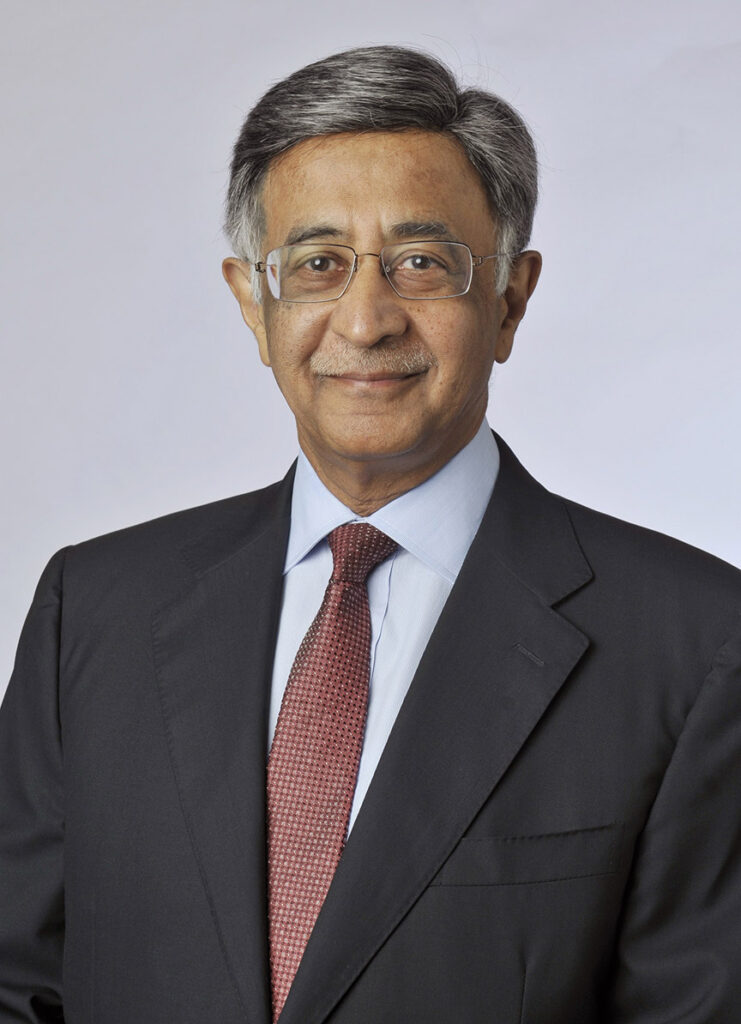
At the India Manufacturing Show 2025, Bharat Forge Chairman Baba Kalyani urges India to transform from an innovation-led economy to a “product nation,” powered by indigenous design, intellectual property, and large-scale manufacturing.
NFAPost, Bengaluru: India must think far beyond its $5 trillion GDP goal and aim for a $30–35 trillion economy built on science, design, and technology-driven manufacturing, said Baba Kalyani, Chairman of Bharat Forge Limited and head of the Advisory Board of the India Manufacturing Show (IMS 2025).
Delivering the keynote address at the seventh edition of IMS 2025 in Bengaluru, Kalyani outlined a bold roadmap for India’s economic transformation, asserting that the nation stands at the threshold of a once-in-a-century industrial opportunity.
“India aspires to grow at a double-digit trajectory, with eight times growth in GDP and a fifteen-fold rise in manufacturing,” Kalyani said. “This transformation is immense but achievable if India shifts from a resource-fuelled economy to one powered by science, technology, and design-led innovation.”
From Innovation to a Product Nation
Kalyani’s central message was clear — India must evolve from an innovation-led economy to a product-driven industrial powerhouse. He argued that “Make in India” and “Atmanirbhar Bharat” would find their true meaning only when Indian companies design, own, and manufacture their intellectual property domestically.
“If you design the product yourself, own the IP yourself, and manufacture it yourself — that is Atmanirbhar Bharat,” he said, drawing applause from the packed auditorium of industry leaders, policymakers, and entrepreneurs.
The Bharat Forge Chairman emphasised that India’s manufacturing expansion must not rely merely on assembly or low-cost labour but on deep integration of R&D, indigenous design, and high-value IP ownership.
“India has the talent to design world-class products — from automobiles to aerospace, from semiconductors to satellites. The same engineers who design for global corporations can design for India. The question is not of capability but of confidence,” he noted.
Science, Technology, and Anusandhan: The Road to Viksit Bharat
Kalyani echoed Prime Minister Narendra Modi’s recent call for a “Viksit Bharat” (Developed India) by 2047, asserting that industrialisation powered by science and technology was the only path forward.
Citing the Prime Minister’s national slogan, “Jai Jawan, Jai Kisan, Jai Vigyan, Jai Anusandhan”, Kalyani said the last two phrases—Vigyan (Science) and Anusandhan (Research)—encapsulate the core of India’s future economic vision.
“The road to a developed India in this digital era lies through science, technology, and innovation. We must integrate our scientific institutions with industry, so that innovation is not confined to labs but becomes the engine of manufacturing growth,” he said.
Empowering MSMEs: The Backbone of Industrial India
Acknowledging the government’s support for the micro, small, and medium enterprises (MSME) sector, Kalyani praised policies such as the PM Mudra Yojana, Credit Guarantee Scheme, and PM Vishwakarma Yojana, calling them vital enablers of industrial expansion.
He particularly highlighted the 2020 revision of the MSME definition, which expanded eligibility for small and medium enterprises, but said the time had come for another revision.
“I was telling the Hon’ble Minister that it’s time to revise the MSME definition again because they are growing and scaling up rapidly,” Kalyani said. “Our MSMEs are no longer micro. They are building sophisticated products, exporting globally, and driving India’s industrial base.”
He reminded the audience that MSMEs contribute nearly 30 per cent of India’s GDP and 45 per cent of its manufacturing output, yet they need more R&D integration, design support, and access to global markets to achieve scale.
“We must stop romanticising the struggle of MSMEs as a badge of honour,” he remarked. “Our focus should be on engineering scale with intent — helping small enterprises become large enterprises through technology and design excellence.”
Global Lessons and Opportunities for India
Drawing comparisons with global industrial models, Kalyani cited how the United States, Germany, Japan, South Korea, and China rose to economic prominence through technology-led industrial ecosystems.
However, he warned that many developed nations, particularly in Europe, are now facing deep structural challenges.
“In Germany, where Bharat Forge operates six manufacturing plants, we are witnessing massive shortages of skilled manpower, seven- to eight-fold increases in energy costs, heavy regulatory burdens, and high taxes,” he said. “The famous Mittelstand — the backbone of German industry — is under great stress.”
These global disruptions, he said, have created an unprecedented opportunity for India to emerge as the world’s preferred manufacturing hub.
“Global supply chains are being restructured. The world is looking for alternative destinations, and India today stands among the top choices. Never before has India been as attractive for manufacturing as it is now,” he declared.
Kalyani cited China’s “Little Giants” initiative as a successful model of nurturing small innovators into global industrial leaders. China’s state-supported MSME strategy, he noted, had transformed about 14,600 firms into global champions dominating sectors such as electronics, electric vehicles, and automation.
“Companies like Huawei, DJI, and BYD weren’t born giants — they were built brick by brick,” he said. “India can and must replicate this model by fostering MSMEs that innovate, scale, and own their intellectual property.”
Engineering Scale, Building Confidence
For Kalyani, India’s industrial future rests on combining “know-how” with “know-why” — mastering both the skills of production and the science behind design.
“Whatever we manufacture, we must also design. It is not enough to assemble — we must understand, innovate, and improve,” he said. “This is not just about technology. It is about national confidence — the belief that Indian products can lead the world.”
He urged industry and academia to deepen collaboration, calling for more centres of excellence in manufacturing technologies, materials science, and design innovation.
“The next phase of India’s growth must come from the fusion of engineering and imagination,” he said. “Every MSME, every startup must see itself not just as a manufacturer, but as a creator of ideas and products.”
The Century of India
Concluding his address, Kalyani described the current moment as a “once-in-a-century industrial transformation”, powered by digital innovation, demographic advantage, and geopolitical opportunity.
“The transformation is happening at high speed and high velocity,” he said. “If we continue to invest in design, technology, and manufacturing at scale, the 21st century will truly be India’s century.”
He expressed gratitude to the IMS Foundation and the Karnataka Chapter of Laghu Udyog Bharati for organising the event, which has brought together more than 15,000 enterprises and 500 exhibitors from sectors including defence, automotive, aerospace, heavy engineering, and advanced manufacturing.
“This gathering represents the spirit of new India — innovative, ambitious, and self-reliant,” Kalyani said. “IMS has become a platform where India’s manufacturing ambition meets its entrepreneurial energy.”