Charting India’s Path to Space and Defence Leadership Through Innovation, Collaboration, and Technology Reforms
Bengaluru, NFAPost: The Sheraton Grand Bengaluru Whitefield Hotel and Convention Centre was abuzz with energy, ideas, and innovation as over 850 delegates from across the globe gathered for the second edition of IEEE SPACE 2025—the flagship SPace, Aerospace and defenCE Conference organized by IEEE AESS, AP-S, MTT-S, and the IEEE Bangalore Section.
Over the course of three days, thought leaders, policymakers, researchers, industry captains, and young innovators converged to explore the cutting edge of technology, discuss the strategic imperatives for India, and envision a collaborative ecosystem for national self-reliance and global leadership.
A Galaxy of Leaders Opens the Event
The conference began with an impactful inaugural session graced by Dr. V. Narayanan, Chairman, ISRO; Dr. Samir V. Kamat, Secretary, DDR&D and Chairman, DRDO; Dr. Pawan Goenka, Chairman, IN-SPACe; and IEEE’s global leadership including Prof. Kathleen Kramer (2025 President), Mr. Tom Coughlin (2024 President), and Ms. Mary Ellen Randall (2026 President-Elect).
In his keynote address, Dr. Narayanan—a pioneer in India’s cryogenic propulsion capabilities—recounted ISRO’s journey from solid to semi-cryogenic and cryogenic technologies, highlighting how domestic innovation had placed India among the six nations capable of operating complex cryo stages. “Our goal,” he said, “is to design for future. We are not just launching rockets—we are launching possibilities.”
Dr. Kamat spotlighted DRDO’s breakthroughs in materials science and underwater defence technologies, while Dr. Goenka emphasized IN-SPACe’s focus on policy reforms, public-private partnerships, and a roadmap to increase India’s share in the global space economy from the current 2% to a targeted 10% by 2035.
Three Days of Unmatched Technical and Strategic Engagement
The conference featured 43 technical sessions, 14 parallel tracks, and 9 dedicated special sessions spanning diverse themes—from Quantum Technologies and Software Defined Radio (SDR) to AI/ML in Defence and Women-led Innovations.
A major highlight was the Panel Discussion on “SPACE Technologies for Atmanirbhar and Viksit Bharat”, where leaders from BEL, Airbus, DRDO, and URSC shared how India’s indigenous technology base is evolving toward autonomy and excellence. Dr. K Rajlakshmi Menon, DG (Aero), DRDO, who moderated the session, noted, “We are building not just for today but for the Bharat@100 vision.”
Another powerful moment came during the “Opportunities for Startups in SPACE” panel, where founders of GalaxEye, Astrome, TakeMe2Space, and SISIR Radar shared their journeys of collaboration with ISRO and DRDO, and their ambitions to make India a powerhouse of space-tech exports.
Engaging Plenaries and New Visions for India’s Tech Future
Among the most anticipated plenaries was by Prof. Nikku Madhusudhan from Cambridge University, who presented cutting-edge findings on the search for life beyond our solar system, including spectroscopy-based analysis of exoplanetary atmospheres.
In another standout plenary, Dr. D K Sunil, CMD of HAL, along with Steve Bleymaier, CTO, Ansys, and AVM Pavan Kumar, DG, DSA, discussed SPACE Ecosystem Development—bridging legacy institutions with deeptech startups and academia to forge a collaborative development path.
Role of States and Policy Leadership
The event also highlighted how states are aligning to India’s national space vision. In a forward-thinking panel on policy initiatives, senior bureaucrats from Karnataka and Gujarat detailed their respective space industrial corridors, incentives for startups, and capacity-building efforts.
Special Moments: Celebrating 50 Years of Aryabhata
On July 23, Dr. P. S. Goel, member of the original Aryabhata Spacecraft Realization Team, took the audience through a nostalgic yet inspiring journey of India’s first indigenously built satellite, launched in 1975. “It was not just a satellite,” he said, “but a declaration of intent from a young nation with big dreams.”
Women in SPACE and Young Leaders
This year’s conference also spotlighted diversity and youth through the “Women in SPACE” initiative and Young Faculty Laureate Program. Prof. Maria Sabrina Greco, 2025–26 IEEE AESS President, addressed a special session on radar waveform diversity and cognitive radars, while mentoring young women in STEM fields.
Nine strategic programs were launched, including:
- Student Authors Travel Grant
- AESS Volunteer Fellowship
- 3-Minute Thesis Program
- Free Workshop Registrations
- 52% subsidized registration for IEEE student members
These efforts collectively embodied the conference’s commitment to democratizing access to technology and knowledge.
Astronauts, AI and the Future of Aerospace
The crowd favorite on Day 2 was the interactive session with astronaut designates—Angad Pratap from India and Giovanna Estefania Ramirez Ruiz from Columbia—who shared their vision for the future of human spaceflight. Their participation symbolized the coming age of democratized access to space.
Following this was a high-powered panel on Vehicle Health Monitoring, with leaders from Boeing, Collins Aerospace, GE, and ADA exploring how data, AI, and embedded diagnostics are reshaping predictive maintenance and mission readiness.
Semiconductor Sovereignty: India’s Next Strategic Frontier
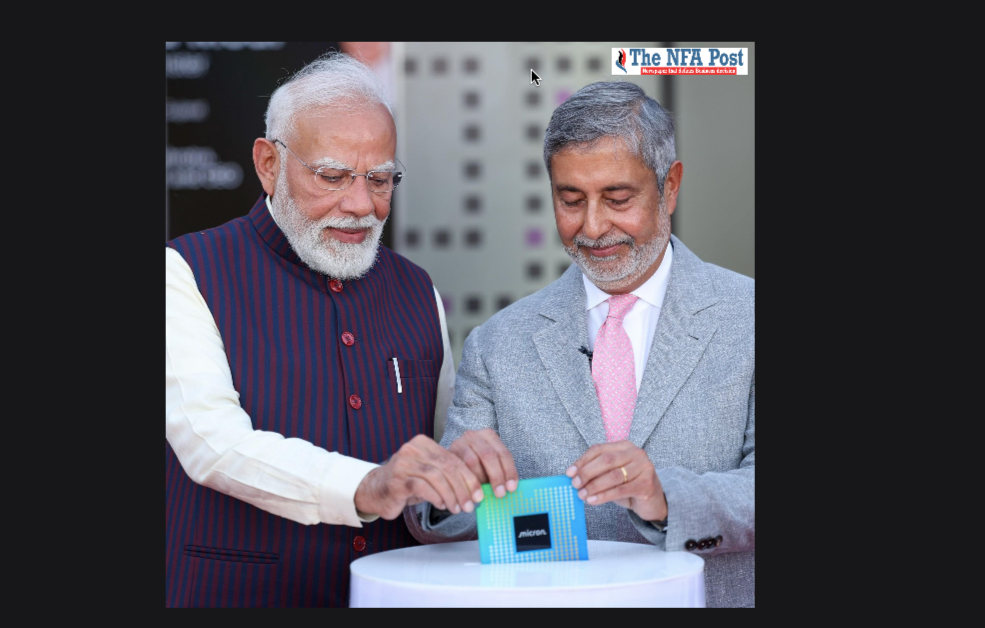
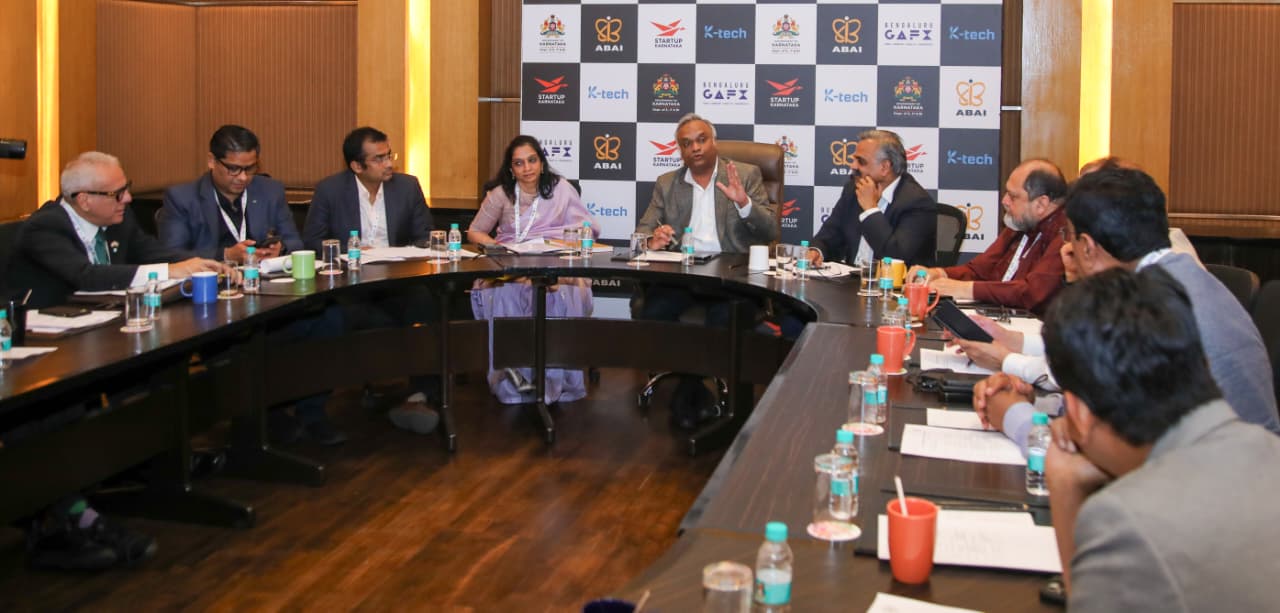
Recognizing semiconductors as the cornerstone of future A&D capability, IEEE SPACE 2025 featured a SemiCon Plenary by Srikanth Settikere, VP, Microchip India, followed by a roundtable on India’s Semiconductor Mission led by Dr. Satya Gupta (VSI) and executives from Ansys, Altera, and C-DAC.
The discussion called for greater synergy between semiconductor design houses and application-specific missions in defence, navigation, and deep space exploration. “India’s chip ambition must go beyond fabs—it must include design, packaging, and mission integration,” remarked Jayraj Nair, CTO, Ansys.
Software Defined Systems and the Digital Warroom
One of the most gripping conversations took place in the final panel discussion on Software Defined Systems for SPACE, with Dr. S Somanath (Secretary, DoS), Dr. Jitendra Jadhav (DG, ADA), and Dr. Aniruddha Mukhopadhyaya (CTO, Ansys). They explored how AI/ML, SDRs, and software-defined payloads will change how satellites, UAVs, and ground stations are designed and operated.
“Future space missions will be software-first, hardware-agile, and mission-flexible,” said Dr. Somanath, calling for a new design paradigm for next-gen systems.
Innovation Showcase and Industry Connect
The expo at SPACE 2025 hosted over 40 companies, including industry giants like ANSYS, Boeing, Keysight, BEL, Airbus, L&T, NI, Microchip, and Azista Aerospace. From phased-array radars and high-throughput satellite payloads to SDR testing and additive manufacturing in aerospace—technologies on display represented the future of aerospace R&D.
Startups like Astrome and GalaxEye presented game-changing work in multi-sensor satellites and high-speed laser communications.
Closing Ceremony: Awards, Reflections, and the Road Ahead
The valedictory session, attended by Dr. G Satheesh Reddy, former Secretary, DDR&D, and Dr. S Somanath, concluded the conference on an inspiring note. Awards were presented to outstanding papers, young faculty, and student innovators.
In their closing remarks, General Chair Mr. Puneet Kumar Mishra and Co-Chairs Dr. K Rajalakshmi Menon, Mr. Rajeev Jyoti, and Dr. Seema Chopra expressed gratitude to the 325+ authors, 600+ reviewers, 850+ delegates, and the IEEE family that made this mega event a success.
Conclusion: A Platform That Shapes the Future
IEEE SPACE 2025 was not just a conference—it was a convergence of past achievements, present capabilities, and future possibilities. As India gears up for Gaganyaan, pushes for self-reliance in defence systems, and emerges as a global SpaceTech hub, events like this play a pivotal role in knowledge exchange, collaboration, and thought leadership.
In a world increasingly shaped by space, aerospace, and defence technologies, SPACE 2025 has ensured India is not just a participant—but a pioneer.
As Mr. Puneet Kumar Mishra, General Chair of SPACE 2025, put it:
“We are not just building technologies — we are building trust, talent, and tomorrow’s world. IEEE SPACE is where aspirations take flight.”