


Three-Year Strategic Alliance Embeds Hospital-Grade Sports Medicine, Emergency Readiness and Preventive Care Within SUFC’s Football Ecosystem
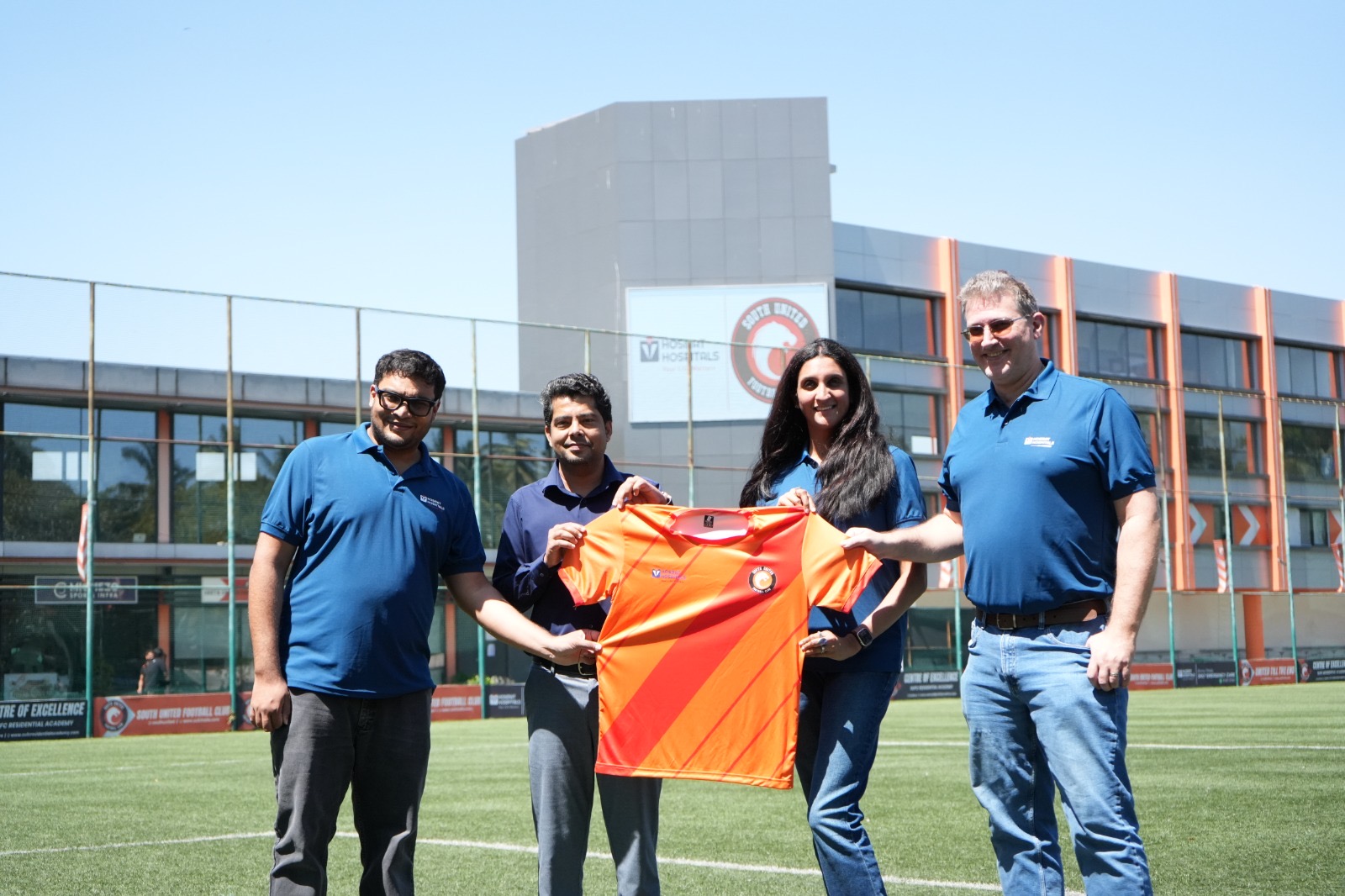
Bengaluru, NFAPost: In a significant move for Indian sports medicine and football development, HOSMAT Hospitals has entered into a three-year strategic medical partnership with South United Football Club (SUFC), positioning itself as the Club’s official Sports Medicine and Medical Services Leader.
The collaboration goes beyond conventional sponsorship. It establishes a fully operational, hospital-grade On-Site Sports Medical Centre within SUFC’s training and competition environment—creating an embedded medical ecosystem that spans preventive screening, real-time match-day emergency response, injury management, and rehabilitation continuity.
For Bengaluru’s growing football ecosystem, the partnership marks a structural shift: medical leadership is no longer peripheral—it is institutionalised.
A Structured Medical Ecosystem On the Field
Under the agreement, HOSMAT will lead and operate SUFC’s medical clinic and manage all medical requirements for players and team personnel across training and competitive seasons.
The integrated framework includes:
- Annual comprehensive health checks and sports-specific medical screening
- Dedicated ambulance services with trained medical teams during championships and major matches
- Full clinical management and nursing support for the on-site centre
- Discounted inpatient and outpatient treatment at HOSMAT facilities
- Supply of essential medical consumables for the clinic at no cost
The model aligns with global best practices, where professional sports ecosystems increasingly deploy embedded medical teams to reduce response times and improve injury outcomes.
International sports health research indicates that structured medical oversight and periodic screening can reduce preventable sports injuries by 30–50%. Embedded emergency systems, meanwhile, can reduce critical response times by up to 40% when medical teams are stationed on-site.
“Medical Leadership, Not Just Emergency Response”
Anisha Chandy Eckardt, Managing Director of HOSMAT Hospitals, framed the partnership as a natural evolution of sports medicine in India.
“Modern sport demands structured medical leadership—not just emergency response, but prevention, monitoring, and recovery continuity. At HOSMAT, sports medicine is built on decades of orthopaedic, trauma, and rehabilitation excellence. Our partnership with SUFC, along with the launch of the on-site sports medical centre, brings hospital-grade systems directly into the sporting environment—reducing response time, improving injury outcomes, and supporting athlete longevity.”
She also referenced broader healthcare policy direction:
“The Union Budget’s emphasis on emergency care expansion, allied-health capacity, and decentralised healthcare delivery reinforces exactly this kind of embedded, ecosystem-level medical model. We see this partnership as both performance-enabling and policy-aligned.”
Strengthening Athlete Safety Across All Levels
For SUFC, the partnership is as much about culture as clinical capability.
Mohamed Rafik, CEO of SUFC, underscored that modern football performance is inseparable from medical preparedness.
“Player safety and medical preparedness are core to competitive performance today. Partnering with HOSMAT Hospitals gives us clinical depth both on and off the field. With an on-site sports medical centre, ambulance readiness and preventive screening, we are strengthening our athlete care framework to global standards.”
Importantly, the facility will serve more than just the senior men’s team.
“This medical facility is not limited to our professional first team. It will support our academy, community programmes and all on-ground activity—from toddlers and grassroots participants to elite players. As one of the few clubs offering structured medical support across the full football community, SUFC will have a deployed physiotherapist and trained nurse on-site to ensure immediate first aid and injury management.”
This comprehensive approach reflects SUFC’s vertically integrated development model—from grassroots to elite competition.
The Institutional Context
HOSMAT Hospitals, headquartered in Bengaluru, has built its reputation over three decades in orthopaedics, trauma care, sports injuries, and rehabilitation. As it expands into a multi-specialty hospital group, sports medicine remains central to its identity.
SUFC, established in 2012, has trained over 13,000 young footballers and operates elite youth teams across U-13, U-15 and U-17 categories, alongside a Senior Men’s Team. The Club has competed in the KSFA Super Division and I-League 2nd Division, and represented South India in the 134th edition of the Durand Cup. It also competes in the Reliance Foundation Youth Development League (2025–26), with more than 80 players selected for the Santosh Trophy.
With academies in Bengaluru, Pune and Hyderabad, and a residential academy in Bengaluru, SUFC is positioning itself as a structured football ecosystem rather than merely a competitive club.
A Signal for Indian Sport
Globally, professional sports organisations have long recognised that performance metrics improve when athlete health systems are proactive rather than reactive. India’s sporting infrastructure, particularly at the club level, has historically lagged in embedding medical ecosystems directly within training environments.
This partnership signals a transition.
By institutionalising hospital-grade care within a football club, the HOSMAT–SUFC alliance reflects a broader maturation of Indian sport—where athlete longevity, injury prevention, and structured rehabilitation are treated as strategic priorities rather than operational afterthoughts.
In Bengaluru—a city increasingly associated with professional sport, sports science, and private healthcare innovation—the collaboration may well serve as a template.
The message is clear: in modern sport, excellence is not just trained on the field. It is built in the clinic, sustained through prevention, and secured through preparedness.








Leave a Reply