Inaugural flight in Bengaluru marks a decisive step in India’s Aatmanirbhar civil aviation ambitions, alongside DGCA certification of the indigenous Shakti civil engine
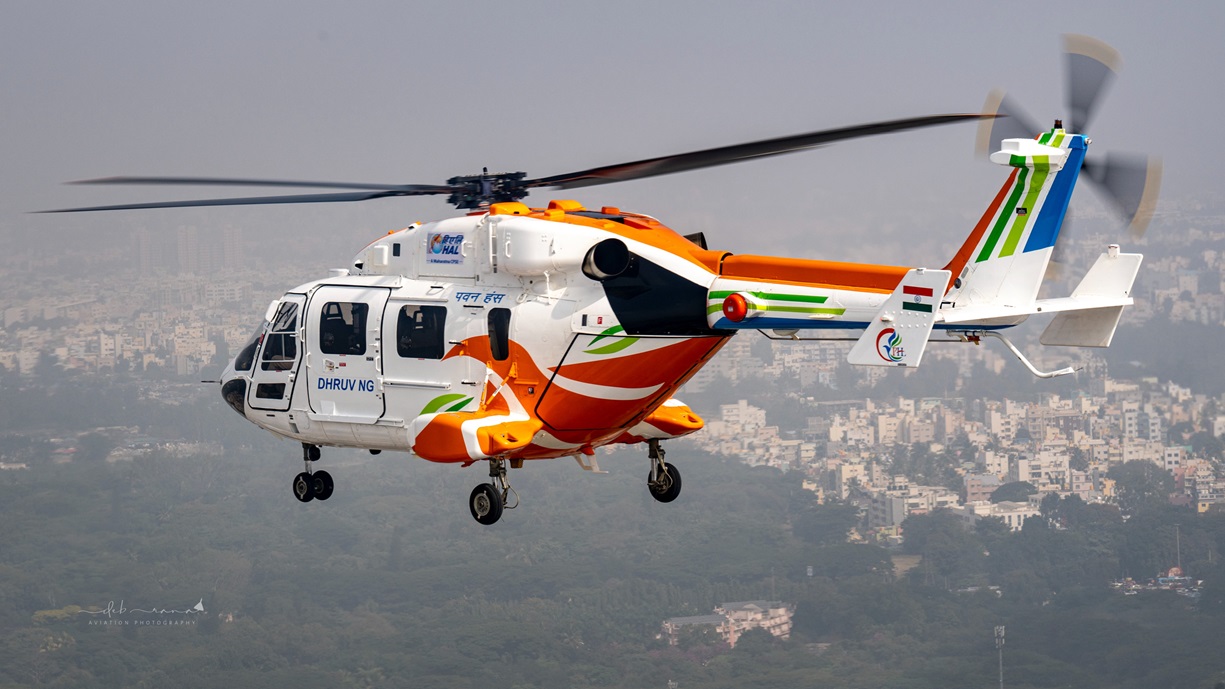
Bengaluru, NFAPost: In a milestone moment for India’s aerospace ecosystem, Hindustan Aeronautics Limited (HAL) successfully conducted the inaugural flight of its Dhruv New Generation Helicopter (Dhruv NG), firmly marking its entry into the civil helicopter market. The flight, flagged off at HAL’s Helicopter Division in Bengaluru, underscores India’s growing confidence in indigenous civil aviation platforms built to global standards.
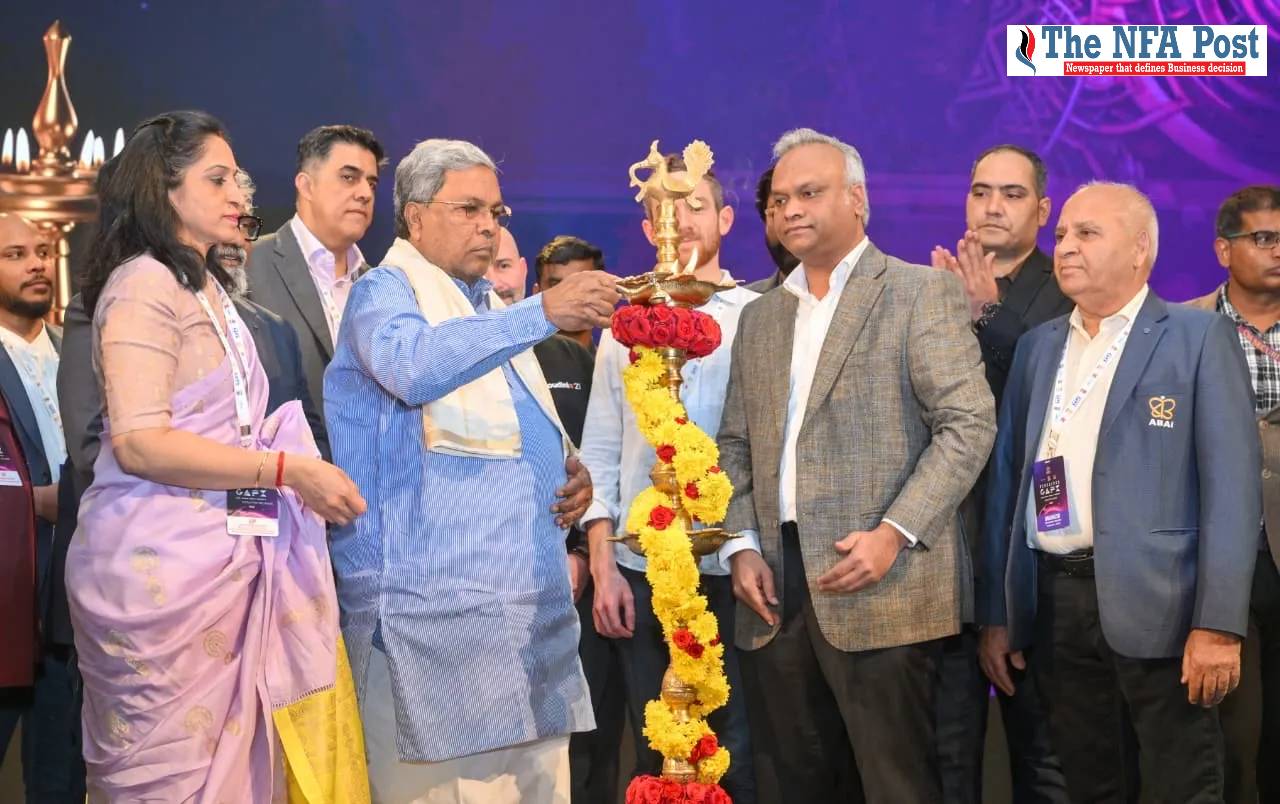
The inaugural sortie was flagged off by Kinjarapu Ram Mohan Naidu, Union Minister of Civil Aviation, in the presence of D K Sunil, Chairman and Managing Director, HAL; Directorate General of Civil Aviation (DGCA) Joint Director General Maneesh Kumar; Pawan Hans CMD Sanjeev Razdan; and senior HAL leadership.
Beyond the flight itself, the event carried symbolic and strategic weight. HAL also received DGCA certification for the indigenous manufacture of the Shakti civil engine—the first time an aero engine has been certified by India’s aviation regulator for indigenous production. Developed in collaboration with Safran Engines, the certification marks a decisive leap in India’s quest for self-reliance in critical propulsion technologies.
“This flight marks an important milestone in Indian aviation,” said Civil Aviation Minister Ram Mohan Naidu. “I can see the Sankalp of a Viksit Bharat taking wings. HAL has demonstrated remarkable execution by completing the inaugural flight within a year of showcasing the demo. Dhruv NG has emerged as a platform for multiple operators, and Make in India today is a seal of global quality.”
From Military Mainstay to Civil Platform
For HAL, the Dhruv NG represents more than a product launch—it signals a strategic expansion into the civil rotary-wing segment. The Dhruv Mk 1 Civil platform has already logged over 24,000 flight hours, and the New Generation variant builds on this operational pedigree with targeted upgrades aligned to international civil certification norms.
“The Dhruv ‘New Gen’ helicopter is the cornerstone of HAL’s civil expansion,” said HAL CMD D K Sunil. “It has been specifically upgraded to meet the rigorous demands of the global civil aviation market. With enhanced safety, performance, and cost-effectiveness, Dhruv NG stands as a credible alternative to imported helicopters. We are working closely with the DGCA to ensure globally aligned certification standards.”
According to HAL, the Dhruv NG is on track to achieve full civil certification within the next three to four months—a timeline that, if met, would position the helicopter competitively for domestic and international operators.
A Helicopter Engineered for India—and the World
Designed and manufactured in India, the Dhruv NG is a 5.5-tonne, light twin-engine, multi-role helicopter engineered to operate across India’s diverse and demanding terrain—from high-altitude regions to coastal and urban environments.
Powered by twin Shakti 1H1C engines, the helicopter features a civil-certified glass cockpit compliant with AS4 requirements, paired with a modern avionics suite that enhances situational awareness. Safety has been central to the design philosophy, with crashworthy seating, self-sealing fuel tanks, and a redundant twin-engine configuration forming the backbone of the platform.
Advanced vibration control systems deliver a smoother ride, making the helicopter well-suited for VIP transport, emergency medical services, and other civil applications where passenger comfort and reliability are critical.
Beyond the Aircraft: Lifecycle Support as Strategy
HAL is positioning Dhruv NG not merely as an aircraft, but as a comprehensive service offering. The company’s “One-Stop Solution” model spans manufacturing, maintenance, upgrades, and lifecycle support. Integrated logistics frameworks such as Power-By-Hour (PBH) and Performance-Based Logistics (PBL) are designed to ensure high fleet availability and predictable operating costs—key decision factors for civil operators.
As India pushes to build a globally competitive civil aviation manufacturing base, the Dhruv NG’s first flight—and the certification of its indigenous engine—stands out as a defining moment. It reflects a sector moving beyond ambition into execution, where Aatmanirbhar Bharat is no longer a slogan, but a machine taking flight.