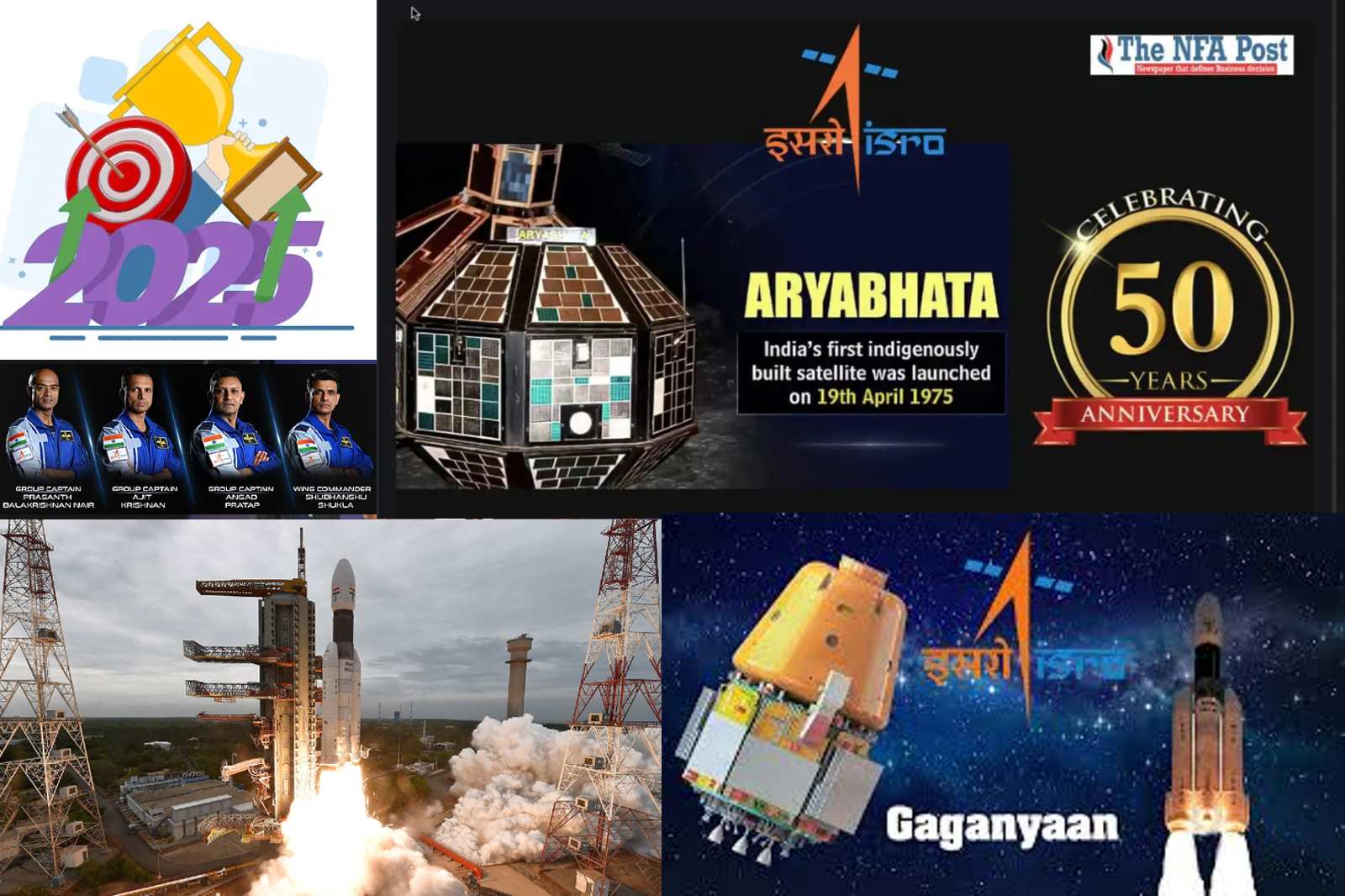
On the golden jubilee of its first satellite, ISRO’s landmark year revealed not just technological maturity, but a strategic transformation into a global space power
A Year Where Past and Future Converged
In the long arc of India’s space journey, 2025 will stand out as a year of rare historical symmetry. It marked fifty years since the launch of Aryabhata, India’s first satellite, and simultaneously showcased an ISRO operating at the frontiers of modern space technology—executing in-space docking, launching the heaviest satellite from Indian soil, deepening global partnerships with NASA, and preparing for independent human spaceflight.
This convergence was more than symbolic. It illustrated how a modest experimental satellite built by 25 engineers in industrial sheds evolved, over five decades, into a complex national capability underpinning security, climate science, navigation, commerce, and diplomacy. In 2025, ISRO was not merely commemorating history—it was actively reshaping India’s future in space.
Aryabhata at 50: The Origin Story That Still Matters
When Aryabhata lifted off on April 19, 1975, aboard a Soviet Kosmos-3M rocket, India became the 11th nation to place a satellite in orbit. For a developing country still grappling with economic and industrial constraints, the achievement was audacious. More importantly, it was strategic.
Under the leadership of Vikram Sarabhai and U.R. Rao, ISRO chose to master fundamentals—systems engineering, telemetry, thermal control, orbital operations—before chasing prestige missions. Aryabhata’s operational life was brief, cut short by a power failure, but its institutional impact was enduring. It trained a generation, validated a philosophy, and proved that space capability could be built indigenously, incrementally, and purposefully.
That philosophy remains embedded in ISRO’s DNA.
The golden jubilee celebrations in 2025 were therefore not nostalgic exercises. Through nationwide outreach, National Space Day events, and the theme “Aryabhata to Gaganyaan: Ancient Wisdom to Infinite Possibilities,” ISRO consciously framed its present achievements as the logical extension of a 50-year continuum.
A Defining Operational Year
The 100th Launch: Continuity at Scale
ISRO began 2025 by crossing a major institutional milestone—its 100th launch mission, achieved with GSLV-F15 carrying the NVS-02 navigation satellite. More than a numerical achievement, it underlined the reliability of India’s indigenous cryogenic propulsion and the operational maturity of the NavIC system.
That this milestone occurred under a new chairman, Dr. V. Narayanan, reinforced the sense of continuity rather than transition—an agency confident in its processes, not dependent on personalities.
SPADEx: Quietly Entering an Elite Club
If one mission in 2025 fundamentally altered India’s technological standing, it was SPADEx.
By successfully docking two satellites autonomously in orbit, ISRO became the fourth country in the world—after the US, Russia, and China—to demonstrate in-space docking. Subsequent undocking, redocking, power transfer, and multi-orientation experiments showed that this was not a one-time demonstration but a repeatable operational capability.
In practical terms, SPADEx laid the foundation for:
- Human spaceflight missions
- On-orbit servicing and assembly
- Space stations and deep-space exploration
In strategic terms, it signaled that India had crossed a threshold few nations ever reach.
Science with Substance: Aditya-L1
While docking captured headlines, Aditya-L1 quietly delivered scientific credibility. By releasing nearly 15 terabytes of solar and heliophysics data to the global community, ISRO positioned India as a contributor—not a consumer—in space science.
This open-data approach strengthened international collaboration and reinforced a key shift in ISRO’s posture: from mission success alone to knowledge leadership.
Institutional Depth: Chips, Thrusters, and Infrastructure
One of the less glamorous—but most consequential—stories of 2025 was ISRO’s progress in foundational technologies.
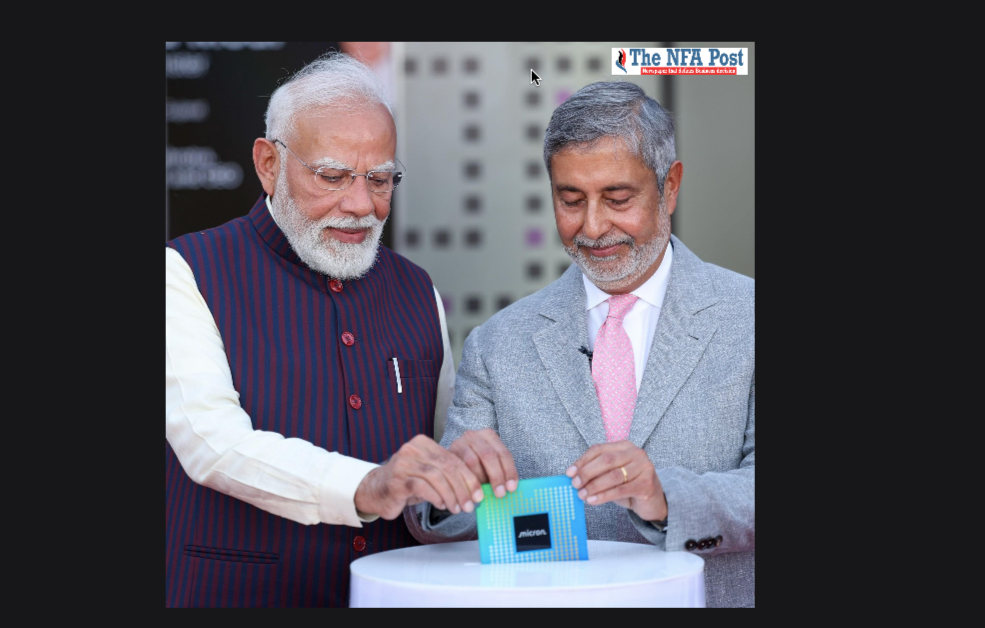
- The successful booting of the IRIS 64-bit RISC-V processor, fully designed and fabricated in India, addressed a critical vulnerability in space systems: dependence on foreign electronics.
- Completion of the 1,000-hour life test of the Stationary Plasma Thruster advanced India’s electric propulsion capabilities, essential for long-duration missions.
- Approval of the Third Launch Pad at Sriharikota signaled long-term intent—supporting next-generation heavy-lift vehicles, a future space station, and lunar missions.
These developments rarely dominate public discourse, yet they determine whether ambition is sustainable. In 2025, ISRO invested decisively in that sustainability.
Failure as a Measure of Maturity
The PSLV-C61 failure in May was the year’s sobering moment. The loss of EOS-09 was significant, both technically and operationally. Yet ISRO’s response—transparent analysis, swift reporting, and a clear return-to-flight timeline—demonstrated an agency comfortable with scrutiny.
In advanced space programs, failure is not disqualifying; how institutions respond to failure is. ISRO’s handling of PSLV-C61 reinforced confidence rather than eroding it.
Global Validation: The NISAR Moment
The NASA–ISRO NISAR mission, launched in July, was arguably the most geopolitically significant event of the year. Dual-frequency SAR capability, joint mission ownership, and shared scientific goals elevated the partnership beyond symbolism.
For India, NISAR confirmed a crucial evolution: ISRO is no longer a junior collaborator—it is a peer agency capable of co-developing the world’s most advanced Earth observation systems.
Approaching the Human Spaceflight Threshold
By August, ISRO confirmed that 80% of Gaganyaan tests were complete, with the first uncrewed mission scheduled for December 2025. The successful Integrated Air Drop Test and readiness of the humanoid robot Vyommitra underscored disciplined progress rather than deadline-driven haste.
India’s human spaceflight program, often questioned for its pacing, appeared in 2025 to have found the right balance between ambition and caution.
A Structural Shift: Industry and Commercial Space
Perhaps the most profound change in 2025 was structural rather than technical.
- The Pixxel-led commercial EO constellation, funded entirely by private capital, marked a decisive move toward a market-driven space economy.
- The completion of the first privately manufactured PSLV by the HAL–L&T consortium demonstrated that technology transfer had matured into industrial capability.
- ISRO’s announcement to transfer 50% of PSLV development work to private players effectively redefined the agency’s role—from manufacturer to systems architect.
This shift may ultimately prove more transformative than any single mission.
From Commemoration to Confidence
By the end of 2025, the numbers told a compelling story:
- 200+ achievements in a single year
- 330+ space startups
- 450+ industrial partners
- Indigenous chips, propulsion, docking, and heavy-lift capability
- Human spaceflight within reach
Yet the deeper narrative was qualitative. ISRO in 2025 operated with confidence born of continuity—secure in its past, pragmatic about its limitations, and deliberate about its future.
Conclusion: Fifty Years, One Trajectory
Fifty years after Aryabhata’s brief but historic flight, India’s space program stands transformed—but not unrecognizable. The same principles that guided that first satellite—self-reliance, incremental mastery, and societal purpose—continue to shape ISRO’s decisions.
The difference is scale, complexity, and consequence.
As ISRO moves into 2026, with Gaganyaan on the horizon and next-generation infrastructure taking shape, the agency carries forward Aryabhata’s legacy not as a memory, but as a mandate: to build space capability that endures, serves, and leads.
In that sense, 2025 was not merely a celebration of the past—it was confirmation that India’s space journey has entered its most consequential phase yet.