Ambitious bullet train corridor linking Chennai, Bengaluru and Hyderabad promises dramatic cuts in travel time and a new economic geography for the south—but land acquisition emerges as the critical test
Bengaluru, NFAPost: In one of the most consequential transport announcements for South India in decades, Union Minister for Railways Ashwini Vaishnaw on Tuesday unveiled plans for a high-speed rail network connecting Chennai, Bengaluru and Hyderabad—a triangular corridor the Centre has dubbed the “South Indian Diamond”. The proposed bullet train network, designed to operate at speeds of up to 350 kmph, is positioned as the centrepiece of a record-breaking railway budget outlay for the southern states.
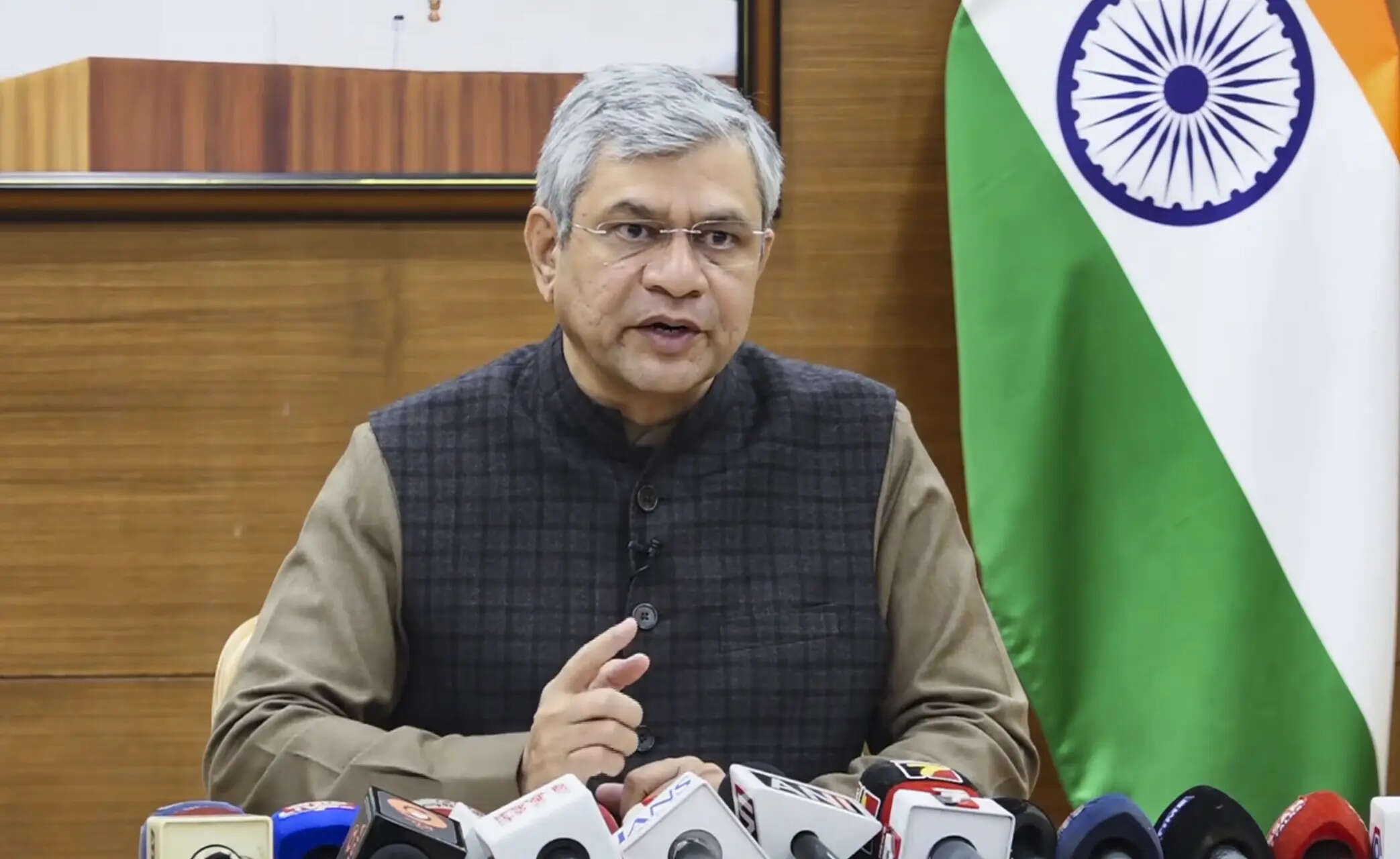
Addressing a press conference in Bengaluru, Vaishnaw outlined a future in which the region’s biggest economic hubs are separated not by overnight journeys, but by commute-like travel times.
“The travel time between Chennai and Bengaluru will be limited to just 1 hour and 13 minutes,” the minister said. “Chennai to Hyderabad will be around 2 hours and 55 minutes. This will create a truly transformative economic corridor for South India.”
A New High-Speed Spine for the South
Under the plan, the Chennai–Bengaluru–Hyderabad triangle will form the core of a broader high-speed rail ecosystem, with Hyderabad emerging as a strategic hub and future connectivity envisaged towards Pune. The corridors will be largely elevated and draw heavily from technical and operational lessons of India’s first bullet train project between Mumbai and Ahmedabad.
Railway officials said the network is intended not merely as a transport upgrade, but as a structural intervention to integrate labour markets, supply chains and innovation ecosystems across states.
“Bengaluru and Chennai will, in many ways, begin to function like twin cities,” Vaishnaw observed. “This will significantly boost manufacturing, design and IT services, particularly in Bengaluru.”
Unprecedented Budgetary Push
The high-speed rail vision is backed by what the Railway Ministry describes as an unprecedented financial commitment to the southern region. Vaishnaw detailed sharp increases in annual railway allocations across all five southern states:
- Andhra Pradesh: ₹10,134 crore
- Karnataka: ₹7,748 crore
- Tamil Nadu: ₹7,611 crore
- Telangana: ₹5,454 crore
- Kerala: ₹3,975 crore
Beyond high-speed rail, the funds will support large-scale line doubling to ease congestion, 100 per cent electrification, and the redevelopment of more than 250 stations under the Amrit Bharat Station scheme.
The minister argued that this scale of investment marks a decisive shift in how rail infrastructure is being deployed—as a catalyst for regional economic transformation rather than incremental capacity addition.
Land Acquisition: The Decisive Bottleneck
Yet, even as the Centre unveiled its futuristic blueprint, Vaishnaw was candid about the single biggest obstacle threatening timelines: land acquisition by state governments.
Pointing to Tamil Nadu, he revealed that progress on the ground remains worryingly slow.
“For railway projects in Tamil Nadu, the total land required is 4,326 hectares. So far, only 1,052 hectares—just 24 per cent—has been acquired,” he said. “We request the state government to acquire 100 per cent of the required land so that people can actually receive the benefits of these projects.”
Similar appeals were directed at Kerala, particularly for land required for new lines and over 100 long-pending railway overbridges. Without faster clearances, officials warned, even sanctioned projects risk remaining on paper.
A Vision Awaiting Execution
The announcements from Bengaluru underline a familiar tension in India’s infrastructure story: a bold central vision backed by funding, confronting complex execution realities at the state and local level. The “South Indian Diamond” promises to redraw economic maps, compress distances and reshape daily life for millions—but only if coordination on the ground keeps pace with ambition at the top.
For now, the blueprint is clear, the money is allocated, and the technology is proven. Whether South India boards the bullet train to a new era may well depend on how swiftly its foundations are laid.