Union Minister Ashwini Vaishnaw outlines an ambitious roadmap for ‘Viksit Bharat’, combining bullet trains, Semiconductor Mission 2.0, AI-led manufacturing and massive job creation
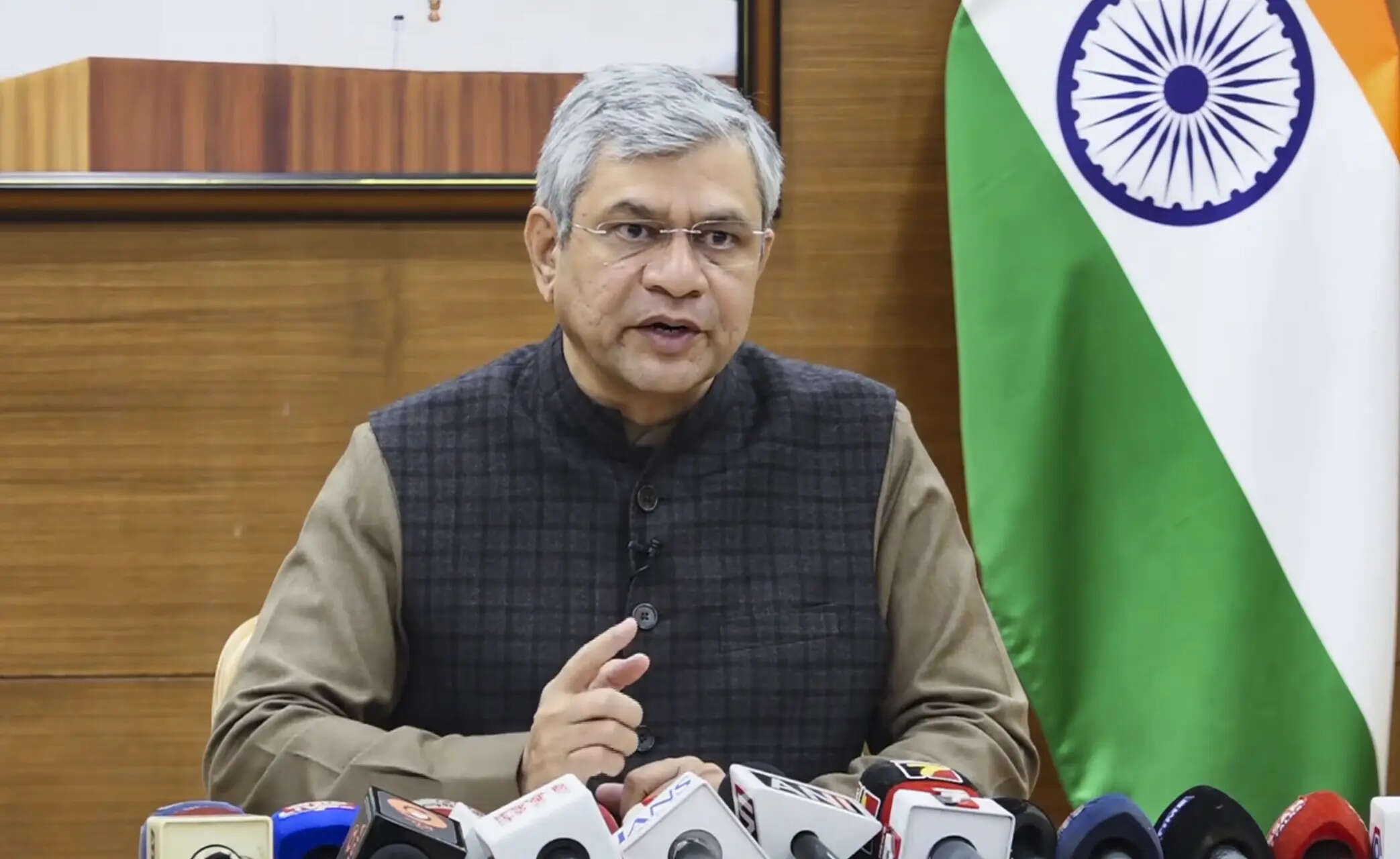
Bengaluru, NFAPost: Union Budget 2026 has laid out one of the most expansive and future-oriented economic visions in recent decades, with infrastructure and technology emerging as its twin pillars. Addressing the media, Union Minister for Railways, Communications, Electronics & IT Ashwini Vaishnaw detailed a multi-layered strategy aimed at accelerating India’s journey towards Viksit Bharat—a developed, self-reliant and globally competitive nation.
Describing the budget as being dedicated to the country’s youth and women shakti, the Minister said it is rooted in the philosophy of sabka saath, sabka vikas, with growth driven simultaneously by physical connectivity, digital capability and manufacturing strength.
At the heart of Budget 2026 are two headline initiatives: a ₹16 lakh crore investment in high-speed rail corridors and the launch of Semiconductor Mission 2.0, designed to position India at the core of the global electronics and AI ecosystem.
High-Speed Rail: Redefining Distance and Economic Geography
India’s railways are set for a historic transformation. Over the past decade, the railway budget has risen nearly tenfold to ₹2.78 lakh crore, and Budget 2026 builds on this momentum with plans to develop nearly 4,000 kilometres of high-speed rail lines across the country.
According to Vaishnaw, these corridors will not merely reduce travel time but fundamentally reshape economic geography by creating integrated growth regions.
“Travel between Chennai and Bengaluru will be reduced to just 1 hour and 13 minutes. Mumbai to Pune will take 48 minutes,” he said.
One of the most consequential announcements is the creation of a southern high-speed triangle connecting Chennai, Bengaluru and Hyderabad.
“That southern triangle will bring about huge economic growth in the southern states of Telangana, Andhra Pradesh, Tamil Nadu, Kerala and Karnataka,” the Minister said. “This will be a major win for all five states.”
Similar corridors are planned in other regions, including:
- Western corridor: Mumbai–Pune–Hyderabad
- Northern corridor: Delhi–Varanasi–Siliguri
These routes are expected to boost tourism, logistics, manufacturing and labour mobility across Maharashtra, Uttar Pradesh, Bihar and West Bengal.
Beyond speed, the budget also prioritises line doubling, station redevelopment and modern signalling, ensuring that conventional rail infrastructure keeps pace with high-speed ambitions.
Semiconductor Mission 2.0: Powering the AI Age
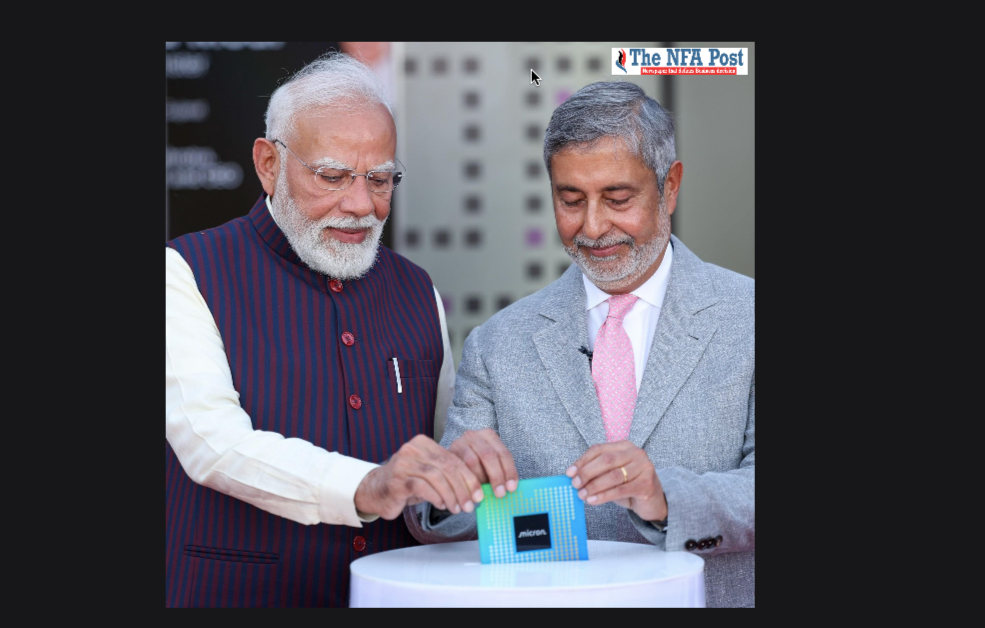
If railways represent India’s physical backbone, semiconductors are being positioned as its digital nervous system. Budget 2026 formally launches Semiconductor Mission 2.0, a renewed and expanded push to make India a global hub for chip design, fabrication and advanced packaging.
Vaishnaw underlined that semiconductors are no longer just an industrial component, but a strategic necessity.
“Semiconductors are a futuristic industry. They will feed directly into AI and the fifth industrial revolution. This will be a big boost to our economy,” he said.
Complementing this mission is a ₹40,000 crore allocation under the Production Linked Incentive (PLI) schemespecifically for electronics component manufacturing. The sector’s growth trajectory has already been dramatic.
“Today, electronics manufacturing employs about 25 lakh people,” Vaishnaw noted. “In the last 10 years, electronics manufacturing has grown six times, and electronics exports have grown eight times.”
With Semiconductor Mission 2.0, the government aims to move India higher up the value chain—from assembly to core technology ownership.
Data Centres, AI and the Digital Backbone
Recognising that AI, cloud computing and digital services will define future competitiveness, Budget 2026 positions India as a major global data centre hub. To attract long-term investment, the government has announced a 20-year tax holiday for new data centres, an unprecedented incentive aimed at creating scale and stability.
This push aligns with India’s broader ambition to lead in AI-driven innovation, enterprise solutions and digital public infrastructure.
Jobs, Creators and the New Economy
The budget also acknowledges the rise of the creator economy as a serious employment and innovation driver. A nationwide initiative will connect 15,000 high schools and 500 colleges with dedicated Creators’ Labs, with an estimated potential to generate 20 lakh new jobs.
These labs are expected to nurture skills in digital storytelling, gaming, animation, design and content technology—fields increasingly central to India’s economic and cultural exports.
Securing Critical Resources: Rare Earth Strategy
In a strategic move reflecting global supply chain realities, the government announced plans for a Rare Earth Permanent Magnet Corridor along India’s coastal regions. Rare earth elements are critical for electronics, electric vehicles, renewable energy and defence manufacturing.
By developing domestic processing and supply capabilities, India aims to reduce dependence on imports and secure long-term industrial resilience.
A Budget Framed Around the Future
Summing up the intent behind Budget 2026, Vaishnaw framed it as both aspirational and grounded.
“This budget is dedicated to the youth of our country,” he said. “It is inspired by a sense of duty towards the nation.”
From bullet trains that collapse distance, to semiconductors that power intelligence, and from data centres to creator labs, Budget 2026 signals a decisive shift—from incremental growth to systemic transformation. The challenge now, as always, will lie in execution. But on paper, the roadmap is unmistakably bold: India is not just planning for the future—it is engineering it.