As the 17th Bengaluru International Film Festival opens with a celebration of global cinema, the exclusion of Palestinian films sparks a political and cultural debate on artistic freedom
Bengaluru, NFAPost: The inauguration of the 17th edition of the Bengaluru International Film Festival (BIFFes) on Thursday was marked not only by cinematic celebration but also by a strong political undercurrent, as the controversy surrounding the non-clearance of Palestinian films took centre stage. Multilingual actor and BIFFes brand ambassador Prakash Raj used the occasion to publicly urge Karnataka Chief Minister Siddaramaiah to take a clear stand on the issue.
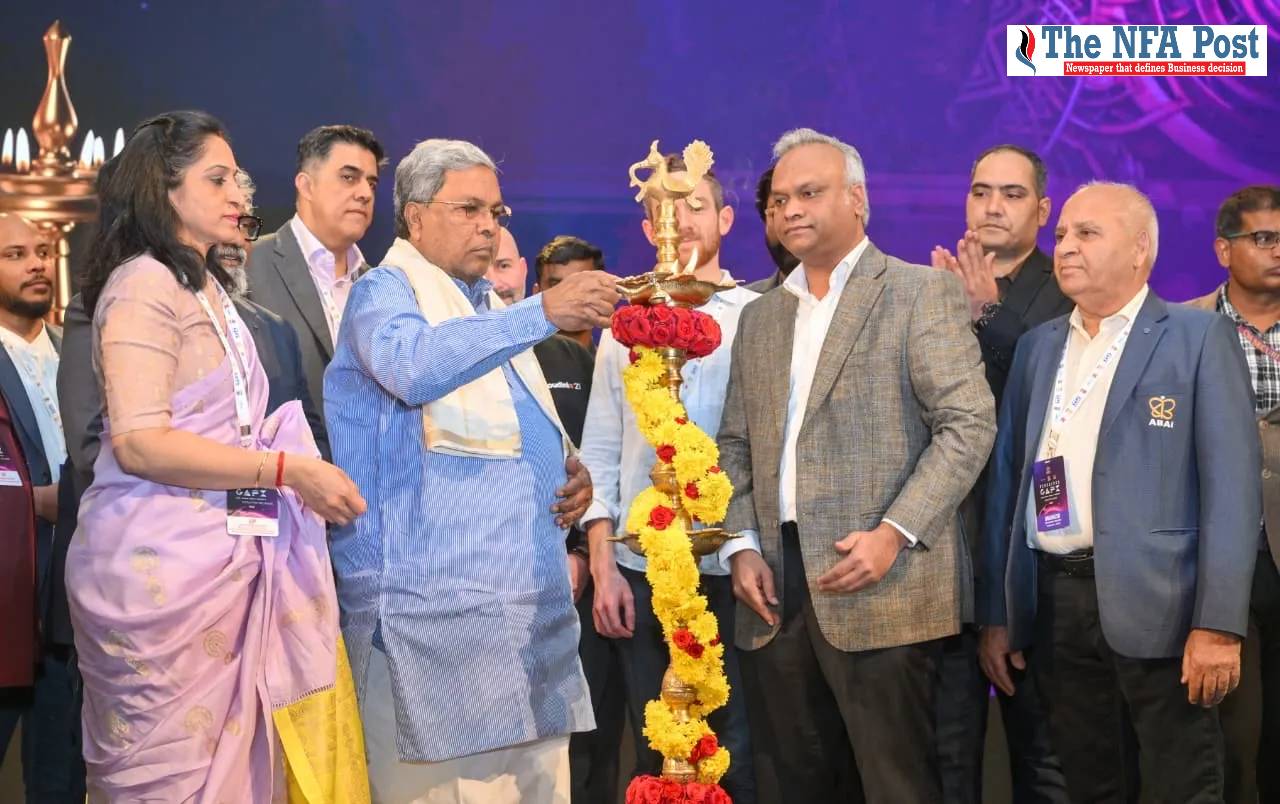
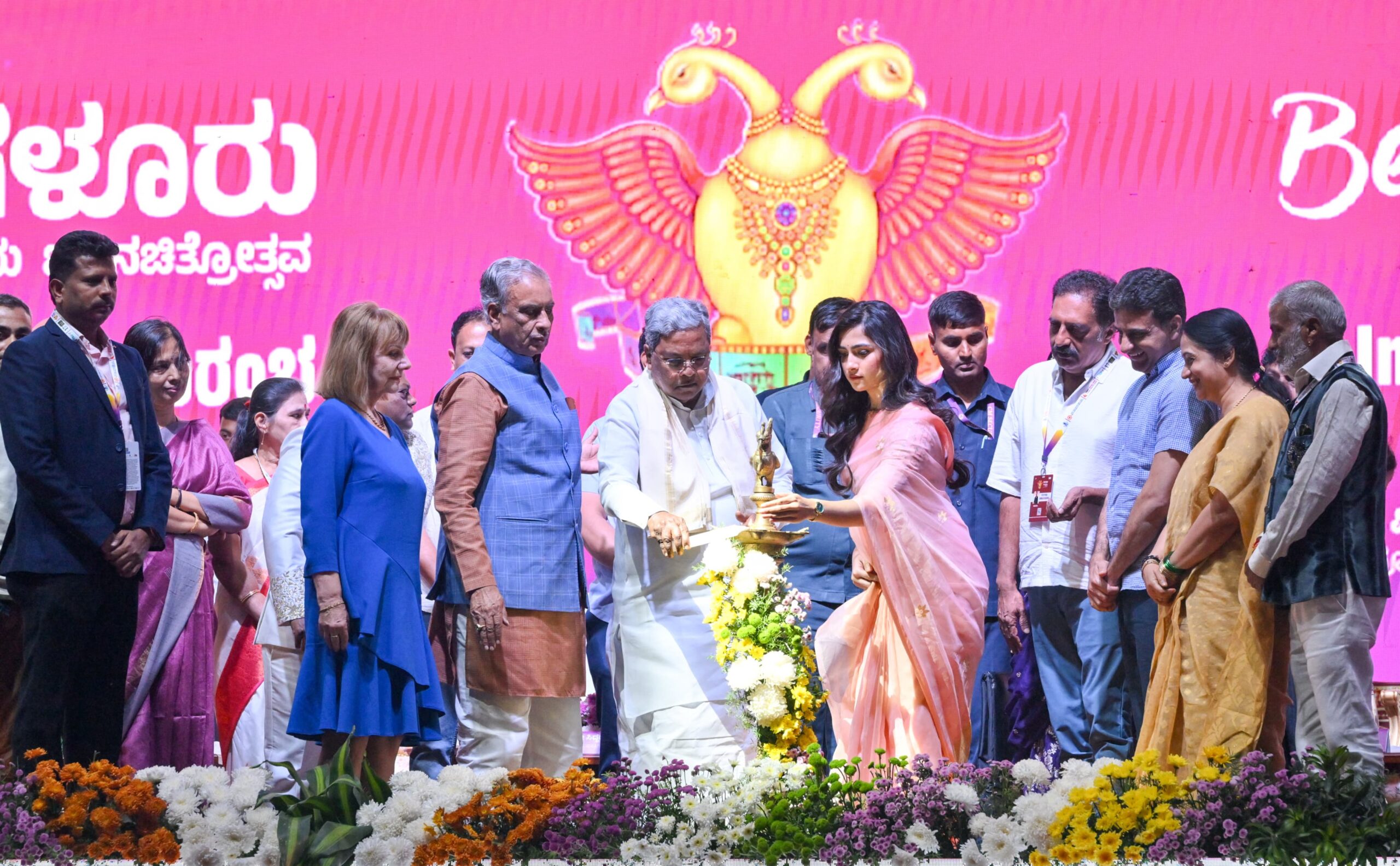
The festival was formally inaugurated by Siddaramaiah on the grand steps of Vidhana Soudha, in the presence of actors Rukmini Vasanth and Prakash Raj, along with members of the film fraternity, policymakers and cultural figures.
Call for Political Clarity on Artistic Freedom
The controversy centres on the Centre’s decision not to clear four out of five Palestinian films selected for screening at BIFFes. While the issue has drawn criticism from filmmakers and cultural activists, the Karnataka government has so far refrained from making an official statement.
Addressing the gathering during the inaugural ceremony, Prakash Raj strongly criticised this silence and called upon the Chief Minister to assert the state’s position.
“An international film festival exists to exchange ideas, understand human suffering and create empathy,” Prakash Raj later told reporters. “But today, politics has entered film and literary spaces. At a time when such a festival is being held, Palestinian films are not being allowed to screen. The Karnataka government must oppose this and take a clear stand.”
In a symbolic act of protest, Prakash Raj read out a Palestinian poem on stage, describing it as a reflection of the pain and suffering of the people whose stories, he said, were being denied space.
Drawing a comparison, he recalled how a Kannada short story collection, Heart Lamp, was widely celebrated after being translated into English and winning the Booker Prize.
“When our stories travel across borders and are celebrated, we take pride. When someone else’s stories are not allowed to come to our land, how can that be acceptable?” he asked, pointing out that Kerala had taken a stand by screening the films.
CM’s Address Focuses on Cinema’s Social Role
In his inaugural address, Chief Minister Siddaramaiah spoke at length about the broader purpose of an international film festival, but did not directly address the Palestinian films controversy.
“The purpose of holding an international film festival is to understand how people live in other countries, their politics and societies, and the inequalities or equality between men and women,” he said.
The Chief Minister assured continued government support for film production and the development of cinema, emphasising that films are not merely a form of entertainment but a powerful social medium.
“Today, society faces inequality, poverty, discrimination and injustice affecting Dalits, backward classes, minorities, farmers, workers and women. Cinema has the responsibility to place these realities before society,” Siddaramaiah said, recalling how the films of legendary actor Dr Rajkumar had effectively reflected social issues.
BIFFes 2026: Scale, Diversity and Women-Centric Focus
Highlighting the scope of this year’s festival, Sadhu Kokila, President of the Karnataka Chalanachitra Academy, said BIFFes 2026 carries the government’s tagline ‘Sthree endhare ashte saake’, inspired by poet G S Shivarudrappa.
Reflecting this ethos, the festival is screening over 250 films from more than 65 countries, including competition entries. More than 120 award-winning and internationally acclaimed films feature in the line-up, with participation from over 65 women directors.
Sadhu Kokila also outlined several new initiatives introduced this year, including red-carpet welcomes for film teams, photo exhibitions marking 91 years of Kannada cinema and 99 years of the film industry, a Wall of Honour at Lulu Mall, open-air screenings, and enhanced medical assistance for film workers. He urged the government to introduce a single-window clearance system to simplify film permissions.
Voices from the Legislature and Film Fraternity
Karnataka Legislative Council Chairman Basavaraj Horatti acknowledged the concerns raised around films from outside the state and those made locally.
“If we preserve and nurture all of this in a positive manner, such programmes will achieve their purpose,” he said, calling for a constructive approach to cultural exchange.
As BIFFes unfolds over the coming days, the controversy surrounding the Palestinian films has added a sharp political edge to the festival—reigniting debate on censorship, artistic freedom and the role of state governments in defending cultural and creative expression on global platforms.