With tariff-free trade under the India–Australia ECTA, a major Australian university campus in Bengaluru, and enhanced air connectivity, Karnataka is fast emerging as a cornerstone of Australia–India economic, education and innovation ties.
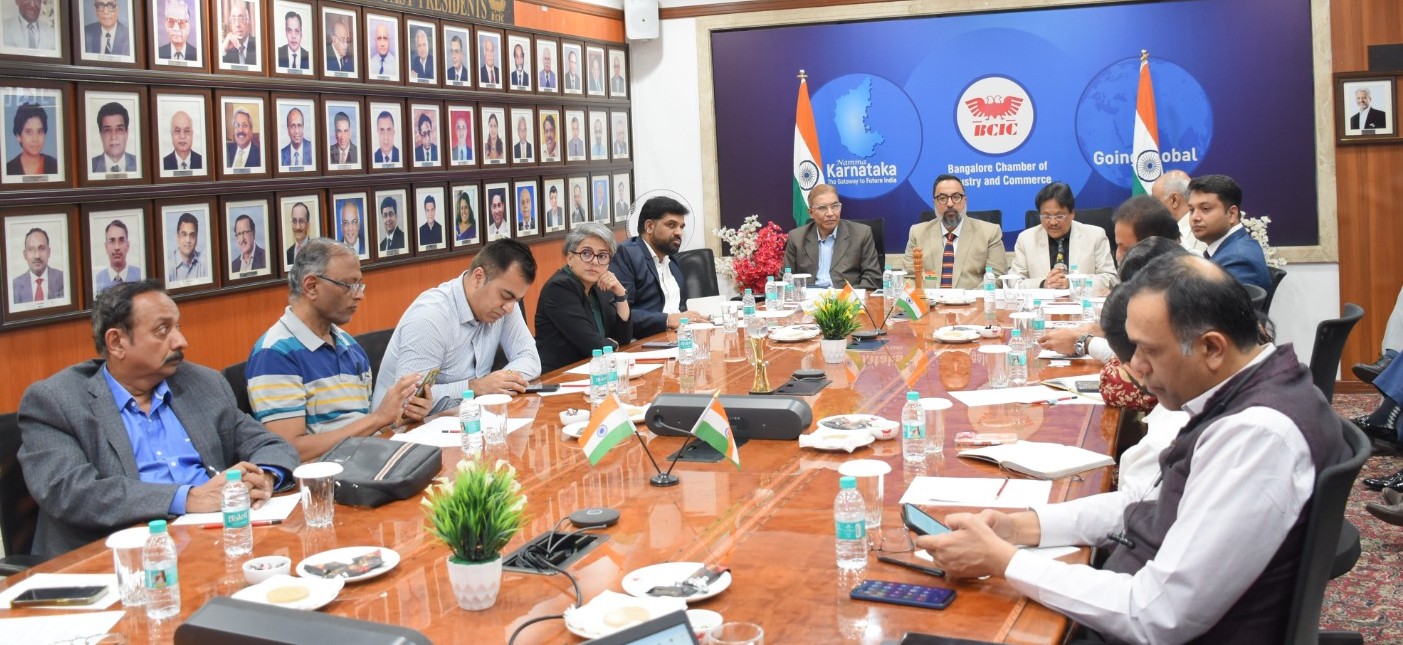
Bengaluru, NFAPost: Australia is significantly deepening its strategic engagement with Karnataka, positioning the state as a pivotal hub for bilateral collaboration across education, technology, clean energy, services and trade. The growing momentum in Australia–India relations was underscored at an interactive session on Tariff-Free Access for Indian Exporters under the India–Australia Economic Cooperation and Trade Agreement (ECTA), held at the Bangalore Chamber of Industry & Commerce (BCIC) in association with the World Trade Center Bengaluru.
Addressing industry leaders, exporters and policymakers, Mr. Vik Singh, Consul (Commercial) and Trade & Investment Commissioner for South Asia at the Australian Trade and Investment Commission, highlighted Karnataka’s central role in Australia’s long-term India strategy. He noted that the state’s strong talent base, innovation-driven ecosystem and global business outlook have made it a natural partner for deeper bilateral cooperation.
“Karnataka has emerged as one of Australia’s most important partners in India, driven by powerful synergies in education, innovation and enterprise,” Mr. Singh said. “This is reflected not only in growing trade and investment flows, but also in Australia’s decision to establish one of its largest consular presences in India here in Karnataka—second only to the High Commission in New Delhi.”
UNSW’s Bengaluru Campus: A Milestone in Education and Research Collaboration
One of the most significant announcements to emerge from the session was the decision by the University of New South Wales (UNSW) to establish a branch campus in Bengaluru. Discussions are already underway with the Government of Karnataka, and the campus is expected to become operational next year.
Ranked among the world’s leading universities, UNSW’s entry into Bengaluru is expected to substantially elevate India–Australia academic engagement. The proposed campus will focus on advanced education, cutting-edge research, and industry-aligned innovation, particularly in areas such as technology, engineering, sustainability and applied sciences.
“As one of the world’s top universities, UNSW’s decision to establish a presence in Bengaluru reflects the deep confidence Australian institutions have in Karnataka’s talent ecosystem and innovation potential,” Mr. Singh said. “This campus will play a critical role in strengthening academic collaboration, joint research initiatives and technology exchange between Australia and India.”
The move further reinforces Karnataka’s growing stature as a global education and knowledge hub, and signals a broader trend of international universities viewing India—not merely as a student destination, but as a base for research, innovation and long-term institutional partnerships.
India–Australia ECTA: Transforming Trade and Export Competitiveness
A central theme of the session was the transformative impact of the India–Australia ECTA, particularly for Indian exporters. From January 1, 2026, 100 per cent of Australian tariff lines have moved to zero duty, offering unprecedented access to one of the world’s most stable and high-value markets.
K. Ravi, Senior Vice President of the Bangalore Chamber of Industry & Commerce (BCIC), described the agreement as a watershed moment for Indian trade.
“The implementation of tariff-free access for Indian exporters under the India–Australia ECTA is a landmark development that will significantly enhance India’s export competitiveness in global markets,” Mr. Ravi said. “This historic step unlocks new opportunities across key sectors such as textiles, engineering goods, pharmaceuticals, gems and jewellery, and agriculture—accelerating MSME-led growth, boosting employment and broadening India’s export reach.”
He added that BCIC would play an active role in ensuring industry readiness by enabling buyer–seller engagements, supporting compliance and helping MSMEs fully leverage the benefits of the agreement.
Connectivity and Sectoral Opportunities Strengthen Bilateral Ties
The strengthening partnership is also being reinforced by improved connectivity, notably the launch of a direct Sydney–Bengaluru flight by Qantas. The new route is expected to significantly enhance business travel, academic exchange and people-to-people connections between the two regions.
Beyond trade and education, Mr. Singh outlined several sectors poised to benefit from deeper Australia–India economic engagement. Clean energy features prominently, supported by Australia’s net-zero commitments and rising investment in renewables, green hydrogen and critical minerals. Education and skills development remain a cornerstone, enabling greater student mobility, joint research and institutional partnerships.
Agribusiness is gaining momentum through improved market access, food processing collaboration and agri-technology exchange, while tourism is emerging as a high-growth sector driven by increasing outbound travel from India. Overall, the services sector—particularly IT, professional services and education—is expected to be the most significant long-term beneficiary of the partnership.
A Strategic Partnership with Long-Term Vision
Taken together, the establishment of a major Australian university campus in Bengaluru, tariff-free trade under the ECTA, enhanced air connectivity and expanding sectoral cooperation mark a decisive deepening of Australia–Karnataka engagement. For Karnataka, the developments reaffirm its position as a preferred destination for global universities, international investors and innovation-led collaboration. For Australia, they underscore a clear commitment to building a resilient, future-focused partnership with India—anchored in trust, talent and shared economic ambition.