At BIFFes, veteran editor Sreekar Prasad unpacks the invisible craft of editing, the limits of AI, and why instinct, emotion and rhythm remain irreducibly human
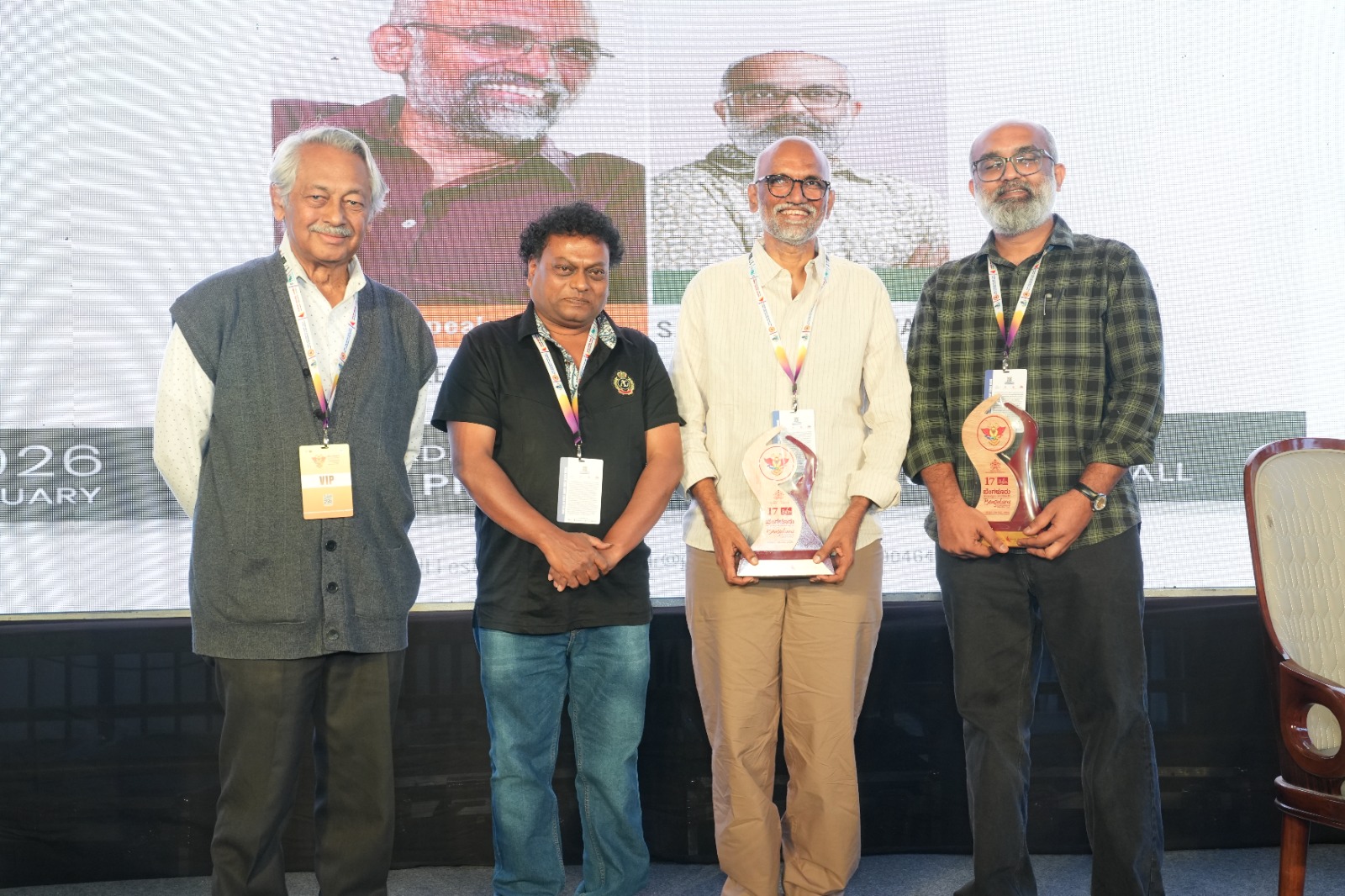
Bengaluru, NFAPost: As artificial intelligence steadily enters every corner of filmmaking—from script analysis to post-production workflows—veteran film editor Sreekar Prasad offered a timely and grounded counterpoint at the 17th Bengaluru International Film Festival (BIFFes). Speaking at an insightful session titled “The Invisible Art of Editing”, Prasad asserted that while AI can enhance efficiency, it can never replace the editor’s eye—the deeply human ability to sense rhythm, emotion and narrative flow.
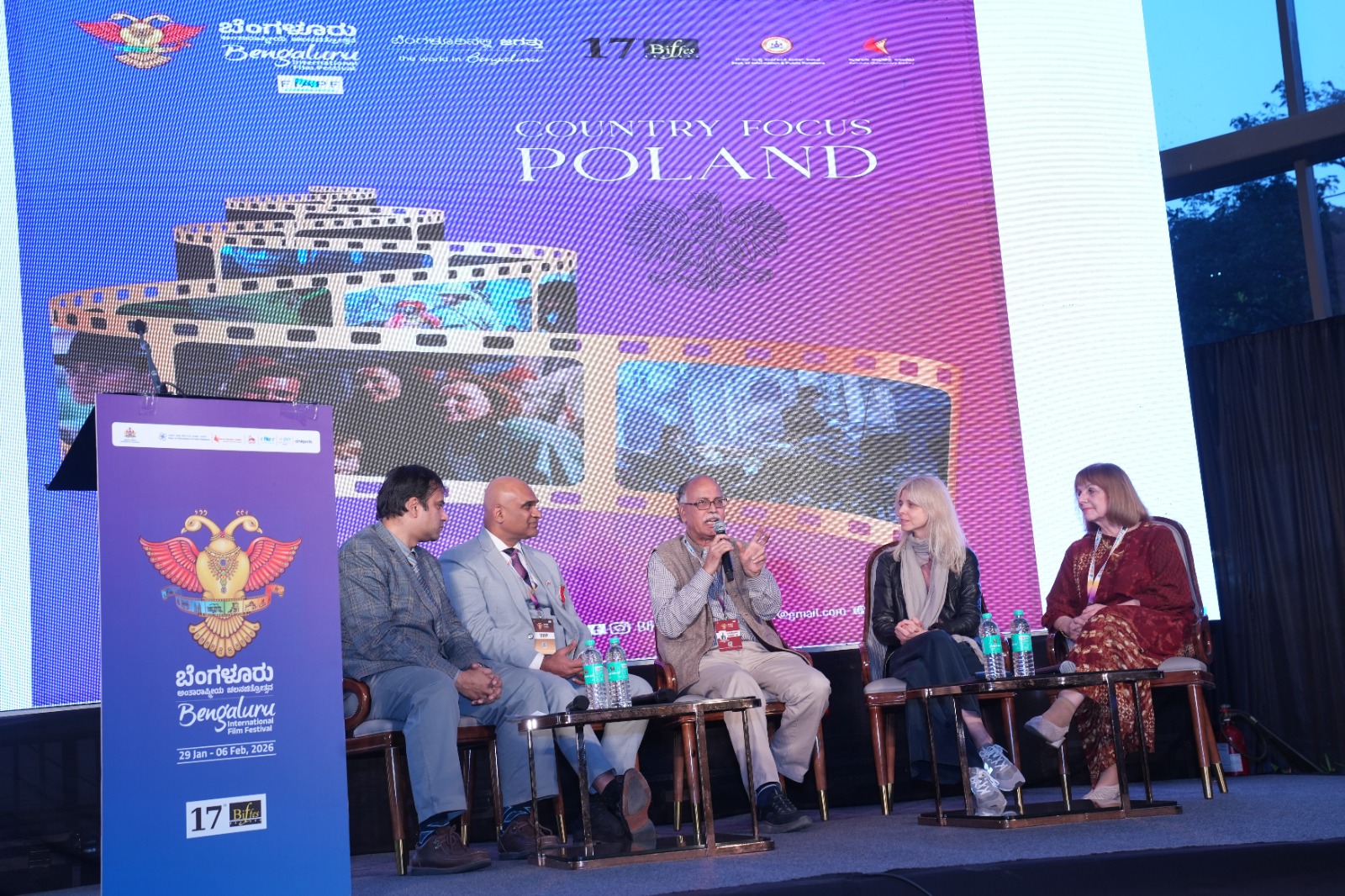
Moderated by producer Sandeep Vishwanath, the session drew filmmakers, editors and students eager to understand how cinema is truly shaped—not on set, but quietly, frame by frame, in the editing room.
“AI can help with research and speed,” Prasad said, “but editing is rooted in instinct, experience and emotional intelligence. These are organic human decisions. A prompt cannot feel rhythm.”
Editing Begins Before the Camera Rolls
Prasad challenged the common perception that editing starts only after a film is shot. For him, the editor’s role begins far earlier—often soon after the first draft of the script.
“I prefer to be involved from the script stage,” he explained. “That early collaboration allows me to bring objectivity, a sense of visual rhythm and narrative clarity.”
This early engagement, he said, helps the editor function as a silent collaborator—one who understands the director’s intent but also anticipates how the story will eventually unfold on screen.
Importantly, Prasad emphasised that scripts are never sacred.
“Once filming begins, reality intervenes—locations, performances, time constraints, budgets. The script evolves, and the editor must evolve with it.”
The Editing Table Is Where the Film Is Made
Calling the editing room the true birthplace of a film, Prasad spoke about how screenplays are often rewritten during post-production.
“This rewriting can be minimal or extensive,” he said, “but it is decisive in shaping the final narrative.”
Being part of the journey—from script development to post-production—allows the editor to contribute meaningfully during this transformation.
“A film finds its final voice only in the edit,” he observed.
Objectivity Through Distance
One of the more intriguing insights from Prasad’s session was his deliberate choice to stay away from film sets.
“I don’t visit sets,” he revealed. “By not being part of the physical struggle of production, I can watch the footage like a first audience.”
This distance, he said, enables him to judge performances and scenes purely on their cinematic impact—without emotional attachment to the effort behind them.
However, he stressed the importance of parallel editing, especially during the early days of shooting.
“The first 10 days are crucial,” he said. “Early edits can reveal issues in tone, performance or missing shots. That’s when you can still course-correct.”
Editing for the Audience
Prasad repeatedly returned to one central idea: editing is ultimately about the audience.
“You must know who your film is for,” he said. “Editing choices change depending on the audience you are addressing.”
While mainstream theatrical films may demand emotional peaks and heightened moments, Prasad cautioned against manufacturing them artificially.
“Those moments must feel organic. Sometimes the best choice is to hold on a performance.”
He warned against excessive cutting simply because multiple camera angles are available.
“Knowing when not to cut is as important as knowing when to cut.”
Micro vs Macro: The Editor’s Two Battles
Explaining his workflow, Prasad described editing as operating on two levels: micro and macro.
During shooting, micro editing focuses on refining individual scenes. But the real challenge emerges later.
“Macro editing is when you look at the film as a whole,” he said. “A scene may work beautifully on its own, but it may not serve the larger narrative.”
He warned that even a single misplaced scene can disrupt momentum and break the audience’s emotional connection.
“That’s when hard decisions have to be made.”
Technology, VFX and the Need for Planning
On the subject of technology and visual effects, Prasad emphasised discipline and foresight.
“Pre-visualisation is essential,” he said. “You must know what is achievable within your budget.”
VFX, he noted, should support the story—not overpower it.
At the same time, Prasad encouraged filmmakers and technicians to remain curious and open to change.
“If you resist technology, you risk becoming irrelevant.”
Cinema Remains a Human Art
Despite acknowledging the growing role of AI and digital tools, Prasad ended on a firm note.
“Cinema is still a deeply human art form,” he said. “At the end of the day, it depends on invisible, intuitive choices—choices that only a human editor can make.”
At BIFFes, “The Invisible Art of Editing” lived up to its name, offering a rare glimpse into a craft that often goes unnoticed but ultimately decides how a story breathes, flows and stays with us long after the screen fades to black.