Union Power Minister Manohar Lal says India’s focus in the energy sector revolves around innovation, affordability and global collaboration to bring matchless disruption
Govt releases two key reports on “National Resource Adequacy Plan” and “Transmission Plan for Integration of over 900 GW Non-Fossil Fuel Capacity by 2035-36”
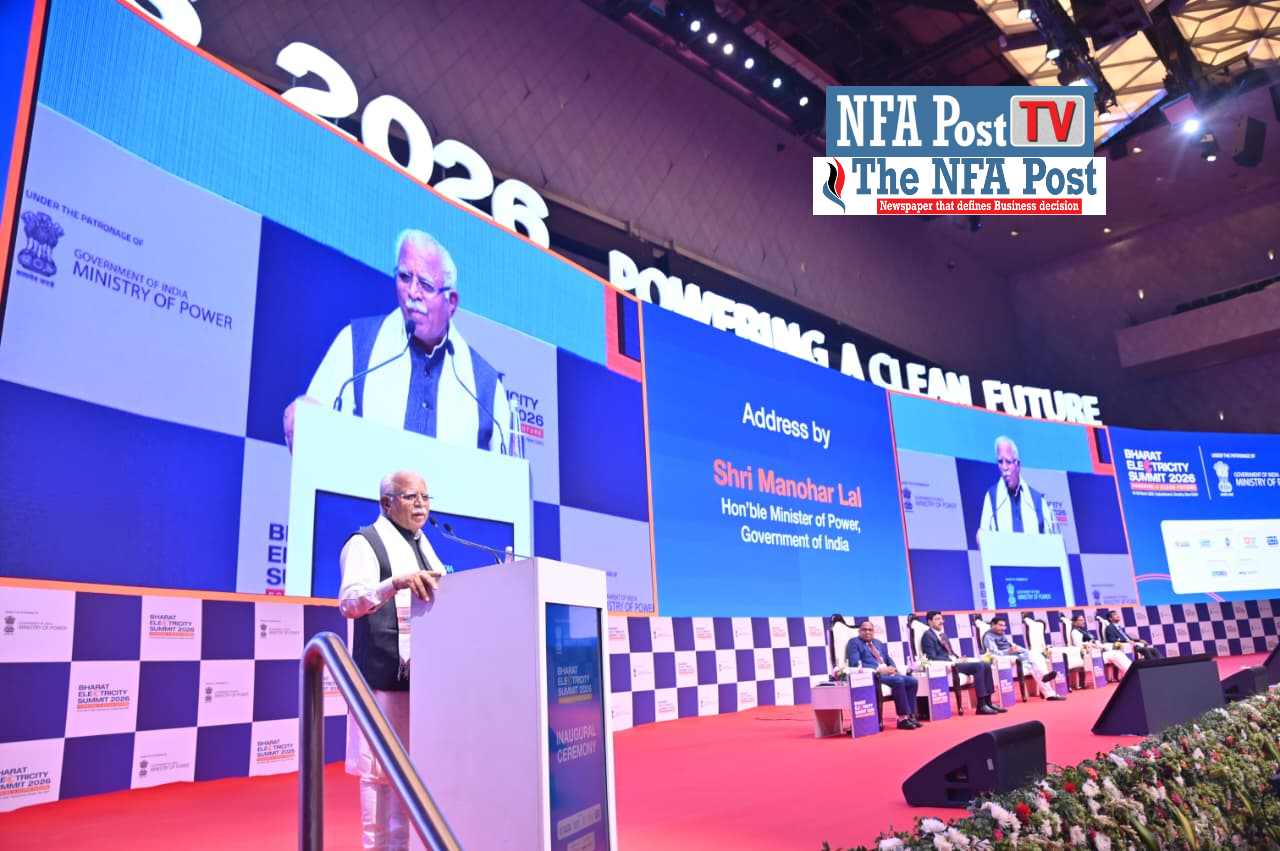
New Delhi, NFAPost: ‘Bharat Electricity Summit 2026’, a four-day global Conference-cum-Exhibition for the power sector, was inaugurated by Union Minister of Power and Housing & Urban Affairs Manohar Lal on Thursday, exhorting Indian and global players to avail unprecedented power sector investment opportunities of approximately Rs 200 lakh crore over the next two decades in the country.
“India stands at a critical juncture of achieving its Nationally Determined Contribution (NDC) target of 50% cumulative non-fossil electric capacity nearly five years ahead of schedule. I also appreciate also to coming up with initiative like the SHANTI Act 2025, PM Surya Ghar Muft Bijli Yojana,” said Union Minister of Power Manohar Lal.
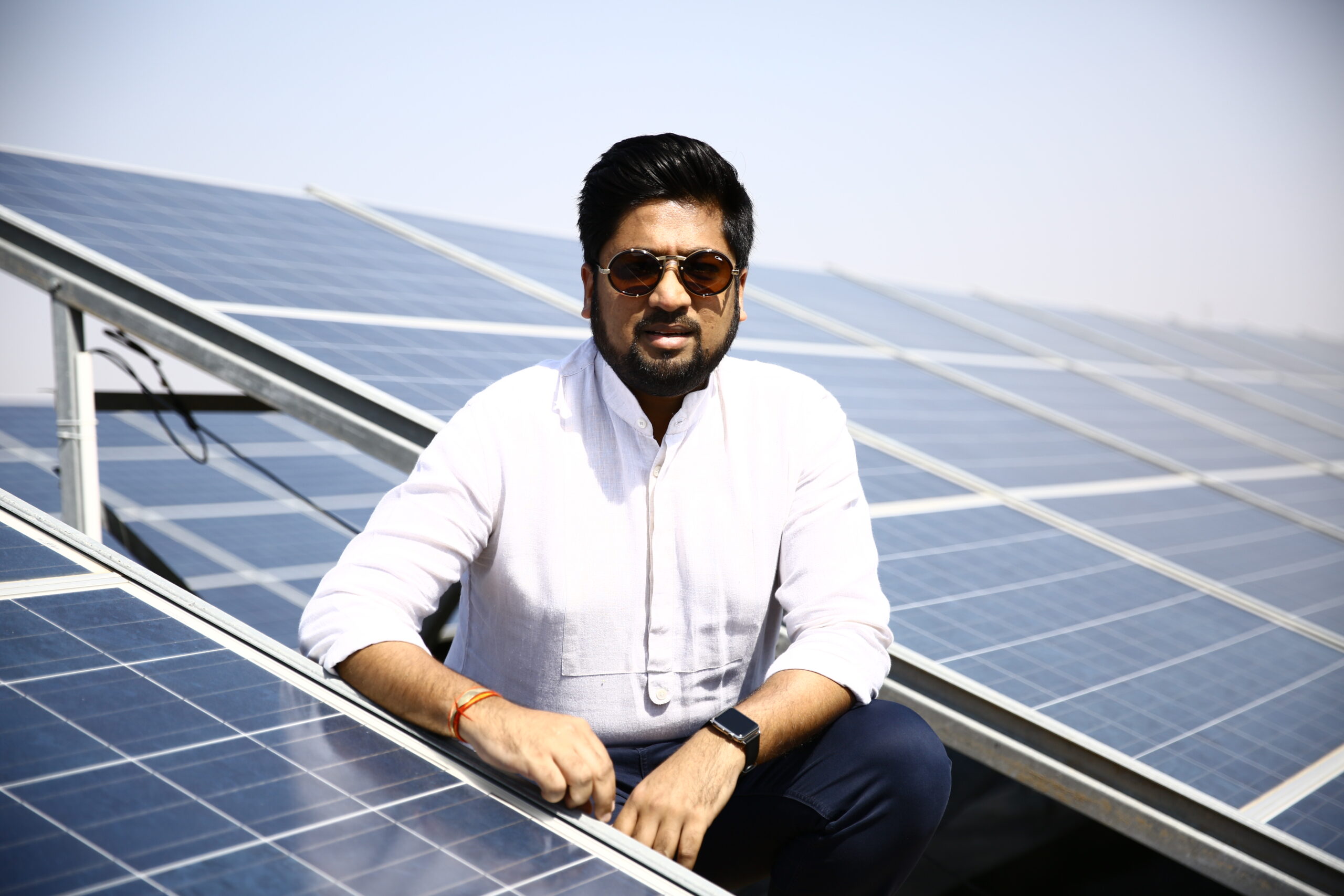
The Union Minister, during the keynote address, also said India’s unbelievable transition from power deficit to a power surplus nation, registering exponential growth in solar energy capacity from 2.8 GW solar capacity to over 143 GW now.
“It is also important that India achieved remarkable progress with a 72% expansion in transmission infrastructure to over 5 lakh circuit kilometers, meeting 250 GW peak demand in 2024-25 and being fully prepared to meet peak demand of 270 GW and beyond,” said Union Minister of Power Manohar Lal.
He also said India is positioning itself in the power sector as a future global exporter of affordable energy as the backbone of the country’s vision to become a developed nation by 2047. “Initiatives such as cross-border energy connectivity, undersea transmission networks etc are steps in the roght direction to be global power player,” said Union Minister of Power Manohar Lal.
He further added that today is not just another day; it is a day of resolve for India’s energy transformation.
“From relying on conventional resources to now returning to the power of the sun, we are completing a full circle. Energy is at the heart of development, and as India moves towards becoming a developed nation by 2047, our focus is on innovation, affordability, and global collaboration. This ‘Conference of Light’ is not just an event, but a movement to take India’s energy leadership to the world,” said Union Minister of Power Manohar Lal.
Speaking at the event, Union Minister of New and Renewable Energy Pralhad Joshi emphasised that while thermal power will continue to serve as the backbone of the energy system, renewable energy represents the only sustainable long-term pathway, underscoring the need for a balanced transition driven by scale, speed, and skill.
“India’s electronic production has expanded over six-fold from Rs 1.1 lakh crore to Rs 1.8 lakh crore in recent years. Exports are on the rise, but emerging global regulations such as the Carbon Border Adjustment Mechanism (CBAM) could pose challenges for carbon-intensive sectors, including steel and even segments like toys, due to their embedded emissions,” said Union Minister of New and Renewable Energy Pralhad Joshi.
The minister stressed that affordable power will be critical in sustaining this growth momentum. “Lower power costs directly cut manufacturing expenses and improve global competitiveness. But competitiveness alone would not suffice unless production also aligns with low- or zero-emission standards,” said Union Minister of New and Renewable Energy Pralhad Joshi.
The Union Minister also argued that renewable energy (RE) offers the most viable pathway to reducing power costs over the long term.
“Declining costs of RE technologies — as well as battery energy storage systems (BESS) — are creating an opportunity to build a more cost-effective and cleaner power ecosystem. While thermal power will continue to play a role in meeting baseload demand, there is a need to develop workable solutions to better integrate RE into the grid,” said Union Minister of New and Renewable Energy Pralhad Joshi.
Ministry of Power Secretary Pankaj Aggarwal said India’s power sector has undergone significant transformation over the past decade, with installed capacity more than doubling to 520 GW.
“RE has been at the heart of this growth, particularly since 2016. Much of this progress represents the “hardware” of the system — physical infrastructure such as generation capacity and transmission networks,” said Ministry of Power Secretary Pankaj Aggarwal.
He also pointed out that the next phase of growth will depend equally on strengthening the “software,” including regulatory frameworks, market design, and pricing mechanisms, as the sector moves away from traditional cost-plus models to more dynamic, market-based systems suited for a renewable-heavy grid.
The event also witnessed the presence of Minister of State for Power and New & Renewable Energy Shripad Naik, Central Electricity Authority (CEA) Chairperson Ghanshyam Prasad and Ministry of Power Secretary Pankaj Agarwal.