At Gas Turbine Research Establishment, Raksha Mantri Calls for Strategic Urgency in Military Propulsion Technology
Bengaluru, NFAPost: In a forceful call for accelerated self-reliance in defence technology, Defence Minister Rajnath Singh has set an ambitious 5–7 year target for India to achieve a breakthrough in indigenous aero engine development.
Speaking during his visit to the Gas Turbine Research Establishment (GTRE), a key laboratory under the Defence Research and Development Organisation (DRDO), Singh urged scientists and engineers to compress timelines dramatically.
“We must assume that 20 years have already passed and we now have only 5–7 years left,” he said, describing the moment as decisive for India’s strategic aspirations.
A Critical Technology Gap
Aero engine technology remains one of the most complex and strategically sensitive domains in defence manufacturing. Mastery requires deep integration of thermodynamics, materials science, fluid mechanics and advanced mechanical engineering—areas where even developed nations invest decades of sustained research.
Singh acknowledged that advanced nations typically take 25 to 30 years to build next-generation engines. However, he stressed that India cannot afford prolonged development cycles in a rapidly evolving geopolitical environment marked by fragile global supply chains.
“Countries possessing indigenous critical technologies will remain secure and self-sustaining,” he observed.
Review of Indigenous Programmes
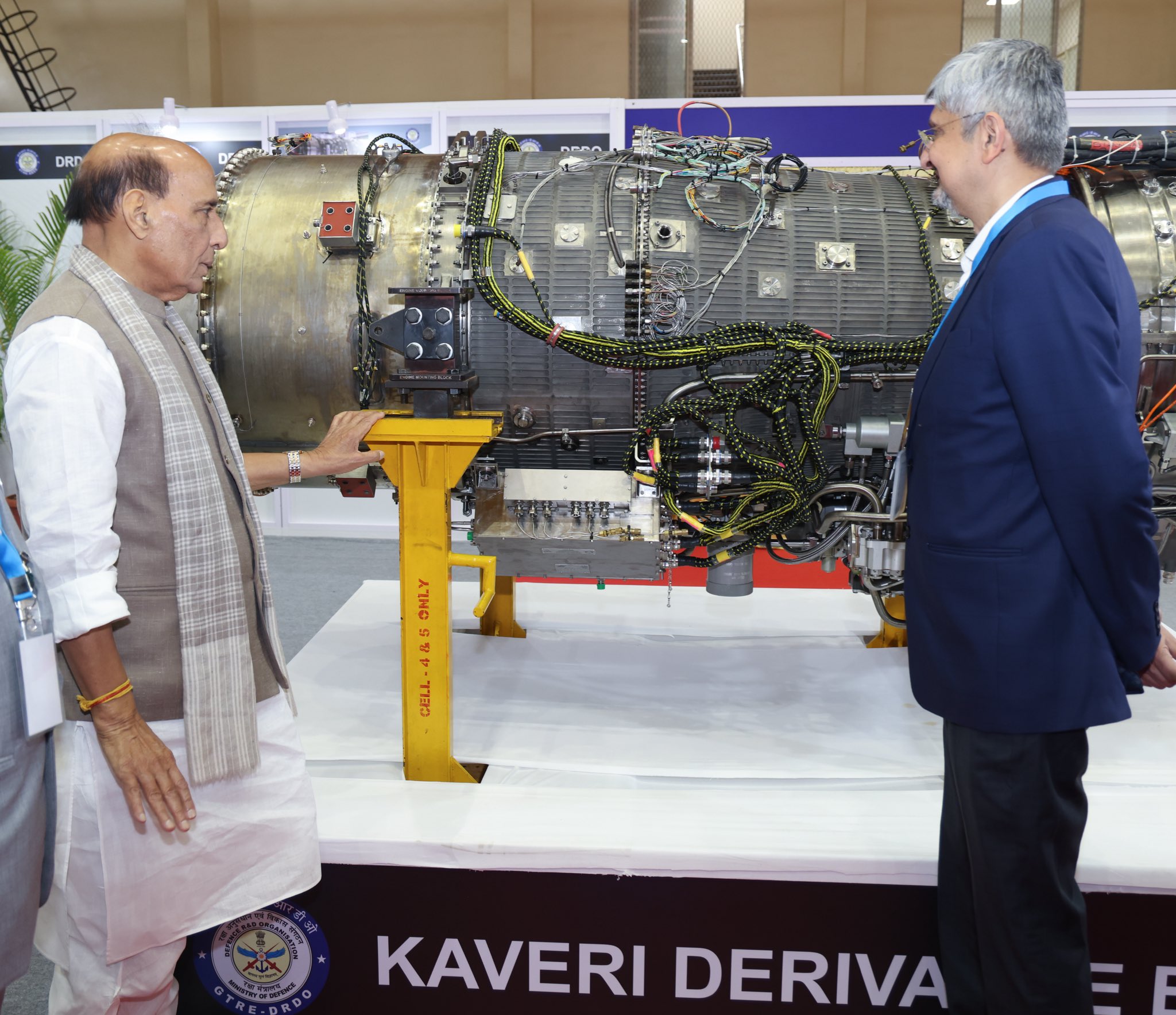
During his visit, the Raksha Mantri reviewed ongoing indigenous military gas turbine engine programmes and was briefed on collaborations involving Indian industry, academia and R&D institutions.
He witnessed a full afterburner engine test of the Kaveri Engine and toured an exhibition showcasing indigenous engines and key components developed at GTRE.
The visit signals renewed emphasis on closing long-standing propulsion gaps that have historically limited India’s ability to independently power advanced fighter aircraft.
AMCA and Beyond
Linking propulsion technology to India’s next-generation fighter ambitions, Singh referenced the Advanced Medium Combat Aircraft (AMCA) programme, stating that India is moving swiftly into its design and development phase.
He urged scientists not to confine themselves to fifth-generation capabilities but to initiate work immediately on sixth-generation propulsion systems incorporating Artificial Intelligence, Machine Learning and advanced materials.
The message was clear: propulsion is the backbone of air dominance, and India must leapfrog rather than merely catch up.
Aatmanirbharta and Strategic Autonomy
Reiterating the government’s commitment under Prime Minister Narendra Modi to achieve Aatmanirbharta (self-reliance) in strategic sectors, Singh framed indigenous aero engines as central to national security.
He cited Operation Sindoor as an illustration of India’s growing defence self-reliance, noting that indigenous communication systems, surveillance platforms and weapon systems had strengthened operational effectiveness and boosted national morale.
International Collaboration
Singh also highlighted ongoing and proposed collaborations with the United Kingdom and France under the National Aero Engine Mission, indicating that partnerships with technologically advanced nations will play a role in overcoming historical bottlenecks.
Such collaborations, he suggested, are aimed not at dependence but at accelerated capability absorption.
Dual-Use Dividend
Beyond military applications, Singh pointed to the broader economic impact of propulsion technologies. Advances in high-temperature composites, materials engineering and turbine systems could benefit civil aviation, power generation and the space sector—creating high-value technological spillovers.
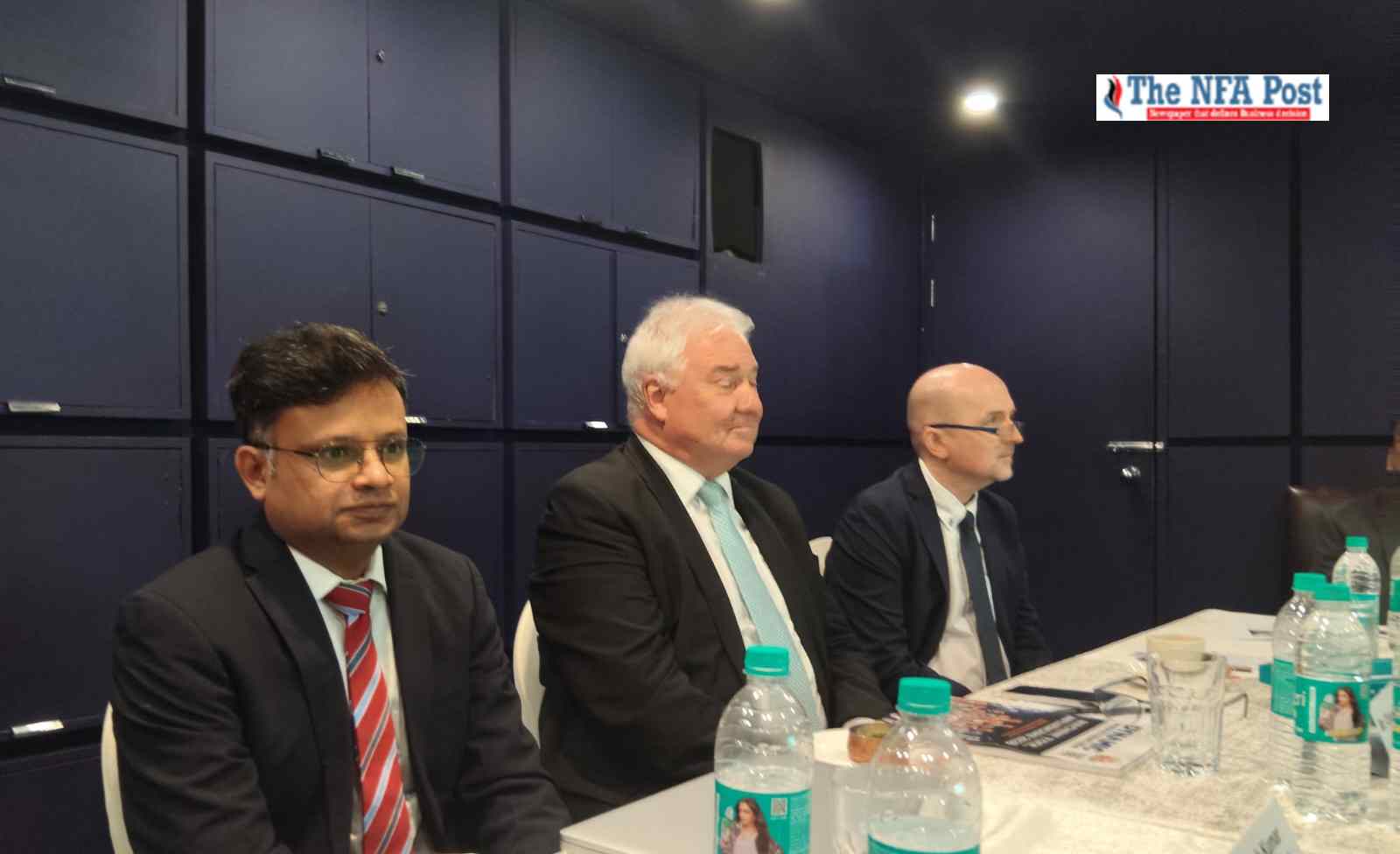
Present at the event were Secretary, Department of Defence R&D and DRDO Chairman Dr Samir V. Kamat, along with senior scientists and GTRE officials.
A Compressed Timeline
By publicly declaring a 5–7 year window, the Defence Minister has effectively placed propulsion technology at the centre of India’s strategic modernisation agenda.
Whether India can compress what has traditionally been a three-decade technological journey into less than a decade remains a formidable challenge. But the political signal is unmistakable: in the domain of aero engines, incrementalism is no longer an option.
The clock, as Singh made clear, is already ticking.