Priyank Kharge Raises Questions on Transparency; Vijayendra Yediyurappa Accuses Congress of Political Targeting
Bengaluru, NFAPost: A sharp political confrontation has erupted in Karnataka after the Congress questioned the transparency and registration status of the Rashtriya Swayamsevak Sangh (RSS), drawing an equally forceful rebuttal from the Bharatiya Janata Party (BJP).
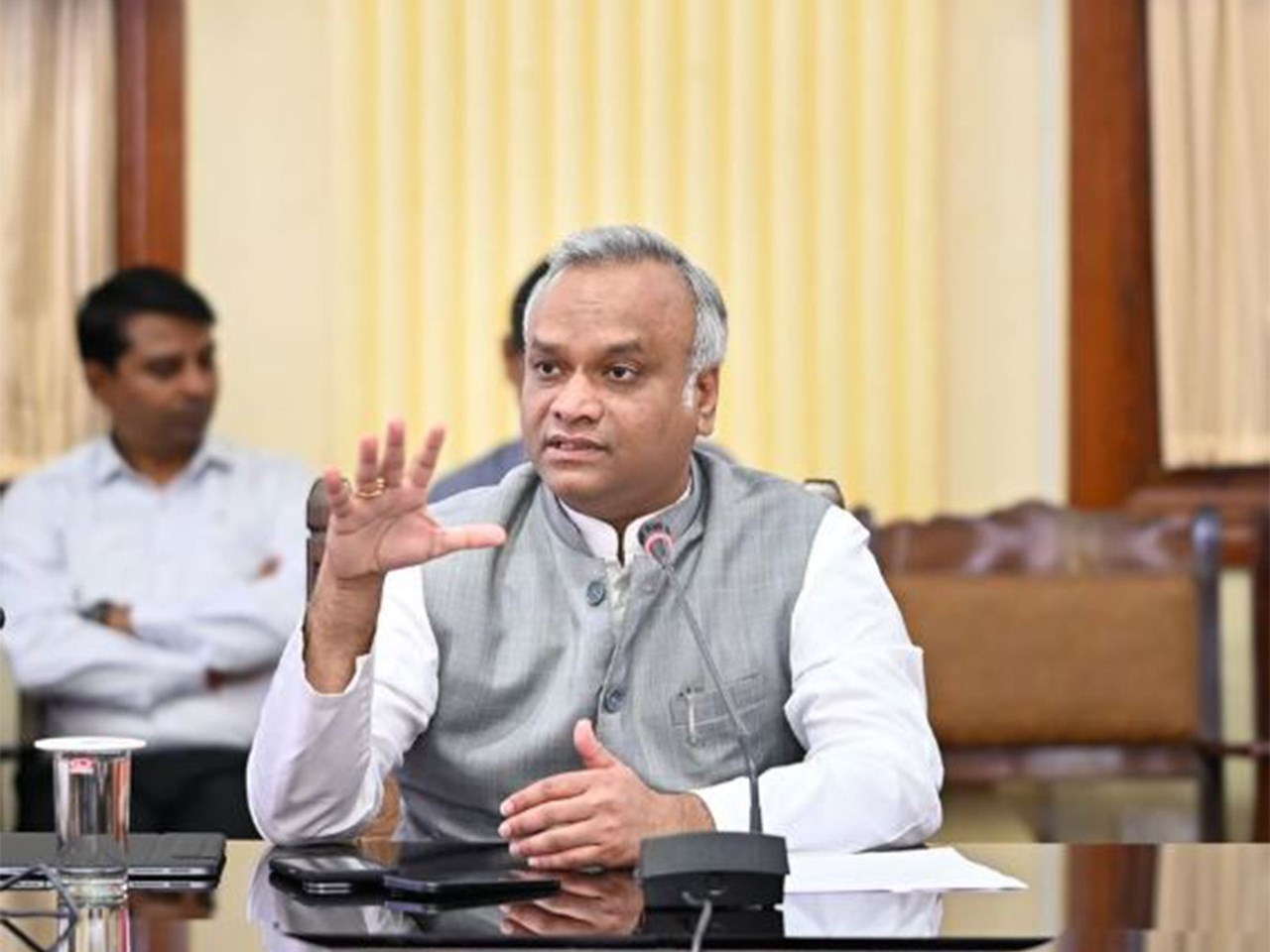
The controversy began when Karnataka Minister Priyank Kharge raised questions regarding the legal registration, financial disclosures, and functioning of the RSS, asking whether an organisation operating nationwide should be subject to statutory scrutiny and financial accountability.
Kharge’s remarks triggered an immediate political response.
BJP Hits Back
Karnataka BJP president Vijayendra Yediyurappa accused the Congress of deliberately targeting what he described as the ideological mentor of the BJP for political mileage.
He defended the RSS as a nationalist cultural organisation and alleged that the Congress was attempting to malign it to divert attention from governance challenges in the state.
The exchange soon escalated beyond policy questions, with Congress leaders accusing Vijayendra of resorting to personal attacks instead of addressing the substantive issues raised.
Congress Stands by Transparency Argument
The Karnataka Pradesh Congress Committee (KPCC) said the BJP was evading “basic and legitimate questions” about transparency by shifting the focus to personal criticism.
Congress leaders maintained that any organisation functioning within India, regardless of its ideological orientation, must comply with applicable laws, including registration norms and financial accountability requirements.
They argued that raising such questions falls within democratic rights and public discourse, and should not automatically be construed as an ideological attack.
BJP Terms Allegations Politically Motivated
The BJP, however, dismissed the charges as baseless and politically motivated. Party leaders asserted that the RSS is a socio-cultural organisation committed to national service and does not require validation from its political opponents.
The party also framed the Congress’ remarks as part of a broader pattern of ideological hostility toward nationalist institutions.
Ideological Faultlines Resurface
Political observers note that the confrontation reflects a deeper ideological contest between the Congress and the BJP—one that frequently surfaces around issues concerning the RSS.
Karnataka, which has often served as a battleground for national political narratives, appears once again to be at the centre of a larger ideological debate.
As rhetoric intensifies on both sides, the dispute underscores enduring questions about transparency, accountability, and political positioning in India’s democratic framework.
For now, what began as a question on compliance has evolved into a full-fledged political slugfest—one that is likely to reverberate beyond Karnataka’s borders.