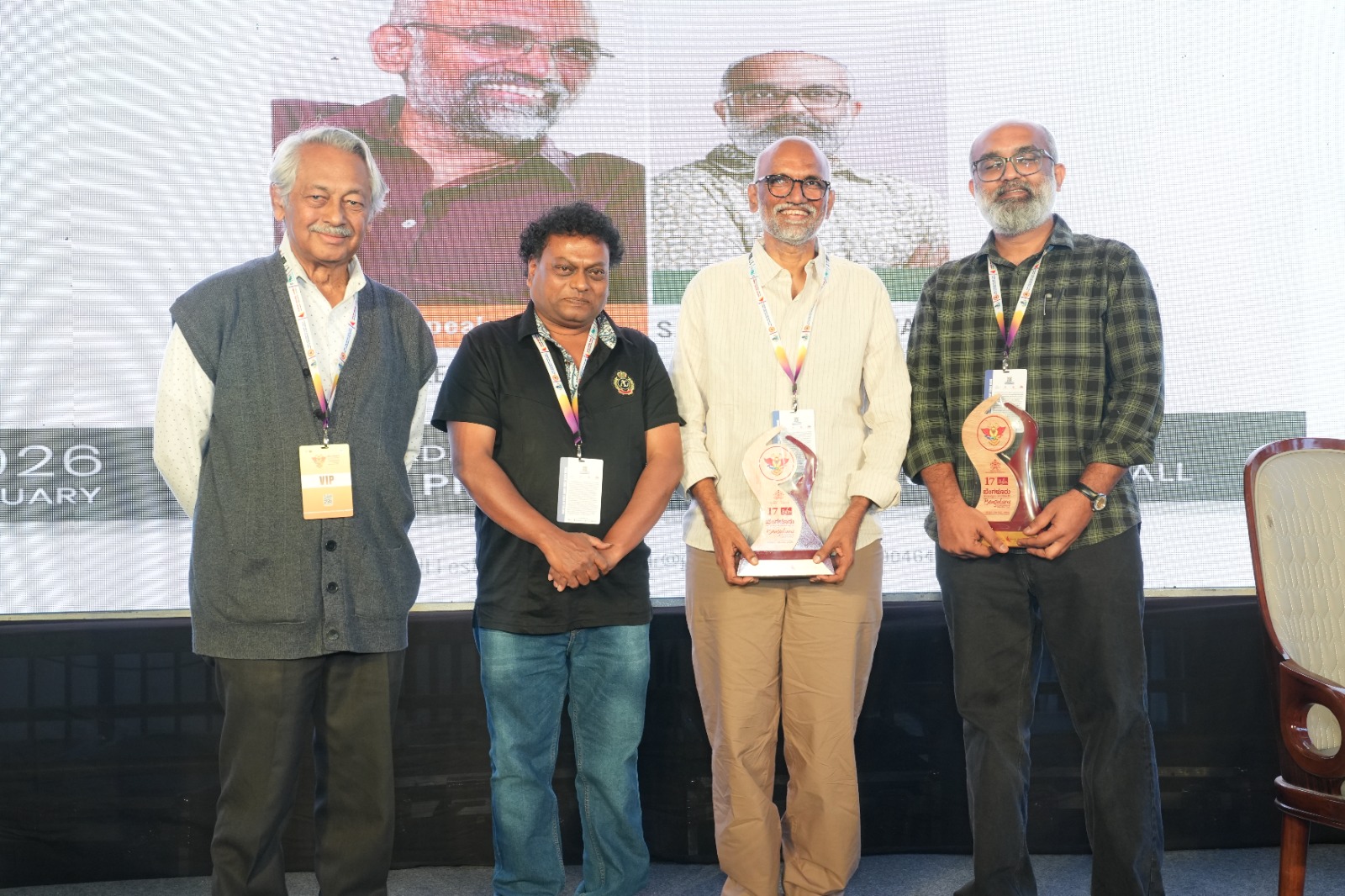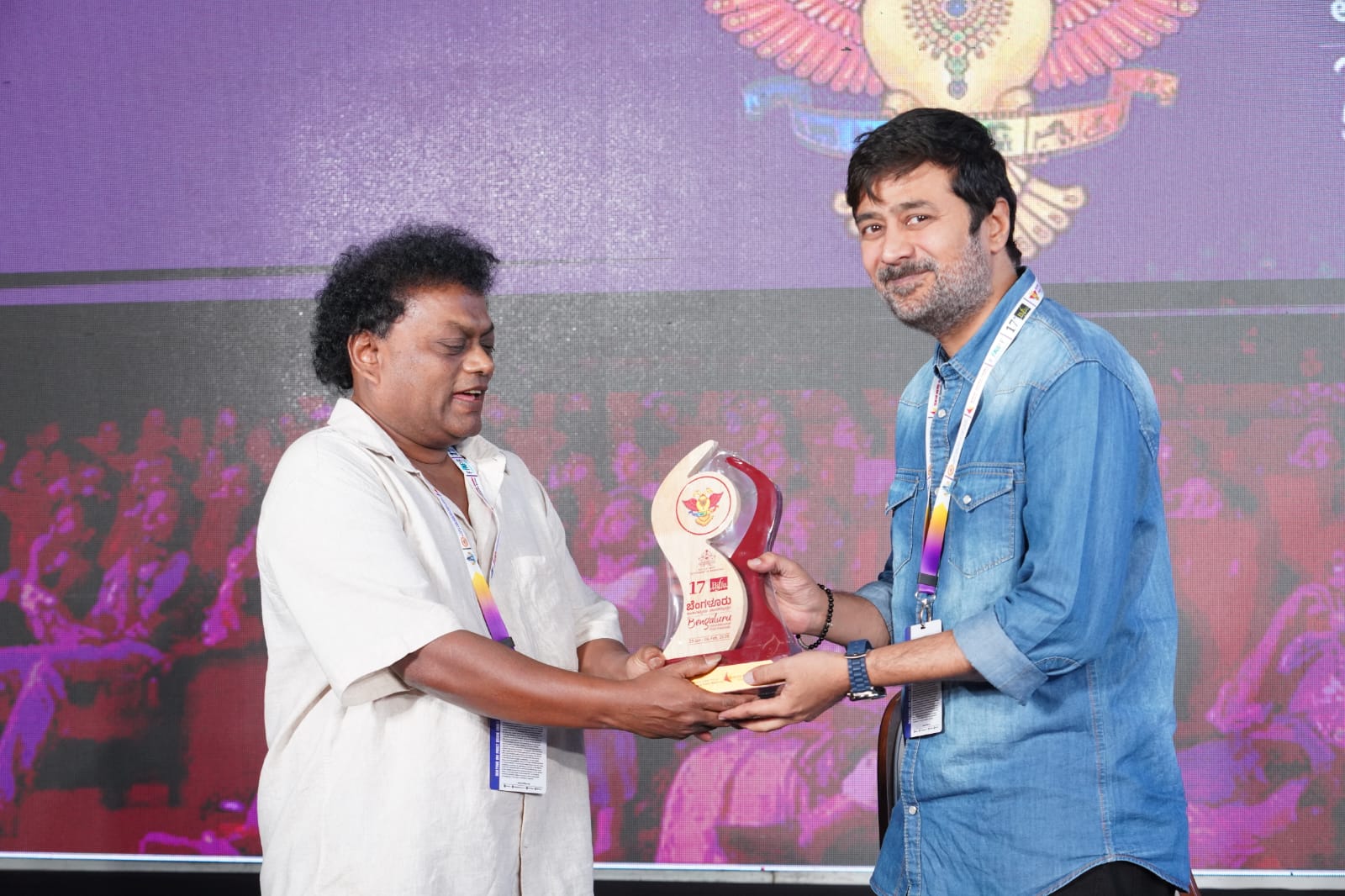
At BIFFes, the actor-director stresses preparation, empathy, and discipline as the true foundations of filmmaking
Bengaluru, NFAPost: Planning, clarity and compassion matter far more than chaos and improvisation on a film set, observed actor-director Rahul Ravindran during a Master Class session at the 17th Bengaluru International Film Festival (BIFFes). Speaking to a packed hall of aspiring filmmakers and cinema students, Ravindran urged directors to “make the film on paper first” before facing the camera.
According to him, the biggest mistake young filmmakers make is postponing creative decisions until they reach the shooting location.
“Instead of going to the location and then thinking about what to shoot, everything should be visualised and planned in advance,” he said. “When you direct the film on paper first, editing becomes far easier and far more efficient.”
Cinema Is Expensive—Efficiency Is Non-Negotiable
Ravindran, director of The Girlfriend, described cinema as one of the most resource-intensive art forms, where lack of planning can lead to severe financial consequences.
“Cinema is a very expensive art form. Efficiency is extremely important,” he noted.
“You should shoot only what is necessary for one film. If you shoot footage that could make two films and finally use material for only one, the rest is a complete waste of time, effort and money.”
Such inefficiency, he warned, often results in heavy losses for producers.
“That is why having a bound script before shooting is crucial,” he stressed.
Preparation vs Improvisation
Addressing the popular belief that some successful filmmakers arrive on set without fixed scenes or dialogues, Ravindran offered a nuanced perspective.
“There are examples of directors like Sukumar who created scenes and dialogues on location and still succeeded,” he acknowledged.
“But even they had done a tremendous amount of preparation beforehand. They don’t arrive clueless—they refine and improve what they have already thought through.”
Improvisation, he suggested, works only when built on a solid foundation of preparation.
Empathy Is a Director’s Greatest Tool
Beyond technical discipline, Ravindran spoke passionately about the human side of filmmaking, emphasising empathy and respect on set.
“Most importantly, a director should have empathy for the film crew,” he said.
“Some people shout a lot during shoots. We are not fighting a war. Shooting requires patience.”
He underlined the importance of equality and dignity across all departments.
“Everyone on set must be treated equally. Every person has self-respect and dignity. No one should be looked down upon. Compassion is essential.”
His remarks drew strong responses from young filmmakers, many of whom see set culture as a defining factor in sustainable filmmaking.
From Idea to Execution
During the session, Ravindran also walked the audience through the creative journey of his directorial projects, including The Girlfriend, explaining how ideas evolve from concept to screenplay to final execution.
He highlighted the importance of clarity at every stage—writing, planning, shooting and post-production—and how this clarity allows a director to communicate effectively with actors, technicians and editors alike.
A Masterclass Rooted in Practical Wisdom
The discussion, moderated by senior journalist Latha Srinivasan, stood out for its practical insights rather than abstract theory. Ravindran’s emphasis on discipline, preparation and humane leadership offered a grounded counterpoint to the romanticised notion of filmmaking as pure chaos-driven creativity.
At BIFFes, his masterclass served as a reminder that great cinema is not born out of last-minute confusion—but out of thoughtful planning, respect for people, and the patience to let ideas take shape long before the camera starts rolling.