At BIFFes, the celebrated cinematographer delivers a compelling masterclass on why preparation, passion and visual language define enduring cinema
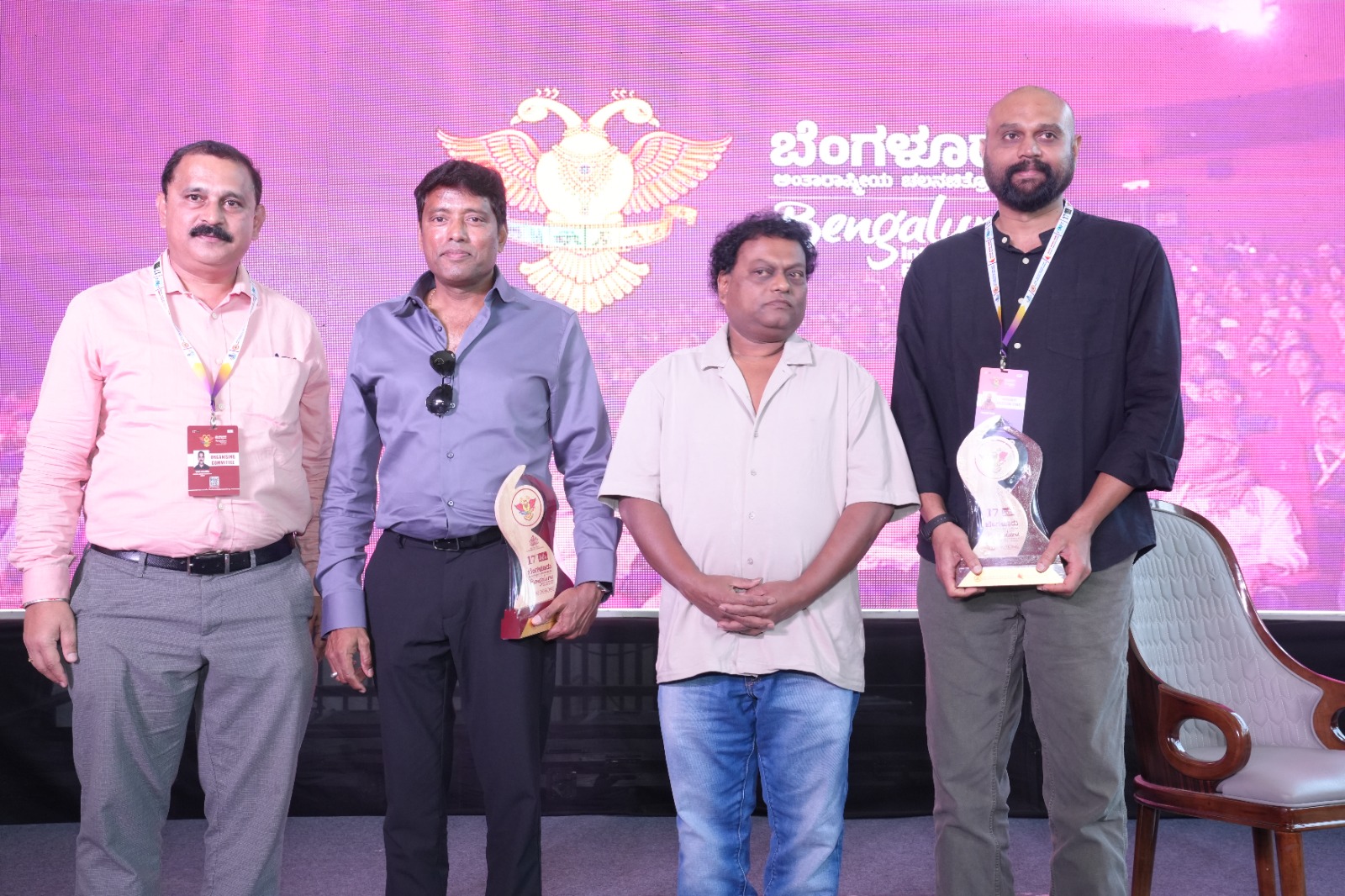
Bengaluru, NFAPost: Cinema demands preparation long before the camera starts rolling. This was the unequivocal message from renowned cinematographer R Rathnavelu, who conducted a deeply insightful masterclass titled “When Light Becomes Language”at the 17th Bengaluru International Film Festival.
Addressing an audience of filmmakers, students and cinema enthusiasts, Rathnavelu stressed that discipline and learning must precede ambition in the film industry.
“It is better to enter cinema after proper study,” he said. “One should learn first and then experiment. Nowadays, people want to enter the industry first and learn later. In such cases, there is no room to experiment. Discipline is the key—and that is why even 65- and 70-year-olds are still working in Hollywood today.”
From Script to Screen: A Cinematographer’s Responsibility
Sharing his working process, Rathnavelu explained that cinematography begins much before shooting.
“I read the script two or three times. I try to understand the director’s vision,” he said. “Then I think about how the emotions of the story can be translated into a visual language—sometimes even better or differently than what the director imagined.”
He added that he stays involved from the writing stage until the film reaches theatres, underlining the collaborative nature of cinema.
Commercial Cinema as a Creative Test
Balancing big-budget commercial films with smaller, experimental projects, Rathnavelu described mainstream cinema as uniquely challenging.
“I enjoy doing both small and commercial films,” he said. “But commercial cinema is tougher. Sometimes stars come in the morning and say they have to leave by 3 PM. You have to shoot within that limitation. It’s like playing a T20 match—you must score runs quickly.”
Adaptability, he noted, is as important as technical skill.
Visual Language and Creative Trust
Recalling his long-standing collaboration with director Sukumar, Rathnavelu offered a revealing anecdote from the making of Rangasthalam.
“If I get an idea, I call Sukumar—even if it’s 11 at night,” he said. “Once, I suggested showing a snake moving through grass using a moving camera. He came over immediately. That’s when I used a gimbal for the first time. We shot 90% of the film on a gimbal, with the camera constantly following the hero.”
That approach, he said, defined the film’s visual identity.
“Every film has its own visual language. When you truly understand cinema, you can create that language. For both Sukumar and me, cinema comes first—everything else comes later.”
Light as Emotion
At the heart of Rathnavelu’s philosophy is light—not merely as illumination, but as emotion.
“Light is what makes a character special. Light creates mood,” he said. “To me, light itself is emotion.”
He illustrated this with an example from 1: Nenokkadine, where an action sequence was shot in an underground parking lot in London.
“They asked how many lights were needed. I said three or four LED lights would be enough,” he recalled. “I used only the lights from cars and bikes present there. The entire unit cheered.”
Learning from the Past, Embracing the Future
Rathnavelu paid tribute to earlier generations of cinematographers who created stunning visuals despite limited resources.
“Our seniors achieved extraordinary imagery without today’s facilities,” he said. “Now we have everything. We should use it to create even better visuals.”
He emphasised the importance of mentorship, noting that while it took him ten years to master recreating sunlight on set, today’s assistants can learn the same in months due to technological access.
The Return of Film and the Risk of Uniformity
While acknowledging that digital cameras have simplified filmmaking, Rathnavelu warned of creative monotony.
“Life became easier after digital cameras, but most films now look the same,” he observed.
He revealed that portions of the upcoming film Peddi, starring Ram Charan, were shot on negative film.
“Ram Charan was thrilled. The sound of negative cameras was being forgotten, but now they are coming back—even Hollywood YouTubers are using film again.”
Cinema as Collective Passion
Concluding the session, Rathnavelu reiterated that cinema is a deeply emotional, collaborative art.
“Cinema is close to the heart. To create powerful visuals, everyone must work together.”
He went on to break down scenes from films such as Devara, Vaaranam Aayiram, Enthiran, 1: Nenokkadine and Rangasthalam, explaining camera choices, lighting strategies, and collaboration with VFX artists and colourists.
Elegantly moderated by Prashanth Pandit, the session lived up to its promise—offering not just technical insights, but a philosophy of cinema rooted in discipline, curiosity and passion.
At BIFFes, Rathnavelu’s masterclass stood out as a reminder that great cinematography begins not with equipment, but with understanding, patience and the courage to listen to light.