From young astronauts venturing into space to cinema that preserves national memory, cultural diplomacy emerges as a powerful bridge between India and Poland at the Bengaluru International Film Festival
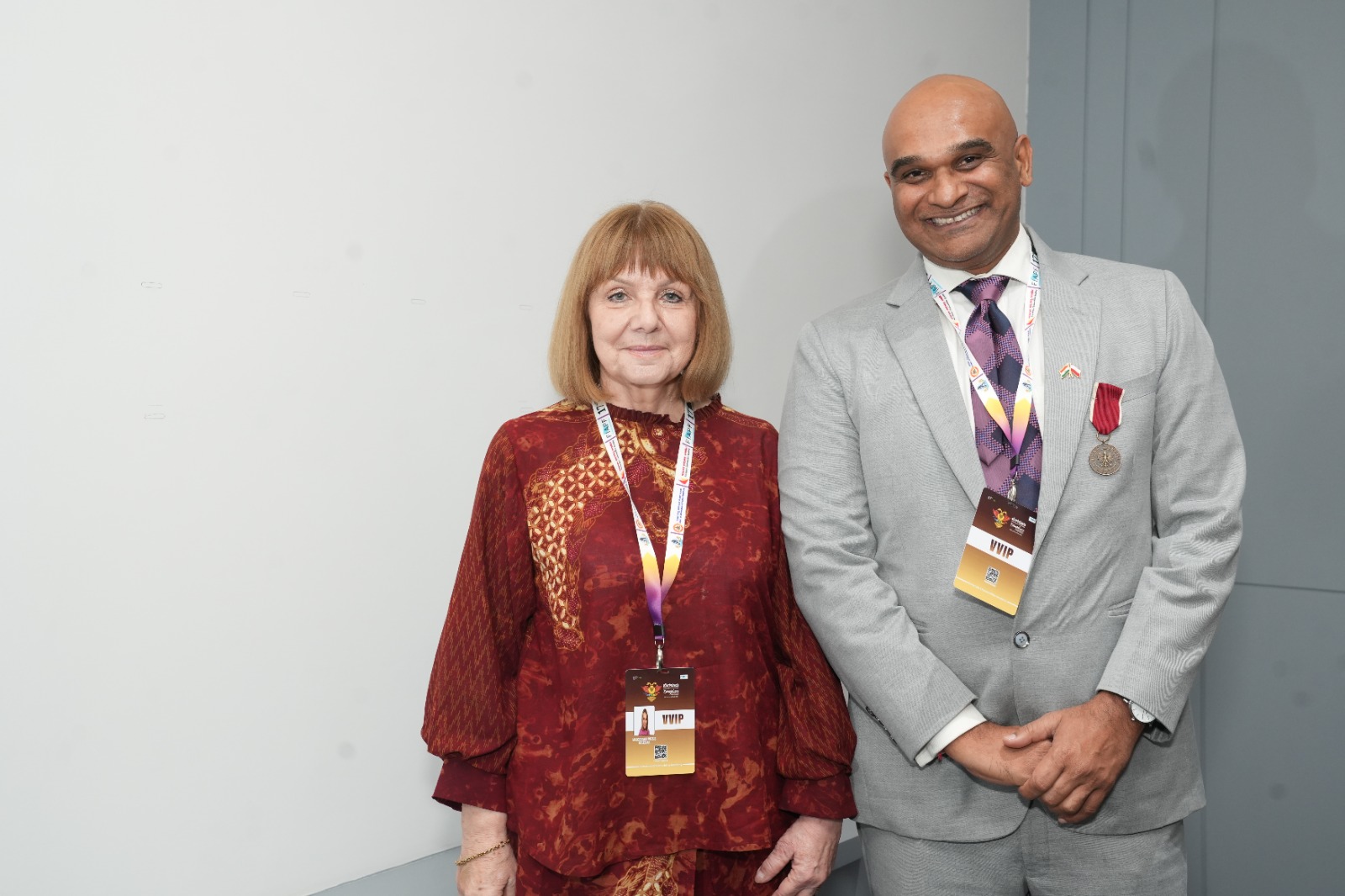
Bengaluru, NFAPost: India and Poland are discovering new and meaningful ways to connect—through both culture and space exploration. Highlighting this growing bond, Malgorzata Wejsis-Golebiak, Director of the Polish Institute in New Delhi, said that the participation of young astronauts from both countries in global space missions symbolises a fresh chapter in bilateral engagement.
Referring to Indian astronaut Shubhanshu Shukla and Polish astronaut Slawosz Uznanski-Wisniewski, Malgorzata noted that such milestones bring nations closer beyond diplomacy.
“With young astronauts from India and Poland taking part in missions to space, our countries have come together in a very symbolic way,” she said. “In the coming days, such meetings will also be organised through culture.”
She was speaking during a special press interaction ahead of a panel discussion titled “Polish Cinema and the Andrzej Wajda Legacy: Art, History, Cinema and Identity”, organised at the Open Forum as part of the 17th Bengaluru International Film Festival (BIFFes).
Culture as a Living Form of Diplomacy
Malgorzata emphasised that cultural exchange remains central to strengthening ties between the two nations.
“As diplomats, we represent not only our country, but our culture in its broadest sense,” she said. “Not just films, theatre or literature, but through all these mediums we try to tell Indian audiences the story of Poland—our history, our relationships, and our experiences.”
She added that cultural storytelling plays a crucial role in fostering understanding and people-to-people connections.
“Based on these shared stories, we hope to fulfil our mission of bringing people from India and Poland closer together.”
Expressing gratitude for Poland being chosen as a focus country at BIFFes this year, Malgorzata said the Polish delegation had curated the programme with care.
“We are honoured to be invited by the festival and the Government of Karnataka. We have tried to bring films that are not only interesting to Indian audiences, but also deeply valuable in understanding Polish culture and history.”
A Strong Polish Presence at BIFFes 2026
Echoing her views, Channarayapatna Rajappa Raghu, Honorary Consul of the Republic of Poland in Bengaluru, expressed happiness over the strong Polish participation at this year’s festival.
“Around 14 Polish films will be screened at the 17th edition of BIFFes,” he said. “I invite people from Bengaluru and across Karnataka to watch these films and experience Polish cinema.”
Celebrating Andrzej Wajda and Contemporary Polish Cinema
Festival curator Murtuza Ali Khan highlighted that this year marks the birth centenary of legendary Polish filmmaker Andrzej Wajda, making the retrospective especially significant.
“We are celebrating the birth centenary of the giant of Polish cinema, Andrzej Wajda,” he said. “In his memory, we have organised a special retrospective featuring seven of his finest films.”
He also noted that Joanna Lapinska, Artistic Director of the Gdynia Film Festival, is serving as a jury member for the Asian Cinema Competition, strengthening the cultural exchange further.
Detailing the Polish film lineup, Murtuza said the programme includes a biopic on composer Frédéric Chopin, a biopic on Franz Kafka directed by Agnieszka Holland, and Under the Volcano by Damian Kocur, Poland’s official Oscar entry.
“Damian Kocur will be visiting in person to conduct a Directing Masterclass,” he added. “We are also screening an important documentary, Letters from Wolf Street. Overall, the audience will experience a comprehensive range of cinema—modern, classic and documentary.”
A Longstanding Cultural Bond
Moderating the session, N Vidyashankar, former Artistic Director of BIFFes, reflected on the deep resonance Polish cinema has had in India.
“For nearly 40 years, Polish films have held a prominent place in film festivals in countries like ours,” he said. “Through Polish cinema, we have understood not only their culture, but also the existential crises and political transitions of Eastern Europe.”
He observed that cinema has made these complex historical shifts relatable to Indian audiences.
“In a sense, we share a cultural bond with Eastern European countries. Their struggles, transitions and resilience become deeply accessible to us through films.”
As BIFFes 2026 unfolds, Poland’s strong cultural presence—rooted in cinema, history and dialogue—stands as a testament to how art and exploration, whether on Earth or in space, continue to build enduring bridges between nations.