At 10th edition of the Phaco Festival, Dr. C. N. Manjunath urges doctors to reclaim compassion, policy makers to correct inequities, and technology to serve not supplant the human touch
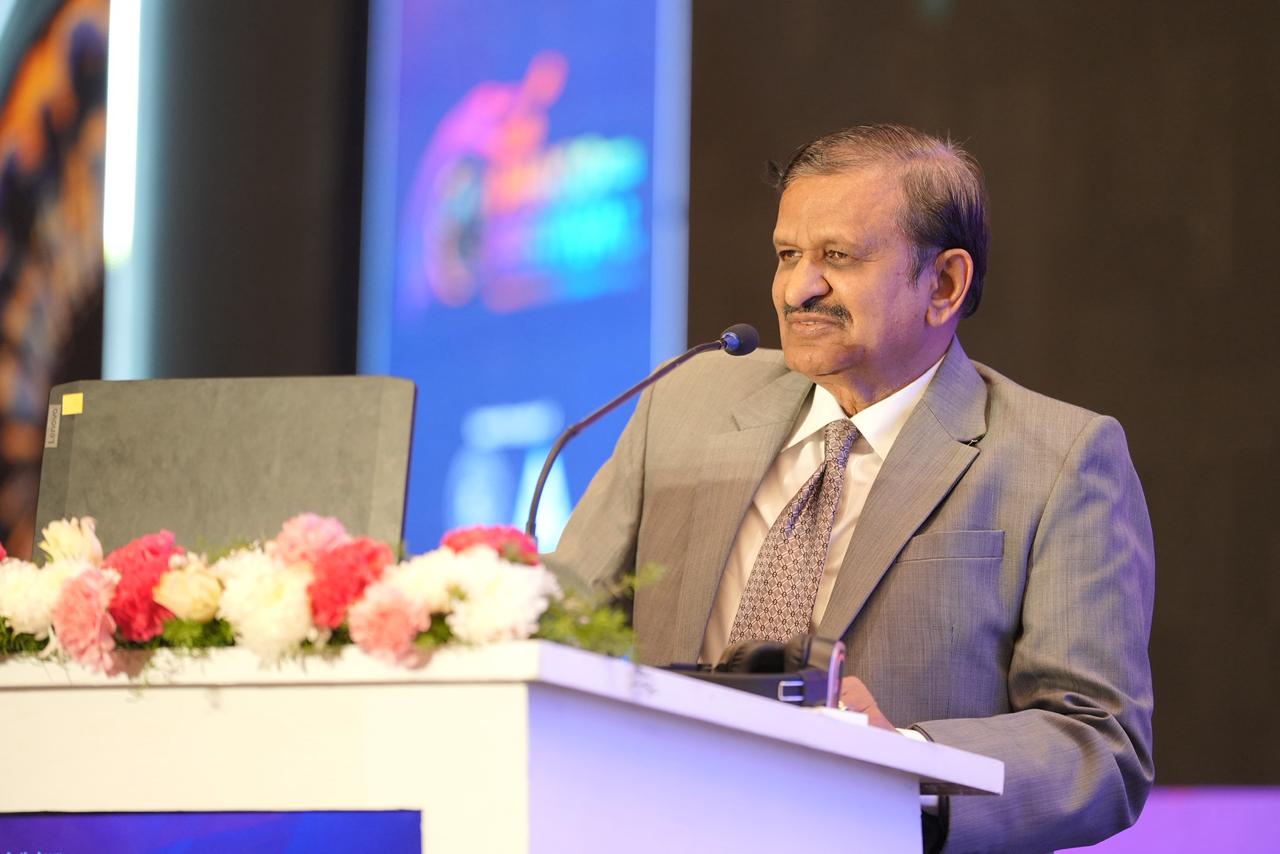
Bengaluru, NFAPost: When Dr. C. N. Manjunath, Member of Parliament (Bengaluru Rural) and Director of the Sri Jayadeva Institute of Cardiovascular Sciences and Research, rose to deliver the inaugural address at the 10th edition of the Phaco Festival, it was evident that this would be more than a ceremonial keynote. What followed was a forthright, experience-laden critique of modern healthcare—and a principled roadmap for restoring balance between technology, affordability, and humanity.
Drawing from decades at the frontlines of public health and policy, Dr. Manjunath offered a diagnosis of India’s medical ecosystem that was both unsparing and hopeful. His message: progress must be tempered by compassion, and innovation must never eclipse judgment.
Between Breakthroughs and Bottom Lines
Dr. Manjunath began by naming the paradox confronting today’s clinicians.
“There is an explosion of technology in every branch,” he observed, “and at the same time, aggressive marketing forces on the other side. We physicians are sandwiched between the two.”
The real test, he argued, lies in navigating this squeeze while ensuring equitable outcomes.
“The core challenge,” he said, “is to provide quality care at an affordable cost to the cross-section of society.”
A System Out of Balance
Despite India’s impressive expansion in medical education—over 820 medical colleges and 1.22 lakh MBBS seats—Dr. Manjunath pointed to a structural fault line.
“There is maldistribution of doctors. There is maldistribution of specialists.”
Tier-1 and Tier-2 cities, he noted, continue to monopolise medical talent, leaving rural and semi-urban India underserved. Speaking from his experience on a parliamentary standing committee on health, he proposed targeted policy solutions:
“We should consider a ten-year tax holiday for those who establish hospitals in tier-three cities or rural areas.”
To encourage young doctors to serve where the need is greatest, he added:
“If an MBBS doctor serves in rural areas, additional incentive marks in NEET PG should be considered.”
Netradhama: Where Quality Meets Conscience
In a healthcare landscape often criticised for excesses, Dr. Manjunath singled out Netradhama, the Phaco Festival’s host institution, as an exemplar of ethical balance.
“Here is an exclusively special institution,” he said. “Quality and charity coexist—subsidy, service, and a humanitarian approach.”
Care, he noted, is never denied.
“Even if somebody doesn’t have money, or documents, treatment is not withheld.”
Why the Human Touch Still Matters
At a time when artificial intelligence and diagnostics dominate discourse, Dr. Manjunath issued a reminder that resonated across the packed auditorium.
“Your supercomputer should be your own brain.”
He distilled clinical excellence into what he called the three T’s:
“Talk, touch, and treat. When you follow these three, the fourth T is automatically added—trust.”
Lamenting the erosion of doctor–patient dialogue, he drew a line between competence and greatness:
“An average doctor treats the disease. An excellent doctor treats the patient.”
Lifestyle Diseases and the Price of Progress
The address turned sobering as Dr. Manjunath cited data on India’s health burden.
“Nearly 60% of deaths in India today are due to lifestyle-driven diseases—heart attacks, strokes, diabetes.”
More alarming, he said, is their early onset.
“Parents are now bringing patients aged 20 to 40. This prematurity is synonymous with lifestyle and environmental change.”
Equally critical, he argued, is economic sensitivity in clinical decision-making. Recalling a case from 22 years ago where conservative management spared a patient unnecessary surgery, he said:
“You must understand the financial dynamics of the patient before deciding treatment.”
His principle was unambiguous:
“If someone cannot afford even two meals a day, there is no logic in suggesting expensive implants.”
From his long stewardship at Jayadeva Institute, he reaffirmed the credo that defines public healthcare at its best:
“Treatment first, payment next. Life is more important than the file. Humanity is the priority.”
The Silent Crisis: Doctors Under Stress
In one of the most candid moments of the evening, Dr. Manjunath spoke of the profession’s hidden toll.
“The average lifespan of a modern-day doctor in India is coming down by 10 to 12 years due to extreme stress.”
He cited pressures from patients, media scrutiny, and regulatory demands—calling, pointedly, for “health camps for doctors themselves.”
He also coined two syndromes emblematic of contemporary practice:
- IDIOT Syndrome — Internet Derived Information Obstructing Treatment
- CAPPY Syndrome — Children Abroad, Parents in India
Both, he said, require “tremendous patience and communication.”
Commandments That Outlast Titles
Dr. Manjunath concluded with a set of professional axioms that drew prolonged applause:
“Dedication is more important than designation.”
“Sincerity is more important than seniority.”
“Values are more important than valuables.”
“Mindset,” he implied, “outweighs everything else.”
A Vision Anchored in Humanity
As the session closed, one truth lingered: technology will continue to accelerate, but medicine’s moral centre must remain intact. Dr. Manjunath’s address was less a speech and more a call to conscience—urging a future where innovation serves empathy, policy corrects inequity, and the healing profession remembers its highest calling.
In an age of algorithms, his message was refreshingly human—and urgently relevant.