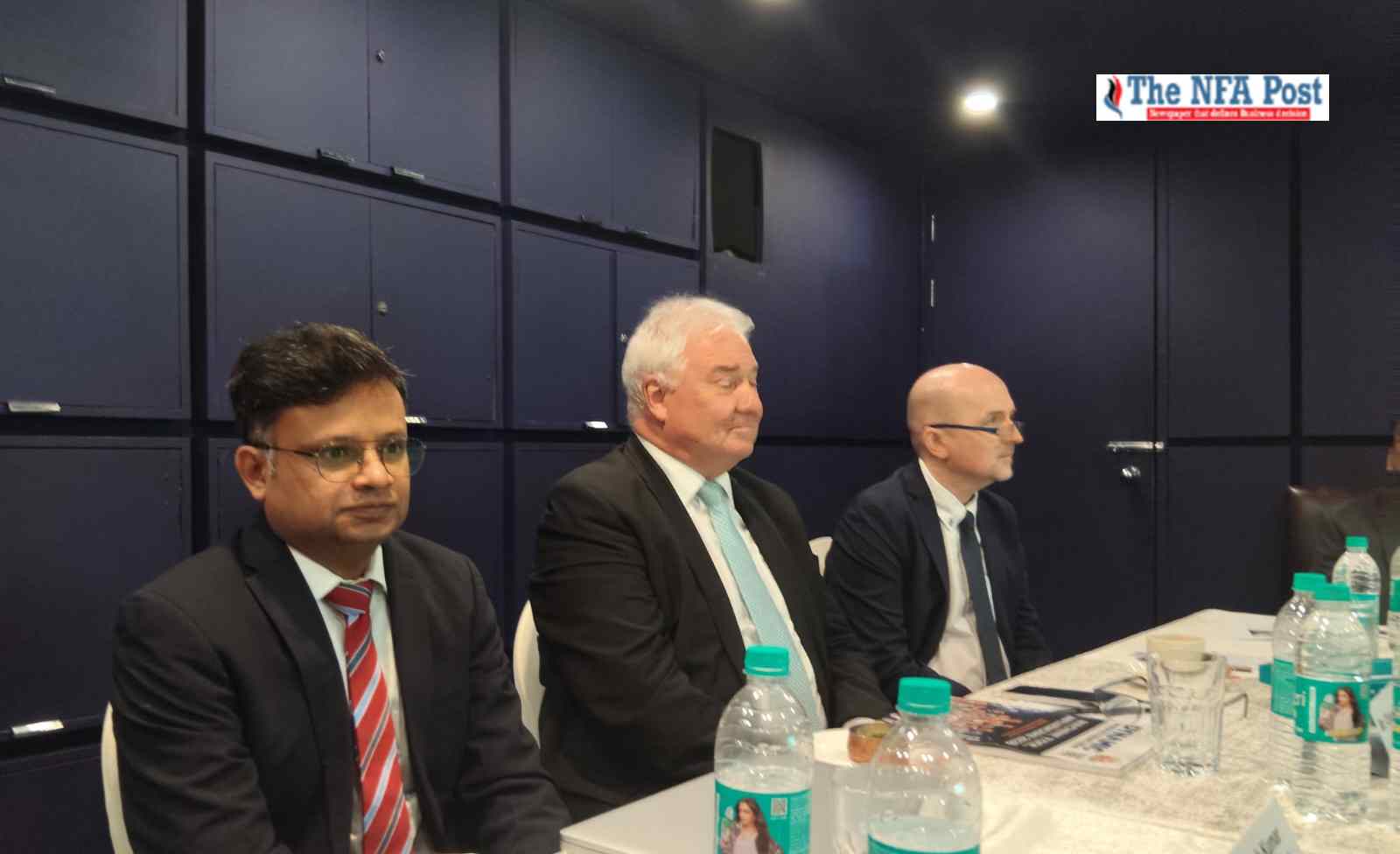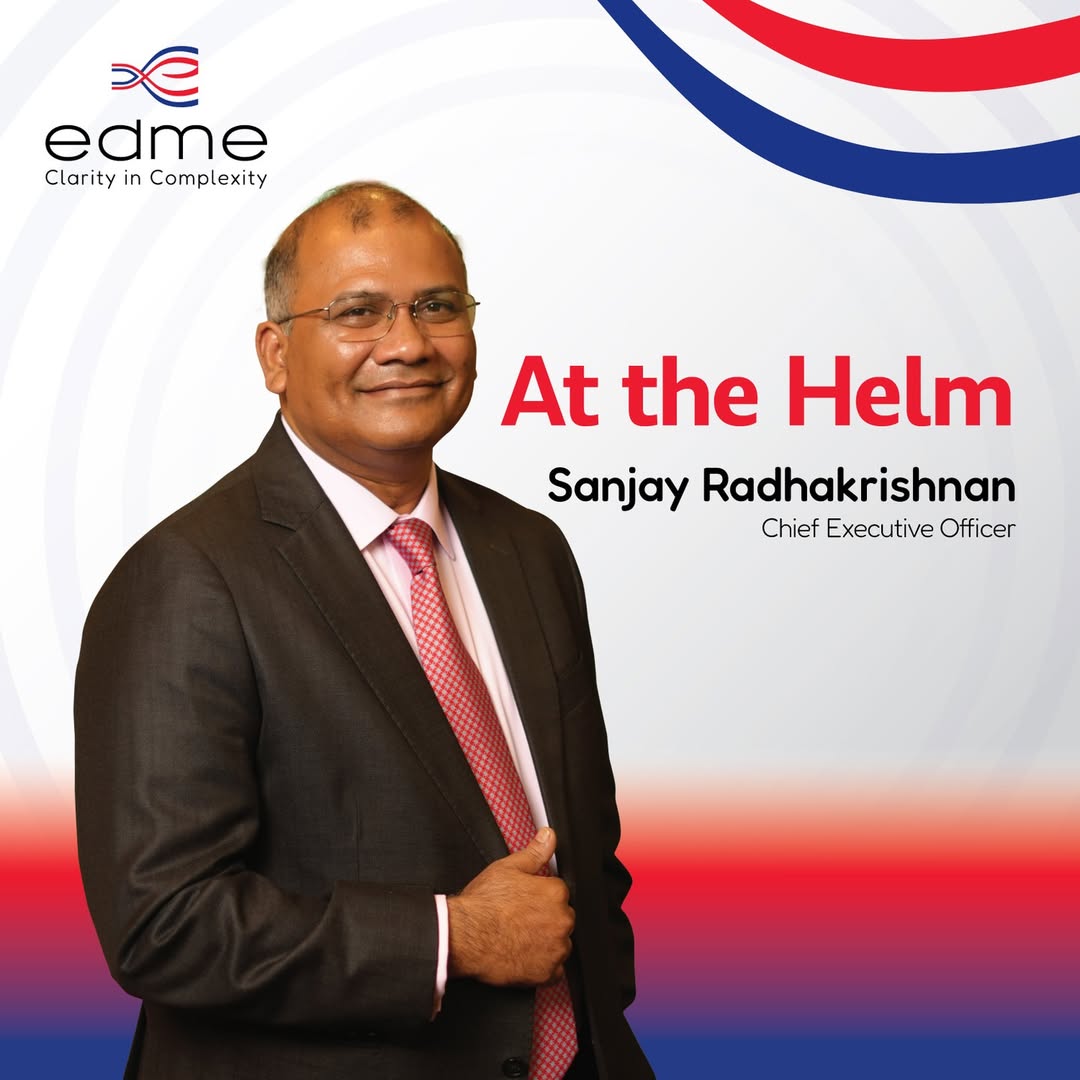
In an exclusive interaction, CEO Sanjay Radhakrishnan explains how Edme is leveraging strategic acquisitions, AI-led platforms, and emerging risk covers to position itself as India’s first multinational insurance broker.
Bengaluru, NFAPost: By any measure, India’s insurance broking industry is at an inflection point—and Edme intends to be at its forefront. In a candid one-on-one conversation, Sanjay Radhakrishnan, CEO of Edme Insurance Brokers Ltd., laid out a clear and ambitious roadmap: scale through smart mergers, disrupt legacy processes with technology, and take Indian insurance broking beyond national borders.
What emerged was not merely a story of growth, but one of reinvention.
Strategic Consolidation: Building Scale with Intent
Radhakrishnan began by demystifying Edme’s recent expansion journey. The company acquired Aditya Birla’s insurance broking business—later rebranded as Edme—and followed it up with the acquisition of the Indian operations of UIB, a London-headquartered multinational broker.
“These moves immediately changed our position in the market,” he said.
“With this, we become the second or third largest broker in the industry. But more importantly, it sets us on a path to becoming India’s first multinational insurance broker.”
While most Indian brokers continue to operate within domestic boundaries, Edme is actively looking outward.
“A lot of Indian brokers stay within the country. Our ambition is to step outside India and build a global footprint,” Radhakrishnan added.
Technology as the True Differentiator
If consolidation provides scale, technology provides Edme its edge.
Radhakrishnan was unequivocal in calling out one of the industry’s biggest inefficiencies—manual data handling in large corporate health insurance programs.
“A single corporate health policy can cover 100,000 employees and nearly 400,000 lives when you include families. Even today, most of this is managed on Excel sheets,” he explained.
Edme has replaced this fragmented approach with an in-house, AI-enabled platform that directly integrates insurers, TPAs, and client HRMS systems—eliminating manual intervention and data silos.
“We’ve moved this entire ecosystem out of Excel and into a live system,” he said.
“Nobody else is doing this today. Most of our competitors are six months to two years behind us.”
Interestingly, the platform was built by talent drawn from consumer technology companies rather than traditional insurance backgrounds—bringing a fundamentally different design philosophy. The system is also not static.
“We relaunch and upgrade the platform every year. It’s a living product,” Radhakrishnan noted.
From Two-Wheelers to Satellites—and Beyond
Edme’s portfolio reflects the breadth of India’s evolving risk landscape. The firm operates across conventional lines such as property, construction, and oil & gas—where it is already among the largest brokers in the country.
But its real differentiation lies in newer, unconventional covers.
“We insure everything from two-wheelers to satellites,” Radhakrishnan said with a smile.
One fast-emerging area is climate risk insurance, which protects businesses against non-traditional, climate-linked losses not covered by standard policies.
He cited an example:
“A burger company once suffered massive losses because lettuce crops failed due to weather conditions. That risk can now be insured.”
Edme is also working on specialised covers for the gig economy and crop risks outside government-backed schemes like PMFBY—such as insuring potato farmers against soil moisture variations.
Reading the Market: What Lies Ahead
On industry dynamics, Radhakrishnan offered a nuanced outlook. Falling reinsurance rates globally are expected to soften property insurance pricing in India. Group health insurance, however, is under pressure.
“Group health rates will go up because losses are mounting. Individual health insurance will also continue to rise due to health inflation,” he observed.
Yet, the long-term story remains overwhelmingly positive.
India’s insurance penetration has grown from under 2% of GDP a decade ago to around 3.5% today. According to Radhakrishnan, this is only the beginning.
“With asset creation increasing alongside GDP growth, insurance growth is inevitable,” he said.
“We should be closer to 5–6% penetration over the next decade—and that would be phenomenal given the size of our economy.”
A Decade of Opportunity
As India builds infrastructure, digitises its economy, and grapples with new-age risks—from climate volatility to platform-driven work—insurance broking is no longer a back-office function. It is becoming a strategic enabler.
Edme’s bet is clear: combine scale, deep domain expertise, and cutting-edge technology to not just participate in this growth, but shape it.
“The next decade will be extremely good for the insurance segment,” Radhakrishnan concluded.
For Edme, that decade appears to have already begun.