VoxelGrids’ indigenous 1.5 Tesla MRI marks a turning point for Make in India, affordable diagnostics, and medical self-reliance
Bengaluru, NFAPost: For decades, India’s hospitals and diagnostic centres have depended almost entirely on imported MRI scanners—highly capable machines, but often prohibitively expensive and logistically complex to deploy outside major cities. That long-standing dependence has now been decisively challenged.
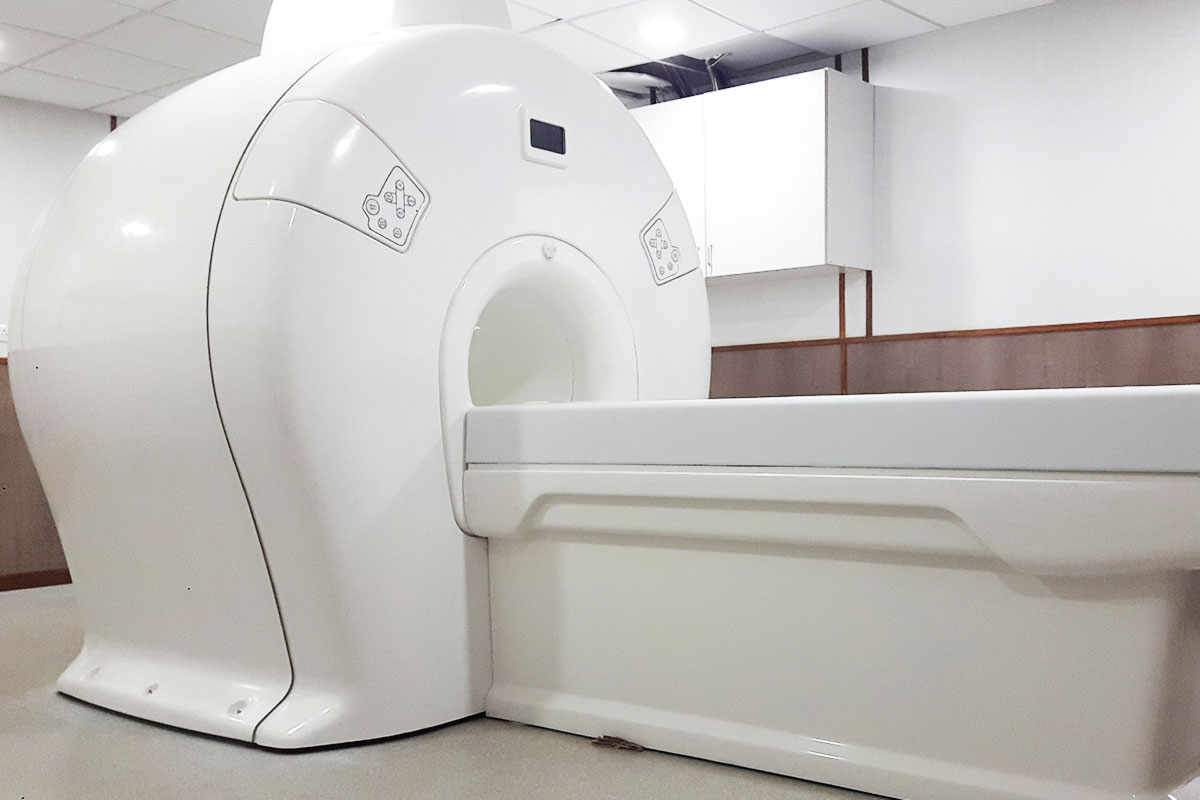
In a significant milestone for Indian medical technology, VoxelGrids, a Zoho-backed startup, has designed, built, and deployed the country’s first fully indigenous MRI (Magnetic Resonance Imaging) scanner. The compact, full-body 1.5 Tesla MRI has been installed at the Chandrapur Cancer Care Foundation near Nagpur—marking not just a technological success, but a statement of intent for India’s medtech ecosystem.
“This is a state-of-the-art scanner that just happens to be affordable,” says the VoxelGrids team—an understated line that captures the ambition behind the project.
Twelve Years in the Making
The indigenous MRI is the outcome of a 12-year effort led by Arjun Arunachalam, founder of VoxelGrids. Unlike many domestic hardware initiatives that rely heavily on imported sub-systems, this scanner has been designed ground-up in India, incorporating original engineering and architectural choices rather than replicating foreign designs.
Until now, India’s MRI market has been dominated by global giants such as Siemens and GE Healthcare. While these systems are clinically proven, their high capital cost, dependence on liquid helium, and complex installation requirements have limited their reach—particularly in tier-2 towns and rural regions.
VoxelGrids set out to solve precisely these constraints.
A Different Kind of MRI
At its core, the VoxelGrids scanner delivers what clinicians expect: a 1.5 tesla magnetic field, the global clinical standard for full-body diagnostics. What sets it apart is how it achieves this.
Key innovations include:
- No liquid helium requirement, eliminating one of the biggest cost and maintenance challenges of conventional MRI systems
- Compact and lightweight design, suitable for both stationary installations and mobile deployments
- Approximately 40% lower build cost compared to imported MRI machines
- Designed for challenging environments, without compromising image quality needed for clinical diagnosis
“The goal was not to build a cheaper MRI by cutting corners,” a senior engineer involved in the project notes. “It was to rethink the system so it could work reliably in Indian conditions—power, space, maintenance, and cost included.”
Why This Matters
MRI is a cornerstone of modern diagnostics—non-invasive, radiation-free, and indispensable for detecting cancer, neurological disorders, spinal injuries, and soft-tissue abnormalities. Yet access in India remains uneven, largely because of cost and infrastructure barriers.
The implications of an indigenous MRI are therefore profound:
- Reduced dependence on imports, strengthening national medical infrastructure
- Lower scan costs, improving affordability for patients
- Greater access to advanced diagnostics in tier-2 cities and underserved regions
- A boost to Atmanirbhar Bharat, particularly in high-value medical devices
- Validation of India’s deep-tech startup ecosystem, beyond software and services
Zoho’s backing of VoxelGrids underscores a growing trend of Indian capital supporting long-gestation, high-impact hardware innovation—an area traditionally seen as risky and resource-intensive.
A Signal Moment for Indian Medtech
More than a single product launch, VoxelGrids’ MRI represents a shift in mindset. It demonstrates that India can build complex, safety-critical medical imaging systems—not as lower-end alternatives, but as globally relevant solutions tailored to real-world constraints.
As healthcare systems worldwide grapple with rising costs and access gaps, India’s first indigenous MRI scanner sends a clear message: innovation, affordability, and clinical excellence do not have to be mutually exclusive.
And sometimes, a breakthrough begins simply by asking a different question—not how do we import it, but how do we build it better, here at home.