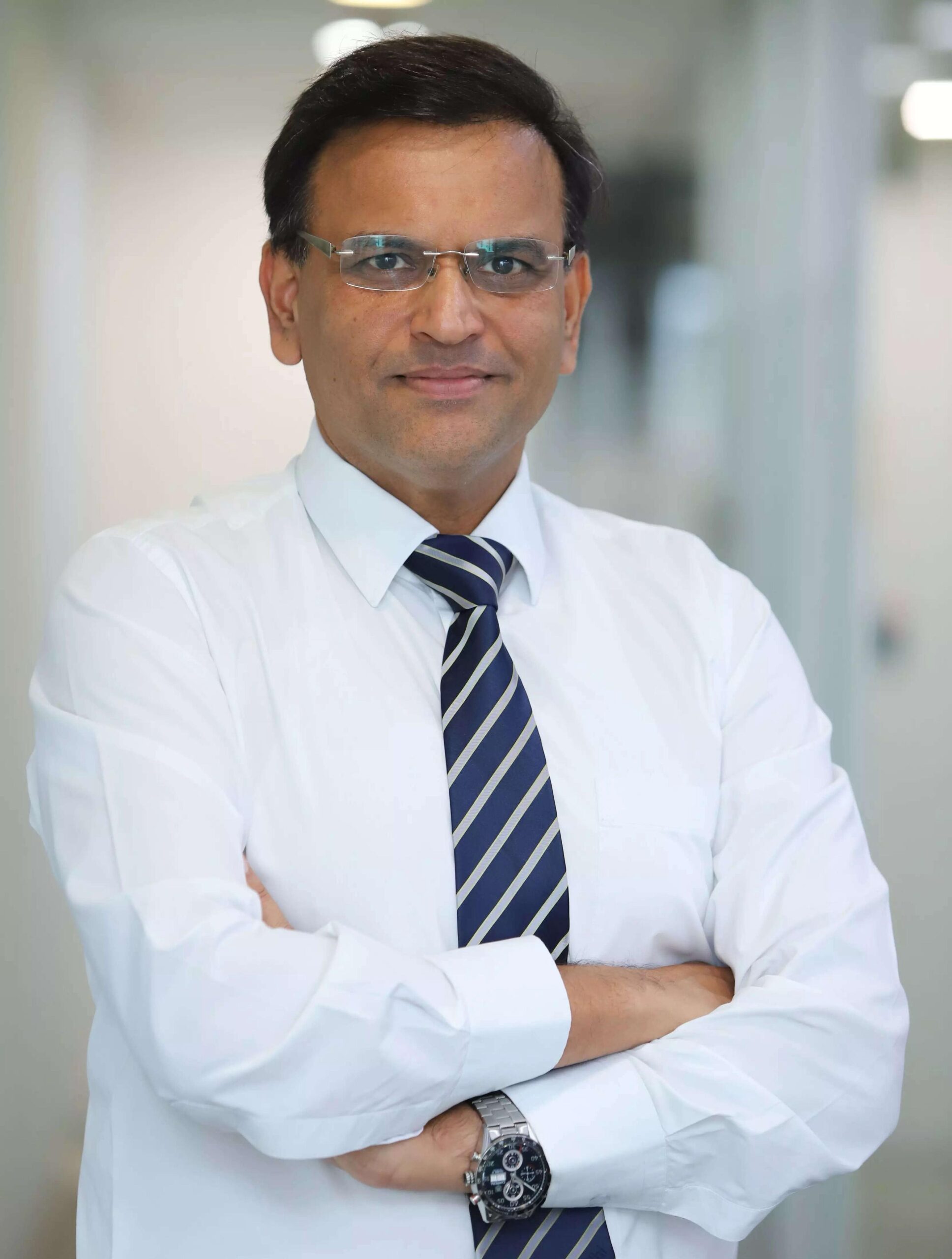
As AI Moves On-Device, MediaTek Bets on Smaller, Smarter Chips to Power the Next Billion Users
Bengaluru, NFAPost: As artificial intelligence steadily shifts from distant data centres to the silicon inside our pockets, the smartphone is undergoing its most consequential reinvention since the advent of mobile internet. No longer confined to calls, messaging, or casual browsing, the smartphone is fast emerging as India’s primary computing device—reshaping how the country works, creates, learns, and entertains itself.
At the centre of this transformation is a quiet but decisive change in semiconductor design: smaller, more energy-efficient chips embedded with specialised AI engines that can run complex workloads directly on the device. For MediaTek, one of the world’s largest fabless chipmakers, this evolution is not just a technological milestone—it is a strategic bet on India’s digital future.
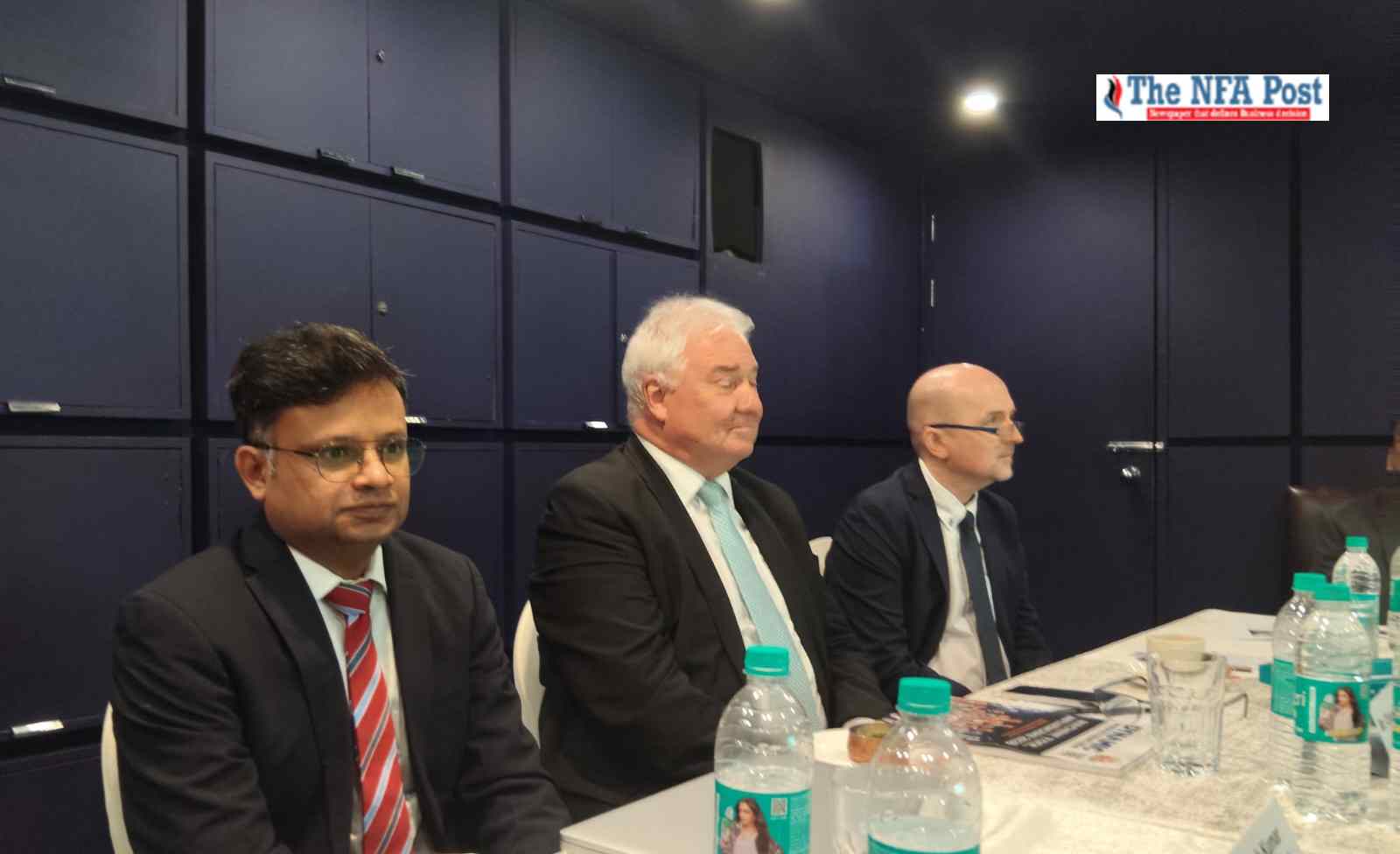
“Smartphones are rapidly replacing laptops and becoming the primary computing device in India,” said Anku Jain, outlining a shift that is already visible beyond India’s metros. “This trend is particularly evident in tier-2 and tier-3 cities, where smartphones are often the only internet-enabled devices. That reality is driving digital inclusion at an unprecedented scale.”
From Cloud Dependency to On-Device Intelligence
For years, the promise of AI was tethered to the cloud—powerful but distant, intelligent yet dependent on connectivity. The current generation of mobile chipsets is changing that equation. By integrating dedicated Neural Processing Units (NPUs), smartphones can now perform AI tasks such as image enhancement, language translation, voice recognition, and content creation locally.
The implications are especially significant for a market like India, where network reliability can vary and affordability remains critical. On-device AI reduces latency, enhances privacy by keeping sensitive data local, and improves battery efficiency—an essential requirement for users who expect their phones to last all day.
MediaTek’s silicon roadmap reflects this philosophy. Rather than chasing raw performance alone, the company has focused on optimising the balance between compute power and energy efficiency. “Smaller nodes are not just about speed; they’re about enabling AI responsibly and sustainably for mass-market users,” Jain explained in essence, pointing to a future where intelligence is built into the device by default.
The Smartphone as India’s Digital Backbone
The idea of smartphones replacing laptops may sound radical in developed markets, but in India it mirrors lived reality. Affordable data plans, widespread 4G and 5G rollouts, and increasingly capable devices have turned smartphones into tools of necessity rather than convenience.
From kirana store owners managing digital payments to students attending online classes and creators editing videos on the go, the smartphone has become the backbone of India’s digital economy. Entire livelihoods—content creation, online commerce, gaming, and gig work—are now smartphone-native.
“Gaming, video editing, professional photography, and AI-powered creativity are driving demand for high-performance phones,” Jain said. “Consumers today are upgrading for utility, not fashion. They want devices that will last three years or more.”
Premium Smartphones Break Out of Metros
One of the more striking shifts in India’s handset market is the rapid expansion of the premium segment—smartphones priced above ₹50,000. Once the preserve of urban elites, flagship devices are now finding buyers in smaller towns and cities.
This is less about aspiration and more about consolidation. As smartphones absorb the roles of laptops, cameras, and entertainment systems, consumers are willing to invest in a single, powerful device that can do it all reliably over time.
“The premium smartphone segment is expanding because of real-world use cases, not lifestyle branding,” Jain observed, underscoring how functional value is reshaping buying behaviour.
Dimensity 9500: A Statement of Intent
MediaTek’s technological ambitions were on full display recently in Bengaluru, where the company showcased its latest flagship chipset, the Dimensity 9500 SoC. Designed as a third-generation All Big Core CPU architecture, the chip features a 4.21GHz ultra core, three premium cores, and four performance cores, paired with the Arm G1-Ultra GPU.
The platform also introduces industry-first support for 4-channel UFS 4.1 storage, significantly improving data throughput—an increasingly critical factor for AI-heavy applications and high-resolution content creation. Equally important is MediaTek’s Imagiq 1190 imaging processor, which enables advanced computational photography and video workflows.
These capabilities are already finding their way into flagship devices such as the OPPO Find X9 series and the vivo X300 series, alongside high-performance offerings in the Dimensity 8000 series.
Scale, Market Leadership, and Staying Power
MediaTek’s confidence in India is backed by numbers. Jain claims the company has led India’s smartphone chipset market for over 20 consecutive quarters, with an estimated 47% share. Globally, MediaTek commands roughly 35–40% of the market, shipping close to two billion devices every year.
That scale offers a strategic advantage: the ability to innovate across price tiers while tailoring solutions for markets like India, where affordability, performance, and efficiency must coexist.
Beyond the Handset: TVs, Cars, and Connectivity
While smartphones remain central to MediaTek’s identity, the company’s reach extends well beyond handheld devices. It is a global leader in Smart TV chipsets and has a growing presence in speakers, Chromebooks, and connectivity solutions.
Automotive electronics, however, may be its most compelling growth story. As vehicles become software-defined—and electric vehicles increase semiconductor intensity—chipmakers are becoming as critical to cars as engines once were.
In India, MediaTek’s infotainment platforms are already used by automakers such as Skoda and Tata Motors, with collaborations expanding to two-wheeler manufacturers as well. These systems power navigation, entertainment, and connected services that consumers increasingly expect as standard.
India as a Strategic Talent Hub
MediaTek’s long-term commitment to India is also evident in its investments in talent. The company employs around 1,000 engineers across R&D centres in Bengaluru, Noida, and Mumbai, spanning both hardware and software domains.
“India is viewed as a strategic talent hub by our global headquarters,” Jain said, signalling further expansion as the company deepens its engineering footprint. The move aligns neatly with India’s broader ambition to become a global centre for semiconductor design and advanced electronics.
The Smartphone at the Heart of India’s AI Future
Looking ahead, MediaTek sees smartphones as the most critical personal devices of the AI era—particularly in India’s mass market. With AI-enabled flagships, growing automotive momentum, and emerging opportunities in cloud and connectivity, the company expects sustained growth across consumer and enterprise segments.
As chips shrink and intelligence becomes embedded by design, the smartphone’s role continues to expand. In India’s next phase of digital growth, it will not merely be a device—it will be the computer, the creative studio, and the gateway to opportunity for hundreds of millions.