New LH and TF series materials target high-performance, high-density electronic applications as demand for compact, faster devices accelerates
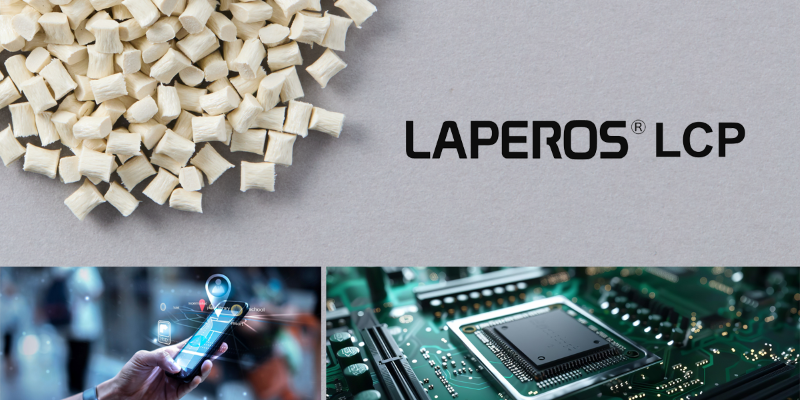
Bengaluru, NFAPost: As the global electronics industry pushes the boundaries of miniaturisation, performance and design complexity, Polyplastics Co., Ltd., a global leader in engineering thermoplastics, has expanded its LAPEROS® liquid crystal polymer (LCP) portfolio with the launch of two new material series—LH and TF. The move underscores the company’s strategic focus on supporting next-generation electronic components that demand higher performance, tighter tolerances and greater design flexibility.
The newly introduced grades address evolving requirements across smartphones, tablets and precision electronic components, where manufacturers are seeking materials that combine high flowability, thermal stability and mechanical strength without compromising manufacturability.
According to Polyplastics, the expansion follows a dual-track approach: offering balanced, versatile materials for diverse designs, and ultra-high-flow materials engineered specifically for complex, fine-pitch geometries.
Designed for versatility and performance
The LH series has been developed as a well-rounded solution, balancing flowability, mechanical properties and heat resistance. This combination allows designers greater freedom to accommodate a wide range of product architectures, making the LH grades suitable for multiple electronic component applications.
By contrast, the TF series is engineered for exceptional fluidity, enabling precise molding of intricate shapes commonly found in compact consumer electronics. Despite its high flow characteristics, the TF series maintains strong mechanical performance and a flexible molding window—key attributes for manufacturers focused on high-density integration and aggressive downsizing.
Together, the two series expand the design toolkit available to electronics manufacturers, particularly as component layouts become denser and more complex.
AI-driven materials development
Polyplastics has also highlighted its growing use of Materials Informatics, leveraging AI and advanced data analytics to accelerate product development. By analysing decades of accumulated material data, the company is able to derive optimal property combinations more efficiently, significantly reducing development timelines while improving precision in material design.
This data-driven approach, Polyplastics says, is increasingly critical as electronics customers demand faster innovation cycles and application-specific material solutions.
Strong market position in LCPs
Produced in Japan and the Taiwan region, LAPEROS® LCP currently has an annual production capacity of 20,000 tonnes and commands a 34% share of the global market, according to the Fuji Keizai 2025 report. The material has long been a mainstay in the electronic components sector, supporting advances in connectors, sockets and other critical applications.
LAPEROS® LCP is gaining particular traction in next-generation, high-speed transmission applications, including ultra-thin, fine-pitch connectors used in smartphones and tablets. Its combination of mechanical strength, heat resistance and low coefficient of linear thermal expansion makes it well suited for demanding environments where dimensional stability and reliability are paramount.
Supporting the future of electronics
With the expansion of its LAPEROS® range, Polyplastics is reinforcing its role as a key materials partner to the electronics industry at a time when performance margins are narrowing and design complexity is rising. As device makers continue to pack more functionality into smaller footprints, materials innovation—backed by data, AI and manufacturing scale—is emerging as a decisive competitive advantage.
For Polyplastics, the launch of the LH and TF series signals not just an incremental product update, but a broader commitment to enabling the next generation of high-performance, miniaturised electronic devices through advanced polymer science.
LAPEROS® is a registered trademark of Polyplastics Co., Ltd. in Japan and other countries.