India’s first astronaut Wg. Cdr. Rakesh Sharma (Retd.) and ISRO astronaut Gp. Capt. Prasanth B. Nair share rare insights into training, mission readiness and the future of India’s crewed space missions
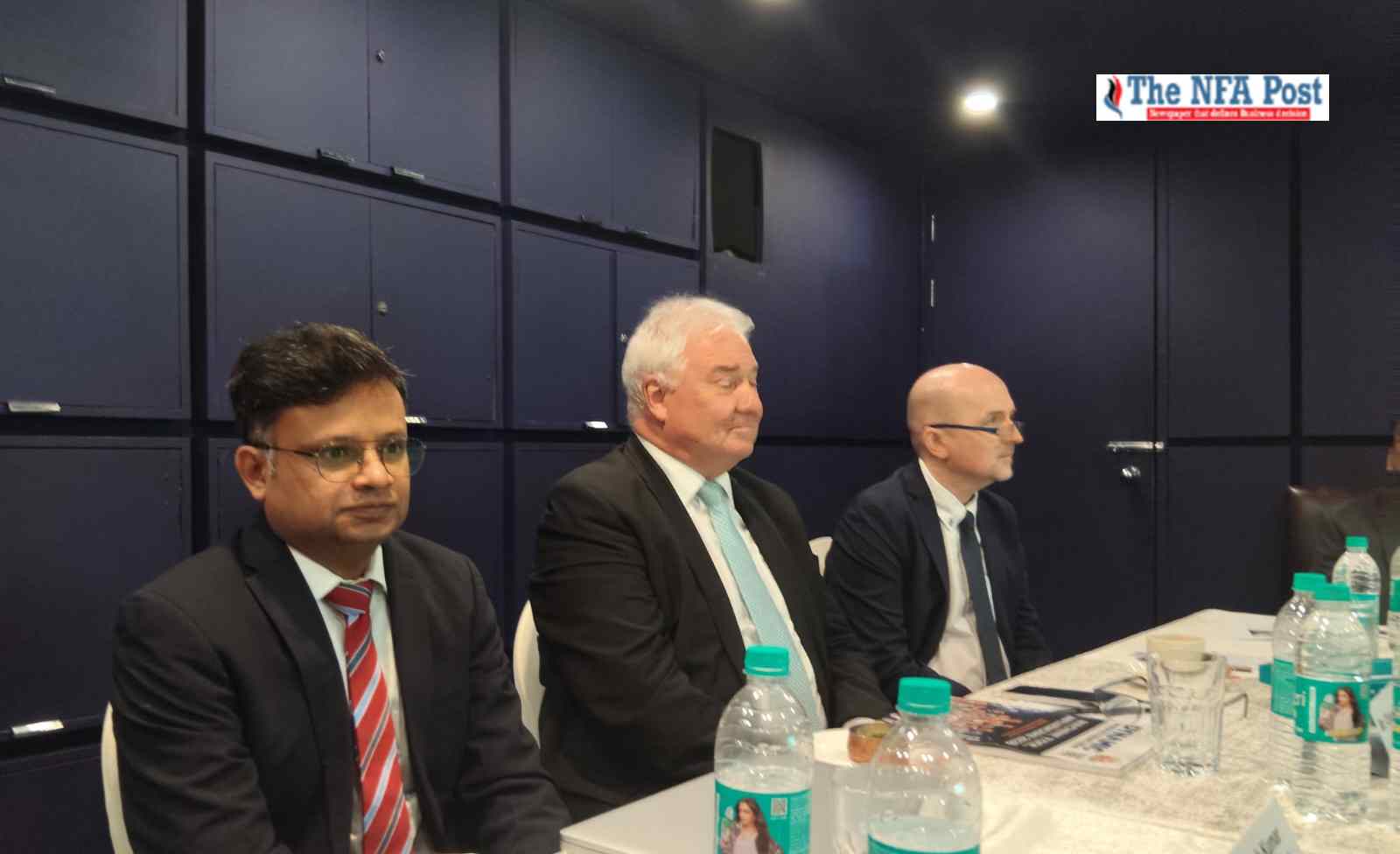
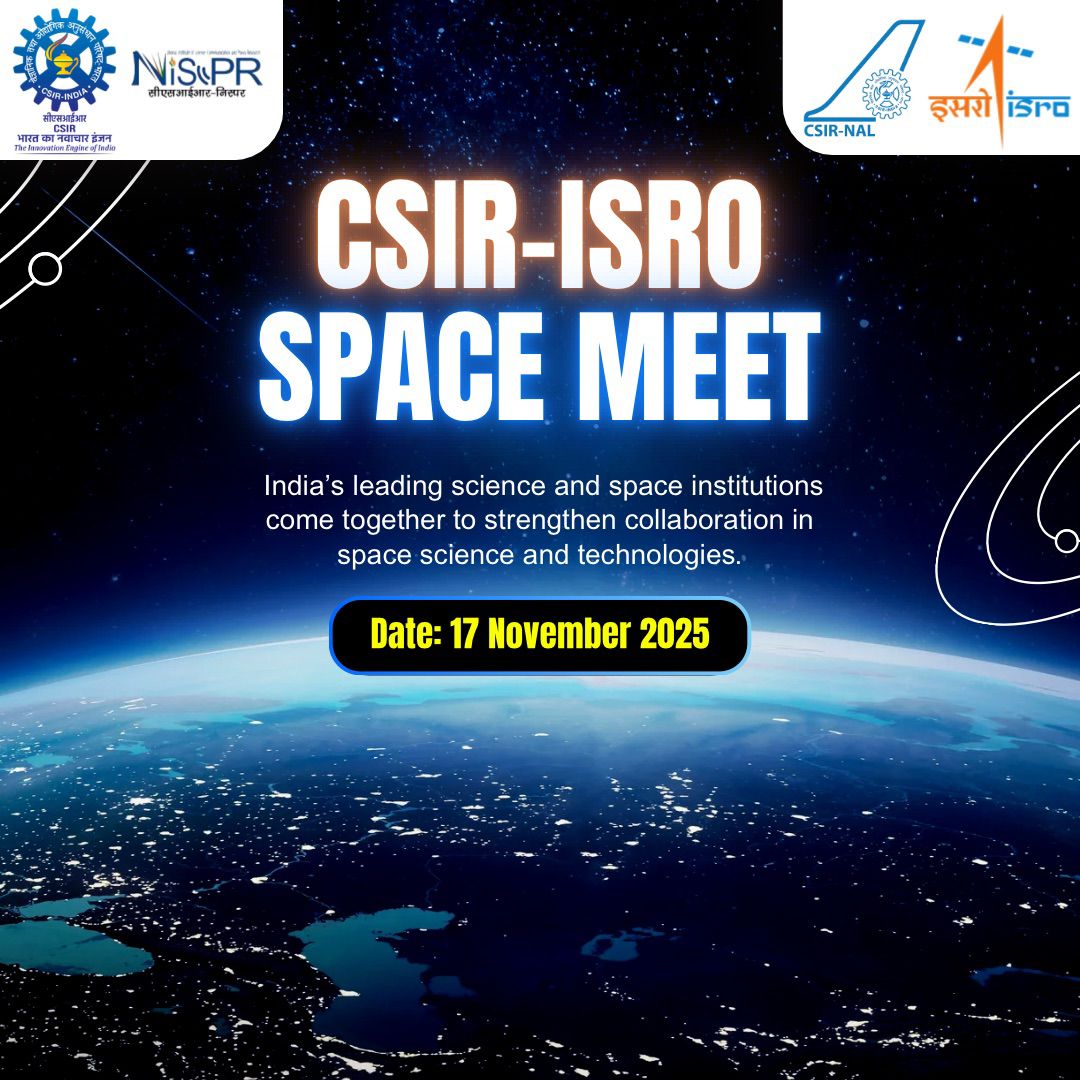
NFAPost, Bengaluru: The Council of Scientific and Industrial Research (CSIR) and the Indian Space Research Organisation (ISRO)jointly hosted the CSIR–ISRO Space Meet 2025 in Bengaluru, bringing together India’s leading scientists, aerospace experts, astronauts and international specialists to align research and technology needs for the country’s ambitious human spaceflight programme. The event, organised by CSIR–National Aerospace Laboratories (CSIR–NAL), served as a platform to advance mission-driven collaboration toward India’s future crewed space missions.
Strengthening India’s Human Spaceflight Capabilities
Delivering the welcome address, Dr. N. Kalaiselvi, Secretary, DSIR & Director General, CSIR, highlighted CSIR’s continuing contributions to India’s aerospace ecosystem. She stressed that the meet would help identify technological gaps and foster collaborative research:
“This platform will provide valuable takeaways through knowledge sharing among scientists, researchers, astronauts and international experts. It further strengthens our commitment to indigenous innovation and strategic R&D aligned with India’s long-term space goals,” she said, acknowledging the leadership of Hon’ble Union Minister Dr. Jitendra Singh.
“Gaganyaan demands national-level collaboration”
In his strategic address, Dr. V. Narayanan, Secretary, Department of Space (DoS) & Chairman, ISRO, emphasised that human spaceflight is inherently multidisciplinary and requires coordinated efforts across ministries, institutions, academia and industry.
He outlined evolving mission priorities, such as:
- Next-generation crew safety systems
- Advanced life-support technologies
- Enhanced crew training and recovery systems
- Development of new scientific payloads for human spaceflight
Dr. Narayanan also reaffirmed India’s long-term aspirations, including future human missions to the Moon, Mars exploration, and the establishment of a dedicated Indian Space Station.
Astronauts Share Unfiltered Insights
One of the most anticipated segments of the meet was the experience-sharing session with:
- Gp. Capt. Prasanth B. Nair, ISRO Astronaut & Gaganyatri
- Wg. Cdr. Rakesh Sharma (Retd.), India’s first astronaut
Gp. Capt. Prasanth B. Nair offered a deep dive into astronaut training, microgravity simulations, mission preparedness, and crew-recovery frameworks.
Wg. Cdr. Rakesh Sharma revisited his historic 1984 Soyuz-T11 mission and acknowledged CSIR–NAL’s long-standing aerospace contributions.
Both astronauts emphasized that India’s Human Spaceflight Programme is focused on peaceful exploration, scientific discovery, and human-centric research that enhances international cooperation.
Global Perspectives on Human Spaceflight
The meet gained global perspective with a special video message from Mr. Jean-Francois Clervoy, ESA Astronaut (NASA STS-66, STS-84, STS-103), who stressed the importance of international collaboration, shared expertise, and safety-focused systems in advancing human spaceflight.
Experts from various leading space agencies and institutions contributed through technical sessions:
- Dr. Lucia Roccaro (ESA) – Human spaceflight physiology
- Dr. Akiko Otsuka (JAXA) – Collaborative research opportunities
- Prof. Pradipta Biswas (IISc) – Human–technology interaction and interface design for crewed missions
These discussions underscored the need for integrated research and advanced engineering to support astronaut health, safety, and mission success.
Reaffirming India’s Vision for Viksit Bharat
Dr. Abhay A. Pashilkar, Director, CSIR–NAL, reiterated the organisation’s commitment to developing materials, technologies and testing capabilities for India’s aerospace and human spaceflight roadmap.
The event concluded with a collective pledge to strengthen science–technology convergence, mission-oriented R&D, and multi-agency collaboration to advance India’s human spaceflight capabilities — all aligned with India’s vision of Viksit Bharat @2047.
With India preparing for the next phase of its crewed missions and expanding global partnerships, the CSIR–ISRO Space Meet 2025 served as a timely and strategic convergence of expertise, vision, and commitment.